
Advertisement
Adas Calibration Importance
Advanced Driver Assistance Systems (ADAS) are now at the core of Toyota’s safety and performance, and proper calibration after windshield or glass replacement is absolutely critical. If your Toyota’s windshield has recently been replaced or repaired, skipping ADAS calibration can compromise everything from lane-keeping assist to emergency braking. In this in-depth guide, we’ll explain exactly why ADAS calibration is non-negotiable after glass work, how it impacts Toyota vehicles, the risks of improper calibration, and how to ensure your Toyota remains safe, compliant, and performing at its best.
For a broader look at Toyota glass and windshield parts, including sourcing and fitment, visit our Toyota Glass & Windshield Parts: OEM Fitment, Issues, and Advanced Sourcing category page.
Why Immediate ADAS Calibration After Toyota Glass Replacement Is Non-Negotiable
Toyota’s ADAS systems rely on precise sensor alignment—often directly behind or integrated into the windshield. After any glass replacement, these sensors can shift by millimeters, but even this minimal movement can lead to major system errors. Immediate calibration is required to restore critical safety functions like adaptive cruise control, lane departure warning, and collision avoidance. Without recalibration, your Toyota’s advanced safety features may not work as intended, putting you and others at risk.
The Hidden Problem: Invisible Sensor Misalignment
Most Toyota owners—and even some general repair shops—don’t realize that a new windshield or mirror glass can alter the position of ADAS cameras and sensors. The misalignment isn’t visible to the naked eye. Even a perfectly installed windshield can have slight differences in glass thickness, curvature, or mounting angle compared to the original. These micro-variations can throw off ADAS sensor readings, leading to false alarms, missed detections, or delayed responses.
Expanding the Issue: How Glass Replacement Impacts Toyota ADAS
The Critical Role of the Windshield in ADAS
Modern Toyotas integrate cameras, radar, lidar, and sometimes ultrasonic sensors into the glass or directly adjacent to it. The windshield is no longer just a barrier to the elements—it’s part of the sensor array. For example, Toyota’s Lane Tracing Assist and Pre-Collision System rely on a forward-facing camera mounted to the windshield. If the glass is even slightly out of spec, the system’s entire field of vision can shift, misreading lane markings or vehicles ahead.
What Happens When Calibration Is Skipped?
- Lane Departure Warning May Fail: The system might not detect lane markings correctly, increasing accident risk.
- Automatic Emergency Braking May Not Trigger: Forward collision sensors may misjudge distances.
- Adaptive Cruise Control May React Unexpectedly: Sensor misalignment can cause erratic speed adjustments.
- False Alarms or Missed Alerts: You may get incorrect warnings or miss real hazards.
These issues are not hypothetical. According to the National Highway Traffic Safety Administration (NHTSA), ADAS system accuracy is directly tied to correct sensor positioning and calibration.
Toyota-Specific ADAS: What Needs Calibration After Glass Work?
Toyota’s Safety Sense (TSS) suite is standard on most models and includes several systems that require post-glass calibration:
- Forward-Facing Camera (Windshield): Used for Lane Departure Alert, Lane Tracing Assist, Road Sign Assist, and Pre-Collision System.
- Radar Sensors (Front Grille, Bumper, Sometimes Windshield): Used for Dynamic Radar Cruise Control and Pre-Collision System.
- Rain and Light Sensors: Often integrated into the windshield; require reinitialization.
- Heads-Up Display Projectors: May be affected by glass curvature or mounting.
If your Toyota has any of the above features, recalibration after glass replacement is mandatory for proper operation.
The Technical Side: How ADAS Calibration Works
What Is ADAS Calibration?
ADAS calibration is the process of realigning and verifying the accuracy of all sensors and cameras after any change in their mounting position or environment. For Toyota vehicles, this involves:
Advertisement
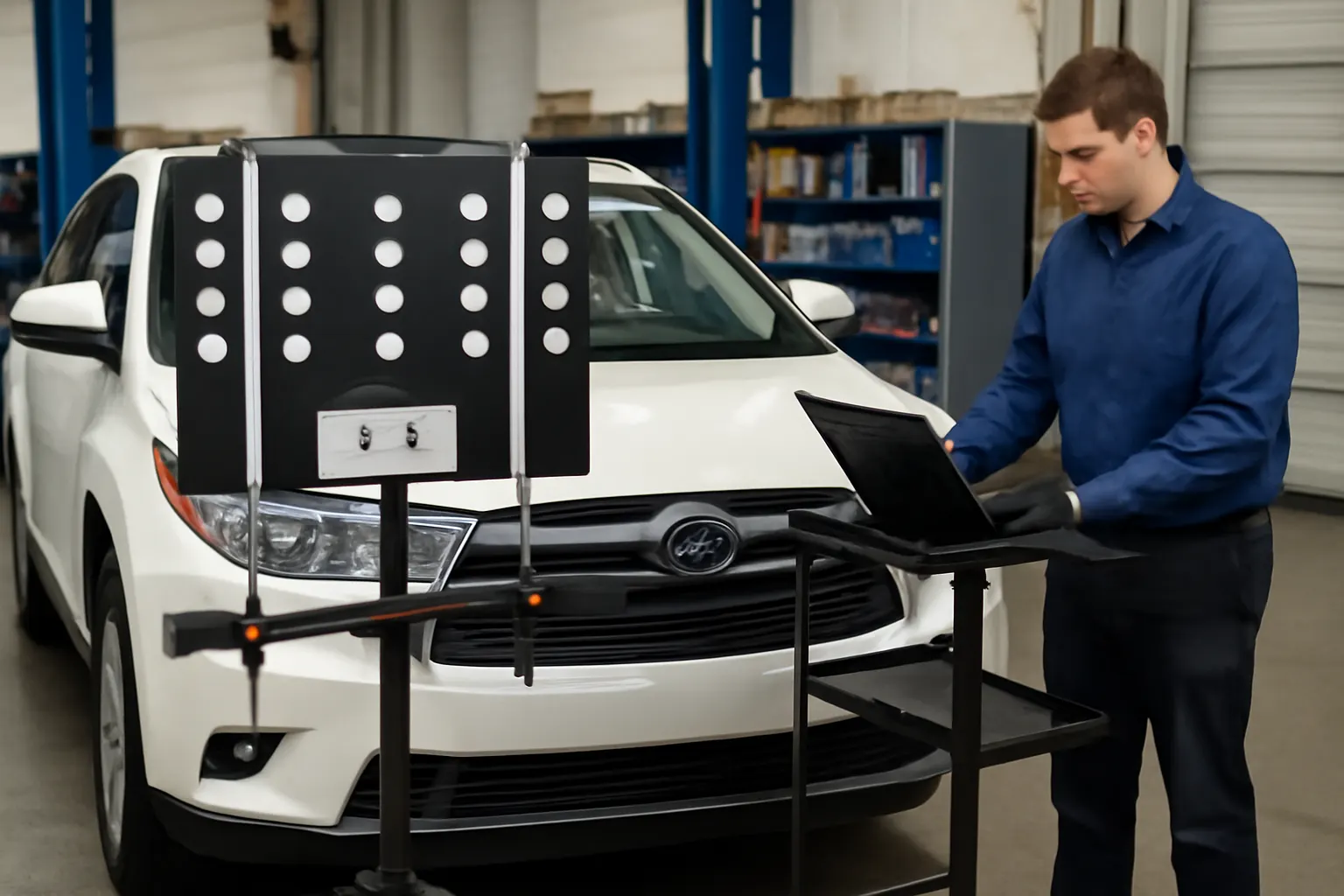
- Static Calibration: The vehicle is parked, and targets or patterns are placed at precise locations around the car. The ADAS system is then recalibrated using diagnostic equipment.
- Dynamic Calibration: The vehicle is driven on the road while the system self-calibrates, guided by a scan tool and real-world inputs.
Why Is It So Sensitive?
Toyota’s ADAS sensors operate with tolerances as fine as fractions of a degree or millimeter. Even a tiny change in glass shape, mounting angle, or sensor bracket position can cause major errors. Calibration tools use manufacturer-specific procedures to ensure every sensor is aligned to Toyota’s strict OEM standards.
The Risks of Ignoring ADAS Calibration
Failing to recalibrate your Toyota’s ADAS after glass replacement is not just a technical oversight—it’s a safety hazard. Here’s what’s at stake:
- Reduced Crash Avoidance: Systems designed to prevent or mitigate accidents may not function.
- Potential for False Security: Drivers may rely on systems that are actually compromised.
- Insurance and Liability Issues: Some insurers may deny claims if ADAS calibration is skipped.
- Compliance and Recalls: Improper calibration can lead to noncompliance with federal safety standards, and may result in recall actions (NHTSA Recalls).
Toyota Glass Replacement: The Calibration Checklist
If you’re replacing a Toyota windshield or any ADAS-integrated glass, use this checklist to ensure proper calibration:
Toyota ADAS Calibration Checklist After Glass Replacement
- Identify all ADAS features present (refer to owner’s manual or dealership).
- Use only OEM or certified aftermarket glass with correct sensor mounting points.
- Install the glass to Toyota OEM specifications (see Toyota Windshield Install Guide).
- Inspect and clean all ADAS cameras and sensors before reinstallation.
- Reconnect all sensor wiring harnesses securely.
- Perform a full static calibration with manufacturer-approved targets and scan tools.
- Complete dynamic calibration if required by Toyota’s service procedures.
- Verify system operation via scan tool and real-world test drive.
- Check for diagnostic trouble codes (DTCs) and resolve any issues.
- Document the calibration process for insurance and compliance.
Skipping any of these steps can compromise your Toyota’s safety systems.
OEM vs Aftermarket Glass: Does It Affect Calibration?
Absolutely. Toyota’s ADAS sensors are designed for precise alignment with OEM glass. Aftermarket glass may differ in thickness, curvature, or mounting bracket location—even if it claims to be “compatible.” These differences can make calibration more difficult or, in some cases, impossible to achieve to factory standards.
For more on this topic, see our detailed comparison: Toyota Oem Vs Aftermarket Glass.
Diagnostic Strategies: How to Identify Calibration Problems
You may not always get a warning light if your Toyota’s ADAS is misaligned after glass replacement. Here are some diagnostic tips:
- Scan for DTCs: Use a Toyota-compatible scan tool to check for ADAS-related fault codes.
- Test All Safety Features: Confirm lane keeping, adaptive cruise, and collision avoidance work as expected.
- Check Camera Views: Ensure the forward-facing camera provides a centered, undistorted view.
- Observe for False Alerts: Frequent or random warnings may indicate misalignment.
- Monitor Driving Behavior: If the vehicle drifts in lane-keeping mode or fails to brake automatically, recalibration is needed.
If in doubt, always return to the installer or a Toyota-certified technician for a full ADAS inspection.
Sourcing the Right Glass and Calibration Services
Not all glass shops are equipped for Toyota ADAS calibration. Here’s how to source the right parts and service:
Advertisement
- Choose Certified Installers: Look for shops with Toyota ADAS calibration capability and OEM-approved equipment.
- Verify Glass Part Numbers: Use the Toyota Glass Part Number Lookup to ensure correct fitment.
- Request Documentation: Demand proof of calibration and test results after installation.
- Ask About Warranty and Compliance: Ensure the shop stands behind their calibration process.
Maintenance After Calibration: Keeping ADAS Working
After your Toyota’s ADAS has been recalibrated, ongoing maintenance is essential:
- Avoid Further Sensor Disturbance: Any future windshield repair, wheel alignment, or suspension work may require recalibration.
- Keep Sensors Clean: Dirt or windshield film can obscure cameras and sensors.
- Update Software Regularly: Ensure your vehicle’s ADAS software is up to date.
- Monitor for Warning Lights: Address any ADAS-related alerts immediately.
Regular checks and prompt recalibration after any relevant service will keep your Toyota’s safety systems operating at peak performance.
Regulatory and Safety Standards: Why ADAS Calibration Is a Compliance Issue
ADAS calibration is not just a manufacturer recommendation—it’s increasingly a regulatory requirement. The National Highway Traffic Safety Administration (NHTSA) and organizations like SAE International (SAE Standards) set strict guidelines for vehicle safety equipment. Failing to calibrate ADAS after glass replacement can put your Toyota out of compliance, with potential legal and insurance ramifications.
Advanced Materials and ADAS: The Science Behind the Sensitivity
Modern Toyota windshields use advanced materials and manufacturing techniques to optimize weight, strength, and sensor transparency. According to the U.S. Department of Energy, even small changes in glass composition or thickness can affect sensor performance. This is why using the correct glass and precise calibration is essential—not just for safety, but for maintaining Toyota’s design integrity and fuel efficiency.
Common Myths About Toyota ADAS Calibration
Myth 1: “If there’s no warning light, calibration isn’t needed.”
Fact: Many ADAS systems will not alert you to minor misalignments. They may simply stop functioning or work incorrectly.
Myth 2: “Any glass shop can do calibration.”
Fact: Only shops with Toyota-specific ADAS calibration equipment and trained technicians can guarantee proper sensor alignment.
Myth 3: “Aftermarket glass is always as good as OEM.”
Fact: As explained earlier, even tiny differences in glass specs can prevent proper calibration.
Myth 4: “Calibration is just a quick computer reset.”
Fact: Calibration involves physical setup, precision measurements, and often real-world driving to verify accuracy.
The AutoPartEx Expert Solution Path: Ensuring ADAS Safety for Every Toyota
At AutoPartEx, we understand the critical importance of ADAS calibration after any Toyota glass replacement. Our network of certified installers, OEM and select premium aftermarket glass, and advanced calibration tools means your Toyota gets the service and safety it was engineered for. We guide you through every step—from sourcing the right glass (see our Toyota Glass Part Number Lookup) to ensuring your ADAS is recalibrated to exacting standards.
Our commitment: No Toyota leaves our care without documented, verified ADAS calibration, preserving your vehicle’s safety, compliance, and performance. For more details on sourcing, installation, and troubleshooting, visit our Toyota Glass & Windshield Parts: OEM Fitment, Issues, and Advanced Sourcing hub.
Expert Action: What Should Toyota Owners Do Next?
If your Toyota’s windshield or ADAS-integrated glass has been replaced or repaired:
- Confirm Calibration: Ask your installer for proof of ADAS calibration, including before-and-after test results.
- Insist on OEM or Certified Glass: Demand glass that meets Toyota’s specifications.
- Test All Safety Features: Don’t drive away until lane keeping, collision avoidance, and other systems are fully functional.
- Keep Records: Save calibration documentation for your records and insurance.
- Return for Recalibration After Any Related Service: Any further work that might affect sensor alignment (alignment, suspension, glass, body repair) requires another calibration.
By following these steps, you help ensure your Toyota’s advanced safety systems remain fully operational—protecting you, your passengers, and everyone on the road.
References
Advertisement