
Amc Ambassador Automatic Transmission Cooler Parts
AMC Ambassador Automatic Transmission Cooler – OEM Fitment, Service Patterns & Expert Replacement | AutoPartEx
The AMC Ambassador, spanning multiple generations from the classic 1958 model through the final 1974 edition, employed a range of automatic transmissions, each relying on an effective transmission cooler to regulate fluid temperature and ensure long-term drivetrain reliability. A properly functioning automatic transmission cooler is essential to preserve shift quality, prevent overheating, and extend the life of your Ambassador’s transmission—whether you own a base sedan, SST wagon, or a rare V8-powered trim. This page provides a comprehensive expert guide to sourcing, verifying, and replacing the correct automatic transmission cooler for your specific AMC Ambassador variant.
Many AMC Ambassador owners are unaware of the subtle but critical differences in transmission cooler fitment across model years and engine options. For example, the 232 and 258 inline-six engines may require different cooler line routing compared to the 304, 343, or 401 V8s, with unique radiator and bracket configurations found in certain years or trims. Late 1960s models may have year-breaks affecting hose diameter and mounting points, while dealer-installed tow packages often introduced non-standard cooler sizes. Scarcity of NOS and OEM-equivalent coolers further increases the risk of acquiring a mismatched or incompatible part. Improper installation—such as failing to purge old fluid, using incorrect fittings, or neglecting to secure lines—can result in leaks, premature transmission wear, and voided repair work.
Ambassador-specific patterns of transmission cooler failure include internal clogging from aged ATF, corrosion of original steel lines, and bracket fatigue from decades of vibration. Models subject to heavy towing, stop-and-go city driving, or long-term storage are especially prone to transmission overheating due to restricted or ineffective cooling. Diagnostically, a failing cooler may mimic symptoms of valve body or torque converter issues, confounding troubleshooting efforts. Compatibility constraints are significant: not all aftermarket coolers align with original equipment (OE) hose routing or clear factory air conditioning condensers. Certain year-model combinations—such as the 1971 Brougham 401 V8—require careful attention to line thread pitch and core dimensions, making accurate fitment verification a must.
To ensure proper fit and function, start by reviewing the AMC Ambassador’s exact year, engine code, and trim-level details against trusted fitment charts. Use the AutoPartEx AMC Ambassador Transmission Cooler Fitment Guide for model-year fitment accuracy and Classic AMC Automatic Transmission Cooler Installation Guide for detailed installation walkthroughs, including torque specs and fluid recommendations. Sourcing OE-style or premium aftermarket coolers (matching original core size and line diameter) from reputable suppliers minimizes compatibility risks. When upgrading or replacing, always flush lines, inspect brackets for fatigue, and use new seals. Where possible, reference OEM part numbers and compare to service manuals or credible databases. Professional installation is recommended for complex setups, but many owners with intermediate mechanical skills and proper line tools can complete the replacement in 1–2 hours.
Advertisement
0 AMC Ambassador Automatic Transmission Cooler Parts
No Products Found
We're currently updating our inventory for AMC Ambassador automatic transmission cooler parts.
Please check back soon or contact us for specific part availability.
More Automatic Transmission Cooler options for AMC Ambassador
Filtering for AMC Ambassador • Automatic Transmission CoolerBrowse nearby inventory for this model and category without leaving the page.
No Data Available
Please check back soon when more inventory is available for this part.
Advertisement
Expert AMC Ambassador Transmission Cooler Solutions: Measured Results, Real-World Patterns & AutoPartEx Advantage
To support your restoration or maintenance project, AutoPartEx provides authoritative fitment charts, practical installation walkthroughs, and a curated inventory of OE-style and high-quality aftermarket coolers. Access resources like the AMC Ambassador Transmission Cooler Fitment Guide for year-, engine-, and trim-specific compatibility, and consult Classic AMC Automatic Transmission Cooler Installation Guide for step-by-step procedures and tool recommendations. For deeper insights into failure patterns and service signals, review our editorial analysis at AMC Ambassador Cooler Failure Patterns and model history at AMC Ambassador Transmission Cooler Evolution Blog.
AutoPartEx is your trusted partner in classic AMC Ambassador transmission cooler research, sourcing, and replacement. Use AutoPartEx to compare verified fitment, source hard-to-find OEM parts, and access expert technical content that preserves your vehicle’s value and reliability.
Installation of a new cooler involves several key steps: draining the ATF to prevent spills, labeling and carefully disconnecting cooler lines (since thread pitch and fitting size can vary), and removing any brackets or shrouds obstructing access. For models with an integrated radiator cooler, the entire radiator may need removal, so be prepared for additional coolant management. Always inspect and, if needed, replace all rubber hoses and clamps, as aged rubber can split or leak under increased pressure from a new cooler. It’s vital to ensure the new cooler is mounted securely to factory points—bracket fatigue and vibration are notorious for causing leaks or premature cooler failure on Ambassadors.
Once installed, flush the transmission lines with approved ATF to clear any residual debris or old fluid. Use a torque wrench to tighten mounting bolts to the correct specifications (typically 8–15 lb-ft for cooler brackets). After installation, fill the transmission to the correct level, cycle through all gears with the engine running, and check for leaks. Monitor transmission temperature after the first long drive—OEM-spec coolers are designed to maintain ATF below 190°F under normal conditions. Any persistent overheating indicates an underlying restriction or a mismatch in cooler size. Finally, keep records of the installation and fluid change; this will help with future diagnostics and resale value.
For those seeking further guidance, detailed walkthroughs and fitment charts are available through AutoPartEx’s editorial resources. If you encounter persistent overheating or leaks after cooler replacement, consult with a transmission specialist familiar with AMC drivetrains for advanced diagnostics and possible system upgrades.
Practical AMC Ambassador Transmission Cooler Service Tips
Essential Tools for Cooler Replacement
Gather flare nut wrenches, ATF catch pan, torque wrench (8–15 lb-ft), line disconnect tool, hose clamps, and fresh transmission fluid before starting your Ambassador cooler service.
Line and Fitting Inspection
Always inspect and replace aged hoses or corroded steel lines during cooler replacement. Confirm thread pitch and fitting size match your specific year and engine combination.
Installation Time & Difficulty
Most AMC Ambassador cooler replacements take 1–2 hours for experienced DIYers or technicians. Integrated radiator coolers may require additional time for coolant management and bracket removal.
Post-Installation Checks
After installation, cycle through all transmission gears, check fluid level, and monitor for leaks. Use an infrared thermometer to confirm ATF temperature remains below 190°F under normal driving.
References
- Vehicle Safety and Equipment - National Highway Traffic Safety Administration, accessed 2024-06-15Covers general safety and equipment requirements for vehicle cooling and transmission parts.
- Vehicle, Car Seat, Tire, and Equipment Recalls - National Highway Traffic Safety Administration, accessed 2024-06-15Includes recall records and diagnostic patterns for automotive cooling and transmission components.
- Fuel Efficiency - United States Department of Energy, accessed 2024-06-15Provides data on the relationship between transmission temperature, efficiency, and vehicle longevity.
Related Guides & Articles

Amc Ambassador Auto Transmission Cooler Replacement
Replacing the automatic transmission cooler on a 1965–1974 AMC Ambassador is a critical service that preserves transmission life, ensures optimal shifting, and protects your investment in classic AMC engineering. This comprehensive guide delivers a step-by-step replacement procedure, detailed fitment charts, torque specifications, and sourcing strategies for original and modern coolers. Whether your Ambassador is a daily driver or a concours-level restoration, this resource equips you with professional-level knowledge for a successful cooler replacement.
View Guide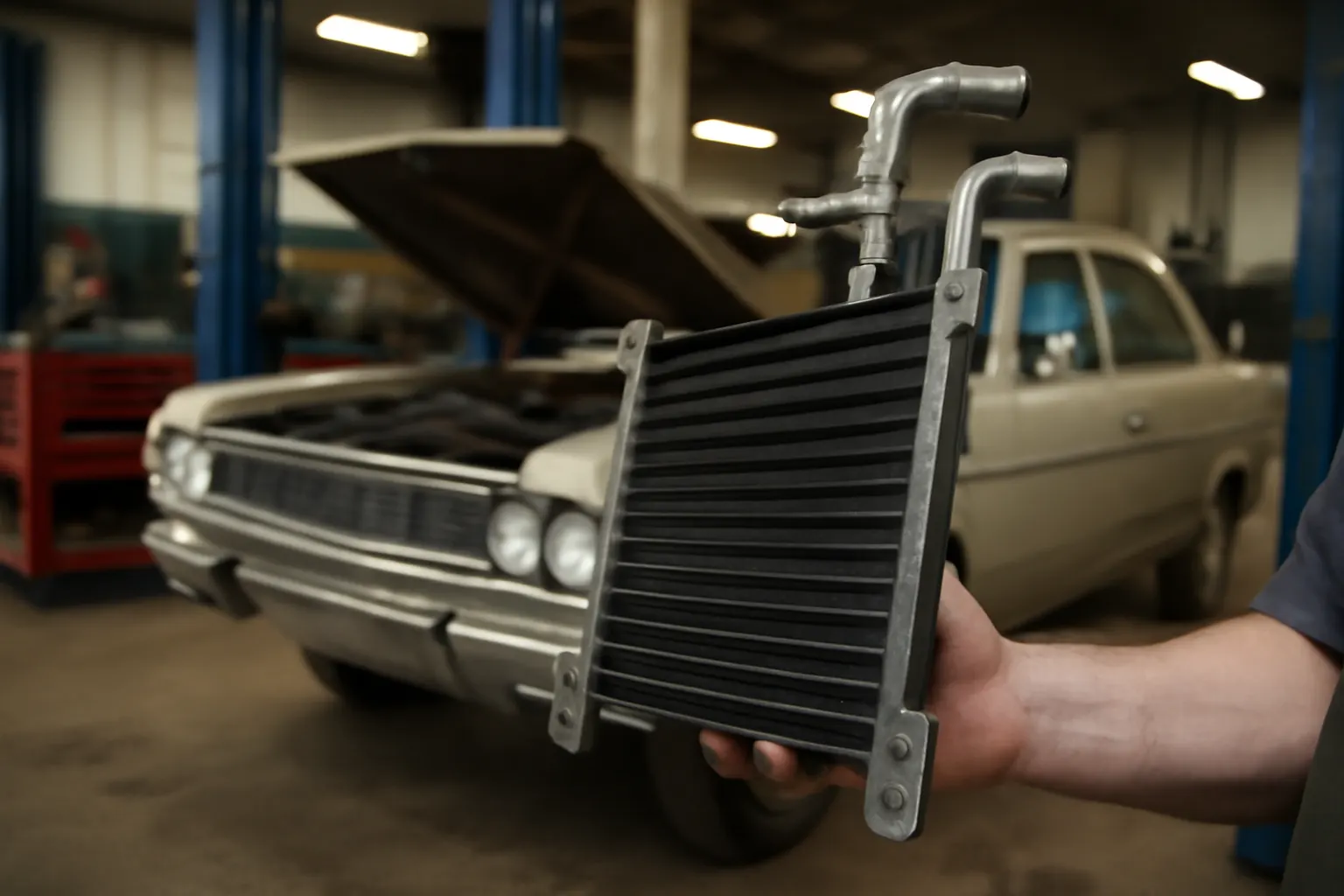
Amc Ambassador Transmission Cooler Evolution
The AMC Ambassador’s automatic transmission cooler evolved in design, materials, and integration from the early 1950s through the last production models in the 1970s. Early models featured basic in-radiator coolers, while later years adopted dedicated external coolers, improved thermal management, and upgraded fittings. Identifying the correct cooler for your year and transmission type is crucial for performance, reliability, and safety. Key Takeaways: 1950s–early 1960s: In-radiator, tube-and-fin coolers; basic steel lines.
Read More
Amc Ambassador Cooler Failure Patterns
Understanding the failure patterns of the AMC Ambassador automatic transmission cooler is essential for maintaining drivetrain longevity and preventing costly transmission repairs. This article delivers a comprehensive, expert-level breakdown of typical cooler failures, diagnostic approaches, and proactive solutions tailored to the AMC Ambassador owner, restorer, or technician. Whether you’re chasing intermittent overheating, unexplained transmission fluid loss, or prepping for a full transmission cooler replacement, this guide is your authoritative resource.
Read More
Classic Amc Automatic Transmission Cooler Fitment
Classic AMC vehicles—especially the Ambassador series—require precise attention to automatic transmission cooler fitment for optimal drivetrain performance, reliability, and longevity. This comprehensive guide delivers a step-by-step fitment and installation reference for owners, restorers, and technicians working with AMC’s classic automatic transmission systems. Whether you’re seeking to maintain originality, improve cooling efficiency, or troubleshoot chronic overheating, this resource details every technical aspect of classic AMC automatic transmission cooler fitment.
View Guide