
Toyota Front Door Handle, Outside
Toyota Front Door Handle, Outside: Selection and Service Guide
When a Toyota’s front door handle fails, it’s often overlooked until daily convenience is disrupted. Understanding what to check, how to compare options, and what evidence supports a quality repair can save time and frustration. This guide explores the unique considerations for selecting and servicing outside front door handles on Toyota vehicles, offering practical steps and evidence-based advice to help you make informed decisions.
Advertisement


Advertisement
More Toyota Front Door Handle, Outside options
Filtering for Toyota • Front Door Handle, OutsideScan nearby Toyota front door handle, outside inventory without leaving this page.
No Data Available
Please check back soon when more inventory is available for this part.
Advertisement
Why Toyota Front Door Handles Deserve a Second Look
It’s easy to take your Toyota’s front door handle for granted—until it sticks, breaks, or refuses to open. Many owners don’t realize how integral this small component is to daily vehicle access and security. While a malfunctioning door handle may seem like a minor inconvenience, it can quickly escalate into a larger problem if ignored, affecting not only ease of entry but also the overall integrity of your vehicle’s door system.
Most drivers are unaware that not all replacement handles are created equal. Toyota models, even within the same generation, often feature subtle differences in handle design, color, and mounting. Overlooking these variations can lead to mismatched parts, improper fitment, or even compromised door function. This makes careful selection and informed comparison crucial, especially when considering salvage or aftermarket options.
Additionally, many Toyota owners may not realize that exterior door handle issues can sometimes signal underlying problems, such as misaligned latches or worn linkage components. Addressing only the visible handle without checking related mechanisms can result in repeated failures. By paying attention to these often-overlooked factors, you can ensure a more reliable and lasting repair, avoiding unnecessary frustration and expense down the line.

What Can Go Wrong With Toyota Front Door Handles?
A faulty outside front door handle on a Toyota can manifest in several ways, from a handle that feels loose or wobbly to one that no longer actuates the latch at all. In some cases, the handle may break off entirely, leaving you unable to open the door from the outside. These symptoms are not just inconvenient—they can also pose safety risks, especially if quick vehicle access is needed in an emergency. Recognizing the early signs of handle wear or failure is the first step toward a successful repair.
The causes of Toyota front door handle issues are varied. Daily use, exposure to the elements, and even minor impacts can contribute to deterioration. Plastic handles, common in many Toyota models, are particularly susceptible to cracking or snapping under stress. Metal handles, while more robust, can suffer from corrosion or binding due to dirt and moisture intrusion. Each material presents its own set of challenges, and the nature of the failure often dictates the best repair approach.
Fitment complexity is another common challenge. Toyota has a history of evolving door handle designs across model years and trim levels. Even within a single model line, there may be differences in mounting points, linkage connections, and exterior finish. This means that a handle from one Camry or Corolla may not be compatible with another from a different year or body style. Without careful verification, it’s easy to end up with a part that looks correct but doesn’t function as intended.
Color matching is a subtle but important consideration, especially for owners concerned with maintaining their vehicle’s appearance. Toyota offers a range of factory paint codes, and even slight variations can be noticeable. Salvage or aftermarket handles may not match perfectly, leading to a patchwork look that detracts from the car’s value. Some owners attempt to repaint handles themselves, but this can yield mixed results if not done with proper materials and techniques.
Underlying mechanical issues can also masquerade as handle problems. For example, a stiff or stuck latch mechanism inside the door can place extra stress on the handle, leading to premature failure. Similarly, worn or misaligned linkage rods may prevent the handle from fully engaging the latch, even if the handle itself is intact. Focusing solely on the exterior part without inspecting these related components can result in repeated repairs and ongoing frustration.
Finally, safety and security concerns should not be underestimated. A malfunctioning outside door handle can compromise your ability to quickly enter or secure your vehicle. In some cases, it may even affect the operation of electronic locking systems or alarm sensors. For these reasons, addressing handle issues promptly and thoroughly is not just a matter of convenience—it’s essential for maintaining your Toyota’s overall safety and usability.
How to Select and Replace a Toyota Front Door Handle
Begin by accurately identifying your Toyota’s year, model, and trim level. This information is essential for selecting the correct outside front door handle, as even small differences can affect fitment. Use your vehicle’s VIN, typically found on the lower left of the windshield or on the registration card, to verify compatibility when searching for replacement parts. Cross-reference this information with reputable parts catalogs or dealership databases to avoid mismatches.
Next, inspect your existing door handle and surrounding area for visible damage. Look for cracks, discoloration, or looseness, and check the handle’s movement for any signs of binding or excessive play. If possible, compare the failed handle to images or diagrams of new or salvage parts to confirm mounting points and linkage connections. Pay special attention to the color and finish, as Toyota offers multiple factory paint codes that may look similar but differ under close inspection.
When sourcing a replacement, consider the pros and cons of new, remanufactured, and salvage parts. New handles typically offer the best fit and finish, but may be more expensive. Salvage handles, taken from another vehicle, can be a cost-effective option if they match your model and color code exactly. Remanufactured or reconditioned handles may offer a balance of price and quality, but verify that any repairs or refurbishing meet your standards for durability and appearance.
Before installation, gather the necessary tools and review a step-by-step removal guide specific to your Toyota model. Many modern Toyotas require partial door panel removal to access the handle’s mounting hardware and linkage rods. Take care to avoid damaging interior trim or weather seals during disassembly. Photographing the process or labeling fasteners can help ensure a smooth reinstallation.
Test the door latch and linkage mechanisms while the handle is removed. Operate the latch manually to check for stiffness or misalignment, and inspect linkage rods for wear or bending. Lubricate moving parts as needed, and address any underlying issues before installing the new handle. This step can prevent premature failure and ensure smooth operation after the repair is complete.
Install the replacement handle by reversing the removal steps, taking care to align mounting points and reconnect linkage rods securely. Before fully reassembling the door panel, test the handle’s operation from both inside and outside the vehicle. Confirm that the latch engages and releases smoothly, and that electronic locks or alarm sensors function as intended. Make any necessary adjustments before final assembly.
After installation, inspect the handle and surrounding area for proper fit and finish. Check that the handle sits flush with the door and that the color and texture match adjacent panels. If using a salvage or repainted handle, evaluate the quality of the finish in different lighting conditions. Address any cosmetic concerns before completing the repair, as mismatched or poorly finished handles can detract from your Toyota’s appearance and resale value.
Finally, document the repair for your records. Keep receipts, part numbers, and photographs of the work performed, as this information can be valuable for future maintenance or resale. If you used a professional shop, request a detailed repair order listing the parts used, labor performed, and any warranties or guarantees provided. This documentation not only helps track your vehicle’s service history but also supports your rights as a consumer in the event of future issues.
What the Evidence and Official Guidance Show
The National Highway Traffic Safety Administration (NHTSA) provides a comprehensive process for identifying and addressing vehicle safety issues, including those related to exterior door handles. According to their official recall guidance, owners can use their vehicle’s VIN to check for open recalls specific to their Toyota. This process helps determine whether a handle-related defect has been formally recognized and whether a manufacturer-provided remedy is available. However, a recall lookup does not confirm that a particular vehicle is affected or that a specific handle will fit another model; it is a tool for identifying known safety issues and ensuring that repairs are completed when necessary NHTSA: Vehicle Recalls.
NHTSA further explains that most safety recalls are initiated by manufacturers and monitored by the agency to ensure effective remedies. If a Toyota front door handle is subject to a recall, owners are notified by mail and instructed to contact their dealership for a free repair or replacement. This process is designed to address safety-related defects, not cosmetic or wear-and-tear issues. Owners should regularly check for recalls using their VIN, especially when purchasing used vehicles or salvage parts, to avoid installing components that may be subject to future safety actions NHTSA: Vehicle Recalls.
The Federal Trade Commission (FTC) offers additional consumer guidance on auto repairs, emphasizing the importance of obtaining a written repair estimate and comparing shop recommendations with the manufacturer’s maintenance schedule. For Toyota door handle repairs, this means requesting a detailed estimate that specifies the part type (new, salvage, or remanufactured), labor charges, and any associated work, such as linkage inspection or latch lubrication. The FTC also advises consumers to seek a second opinion for complex repairs and to verify a technician’s experience with their specific make and model FTC: Auto Repair Basics.
The FTC distinguishes between new, remanufactured, and salvage parts, noting that salvage components are taken from another vehicle without alteration. This distinction is important when selecting a Toyota front door handle, as salvage parts may offer a cost-effective solution but require careful verification of compatibility and condition. The FTC does not guarantee the fitment or performance of any particular part, so consumers should inspect salvage handles for wear, damage, or mismatched finishes before installation FTC: Auto Repair Basics.
Neither NHTSA nor the FTC provides technical specifications or service intervals for Toyota front door handles. Instead, they recommend following the manufacturer’s maintenance schedule and consulting the owner’s manual for model-specific guidance. This underscores the importance of using reputable sources and official diagrams when selecting and installing replacement handles. Without direct evidence of a widespread defect or recall, owners must rely on careful comparison and documentation to ensure a successful repair.
Official guidance also highlights the importance of documentation. The FTC recommends keeping a completed repair order that lists the work performed, parts used, and odometer readings. This practice is especially valuable for Toyota owners who may need to prove the quality of a repair or the provenance of a replacement handle when selling the vehicle or addressing future issues. Detailed records support consumer rights and facilitate warranty claims or dispute resolution if problems arise FTC: Auto Repair Basics.
In summary, the available evidence supports a methodical approach to Toyota front door handle replacement. Use your VIN to check for recalls, obtain written estimates and documentation, and carefully inspect any salvage or aftermarket parts for compatibility and condition. While official sources do not provide detailed technical instructions for every model, they offer clear guidance on consumer rights, documentation, and the importance of using verified parts and procedures. This evidence-based approach minimizes risk and helps ensure a reliable, lasting repair.
Take the Next Step Toward Reliable Toyota Door Access
If your Toyota’s front door handle is showing signs of wear or failure, don’t wait for the problem to worsen. Start by confirming your vehicle’s exact year, model, and color code, and use your VIN to check for any open recalls. Compare new, salvage, and remanufactured options, and insist on written documentation for any repair or part purchase. For more detailed removal and fitment guidance, explore our dedicated resources on Toyota Front Door Handle, Outside and related service topics. Taking these steps now will help restore convenience, security, and peace of mind to your daily drive.
References
- NHTSA: Vehicle Recalls
- FTC: Auto Repair Basics
References
- NHTSA: Vehicle Recalls - NHTSA, accessed 2026-11-02
- FTC: Auto Repair Basics - FTC, accessed 2026-11-02
Related Guides & Articles

Toyota Front Door Handle Removal
Removing and replacing the exterior front door handle on your Toyota sedan or SUV is a highly achievable task for most experienced DIYers and professional technicians. This guide provides a comprehensive, step-by-step approach to safely and efficiently remove and replace the outside front door handle, with a focus on OEM fitment, correct tool usage, torque specifications, and troubleshooting.
View Guide
Toyota Front Door Handle Symptoms
Front door handles are a crucial part of any Toyota vehicle, providing both security and convenience. When these components start to fail, the symptoms can range from minor annoyances to significant safety risks. This guide covers the most common signs of a failing Toyota front door handle, how to accurately diagnose mechanical and electronic issues, and practical steps you can take before considering a replacement.
Read More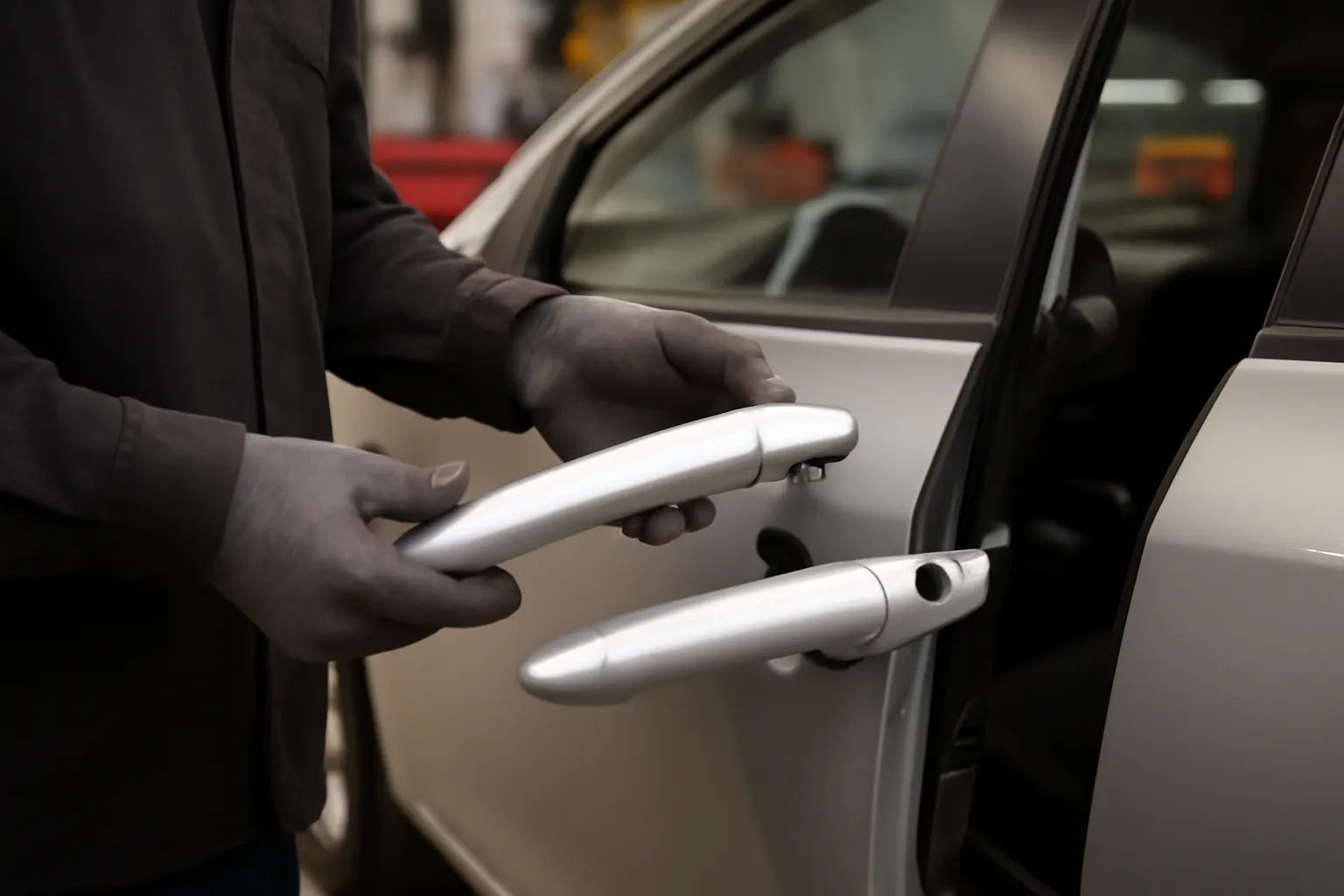
Toyota Handle Color Matching
When replacing a Toyota front door handle, outside, matching the handle’s color and ensuring Smart Key compatibility are crucial steps that prevent costly fitment and installation mistakes. A mismatched handle stands out visually, can reduce resale value, and—if the Smart Key system is ignored—may render keyless entry or security features inoperative. This guide details the essentials of color matching, Smart Key sensor compatibility, and how to avoid common pitfalls when sourcing Toyota exterior handles.
Read MoreToyota Door Handle Fitment Evolution
Toyota’s outside front door handles have evolved significantly over the decades, impacting fitment, durability, and replacement strategies across their global vehicle lineup. This guide delivers a comprehensive, practical overview of how Toyota’s door handle platforms have changed, with a focus on model-specific fitment, part number supersession, and what every technician, enthusiast, or parts buyer needs to know to avoid costly mistakes.
View Guide