
Toyota Front Axle Shaft
Toyota Front Axle Shaft: Fitment, Failure, and Expert Sourcing Guide
Toyota vehicles are globally recognized for their reliability, but even these well-engineered machines rely heavily on critical driveline components such as the front axle shaft. The front axle shaft—sometimes referred to as the CV shaft or front drive shaft—transfers rotational force from the transaxle to the wheels, enabling Toyota’s famed all-wheel and front-wheel drive systems to deliver optimal performance, safety, and efficiency. Whether you operate a Toyota Tacoma, 4Runner, Highlander, RAV4, Camry, or other model, the integrity of the front axle shaft directly impacts handling, fuel efficiency, and long-term durability.
Many Toyota owners and even seasoned technicians may overlook the early signals of front axle shaft issues. Supersession and part number changes are common in Toyota’s OEM and aftermarket catalogs, making it challenging to ensure precise part fitment. Furthermore, Toyota frequently updates shaft designs for different model years, engine options, and drivetrain configurations, leading to hidden compatibility pitfalls. Scarcity of genuine Toyota front axle shafts, especially for older or specialty models, can increase repair delays and costs. Diagnostic ambiguity is another concern—symptoms like vibration, clicking sounds, or grease leakage may be traced to other drivetrain components, resulting in misdiagnosis and unnecessary replacement of related parts.
Toyota front axle shafts exhibit several model-specific failure patterns. On high-mileage vehicles, worn CV joints, split boots, or corrosion at the splines are common. For certain 4WD models like the Tacoma and 4Runner, off-road use accelerates wear and increases the risk of water ingress, leading to premature joint failure. Installation challenges arise due to tight clearances, press-fit stubs, and the need for precise torqueing to Toyota’s specifications. Incorrect installation can result in axle pop-out, differential leaks, or ABS sensor interference. Compatibility risks multiply with Toyota’s frequent running changes to hub splines, shaft lengths, and ABS ring tooth counts, making cross-year or cross-platform swaps particularly risky without verified supersession data.
OEM Toyota front axle shafts are engineered to meet strict durability and performance standards, leveraging advanced materials and manufacturing techniques. To ensure proper fitment and longevity, technicians should always reference the latest Toyota part number supersessions and cross-check vehicle build codes. Detailed diagnostic steps—such as checking for axial play, inspecting CV boots for tiny splits, and confirming grease type—are essential for accurate failure identification. For challenging installations, use a torque wrench calibrated to Toyota’s specification and consult a fitment guide such as Toyota Front Axle Shaft Installation Guide. For broader repair context and diagnostic procedures, review our Front Axle Shaft Diagnosis Article. When sourcing, prioritize OEM or trusted aftermarket shafts with clear warranty coverage and proven material specs. For rare or discontinued Toyota models, work with suppliers familiar with global Toyota part sourcing and supersession lookups.
Advertisement
Showing 0–0 of 0 Toyota front axle shaft parts
No Toyota Front Axle Shaft Found
We're currently updating our inventory for Toyota front axle shaft.
Please check back soon or contact us for specific part availability.
Advertisement
More Toyota Front Axle Shaft options
Filtering for Toyota • Front Axle ShaftScan nearby Toyota front axle shaft inventory without leaving this page.
No Data Available
Please check back soon when more inventory is available for this part.
Advertisement
Expert Toyota Front Axle Shaft Selection and AutoPartEx Advantage
For Toyota Front Axle Shaft, long-term reliability depends on verified fitment, periodic inspection of wear components, and disciplined preventive maintenance. Confirm part numbers by VIN, check supersession notes, and compare mounting points before installation. Review service bulletins and historical failure patterns to prioritize high-risk systems, especially electrical connectors, seals, cooling components, and drivetrain interfaces.
Toyota Front Axle Shaft: Practical Service and Sourcing Info
Repair Cost Range
OEM Toyota front axle shaft: $250–$650 per side. Aftermarket: $90–$400. Labor: $200–$400 per side at professional shops.
Service Timeframe
Front axle shaft replacement on Toyota vehicles typically takes 1.5–3.5 hours, depending on model and technician experience.
Technical Installation Tips
Use a calibrated torque wrench set to Toyota’s spec (177–216 Nm for most platforms). Replace the axle nut and inspect both CV boots. Confirm ABS ring compatibility and perform a post-repair road test.
Model Fitment Concerns
Toyota regularly updates axle shaft part numbers, spline counts, and ABS ring specs. Always use VIN-based lookup and consult a supersession chart before sourcing or installing a replacement shaft.
References
- Vehicle, Car Seat, Tire, and Equipment Recalls - National Highway Traffic Safety Administration, accessed 2024-06-10Primary source for recall data and real-world service patterns involving Toyota front axle shaft failures.
- Fuel Efficiency - United States Department of Energy, accessed 2024-06-10Technical grounding for drivetrain efficiency losses and the impact of axle shaft condition on fuel economy.
- Materials Technologies - United States Department of Energy, accessed 2024-06-10Authoritative source on materials selection and its impact on axle shaft performance and longevity.
Related Guides & Articles

Toyota Front Axle Install Guide
Replacing or servicing the front axle shaft on your Toyota truck or SUV is a critical repair that restores drivetrain integrity, ensures safe operation, and can dramatically improve ride quality. This comprehensive AutoPartEx guide delivers a step-by-step process for removing and installing Toyota front axle shafts, including required tools, torque specifications, and essential safety tips. Whether you’re a seasoned technician or a dedicated DIYer, this guide arms you with the practical expertise to complete the job efficiently and correctly.
View Guide
Front Axle Shaft Diagnosis Article
Front axle shaft problems in Toyota vehicles most often present as clunking or clicking noises during turns, vibrations under acceleration, and ABS warning lights or codes. These symptoms can indicate: Worn or damaged CV joints Bent or out-of-balance axle shafts Failing axle shaft bearings or seals ABS tone ring damage or contamination Many technicians and DIYers fall into the trap of replacing front axle shafts based solely on noise or vibration, only to find the problem persists.
Read More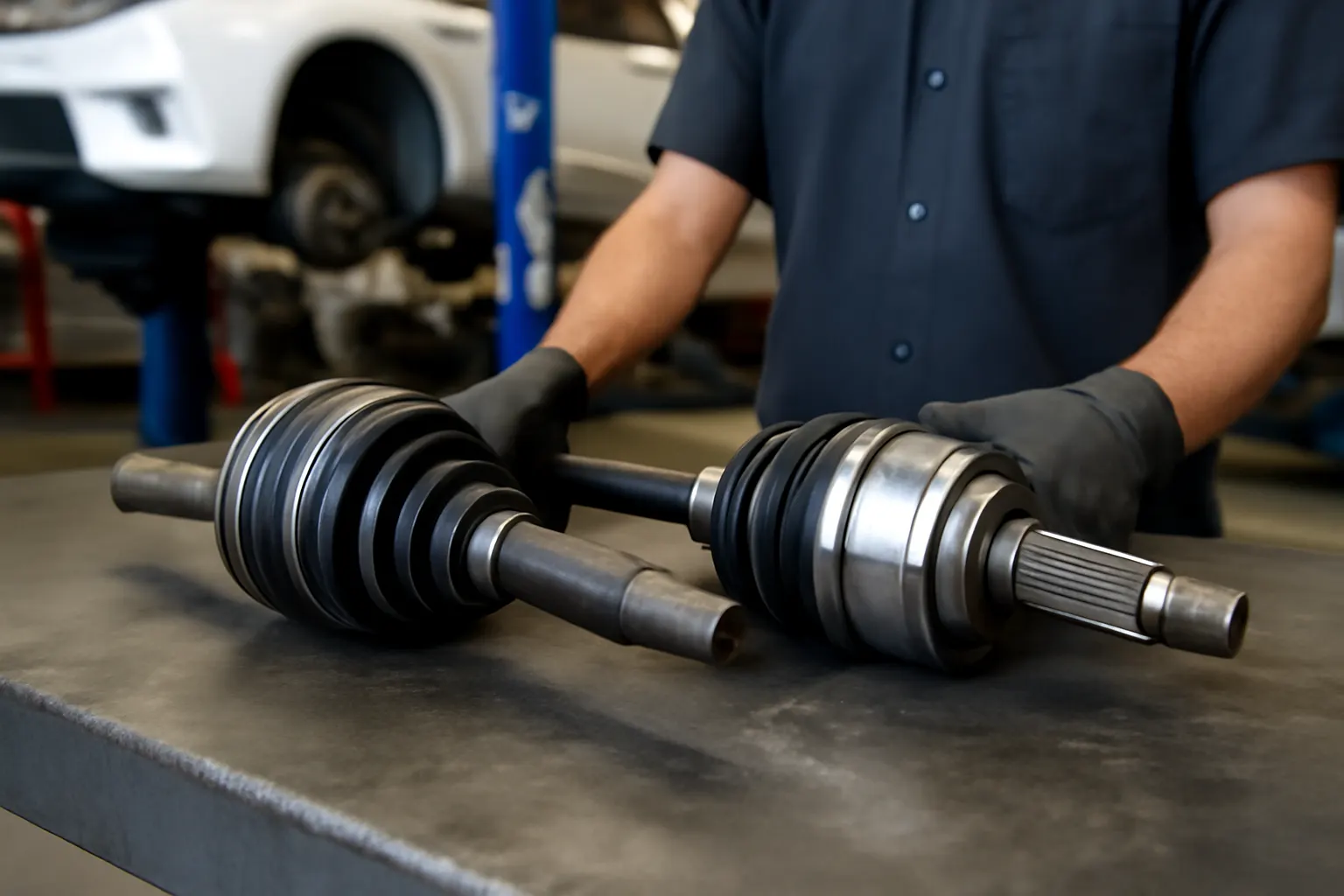
Toyota Vs Aftermarket Axle Shafts
When it comes to replacing a front axle shaft on your Toyota, the decision between genuine Toyota parts and aftermarket alternatives is pivotal. Genuine Toyota front axle shafts are engineered for superior fitment, material integrity, and long-term durability—performing reliably under harsh conditions where many aftermarket options fall short. This guide details why OE Toyota axle shafts consistently outperform most aftermarket counterparts, and how to make the right sourcing decision for your vehicle’s safety, performance, and longevity.
Read More
Toyota Axle Shaft Supersession
When replacing a Toyota front axle shaft, ensuring you have the correct, most up-to-date part number is critical for fitment, safety, and long-term reliability. This comprehensive guide delivers a detailed Toyota axle shaft part number supersession chart by model and year, highlights the most common pitfalls—including VIN-based verification mistakes—and provides a step-by-step methodology for sourcing, diagnosing, and installing the right axle shaft for your vehicle.
View Guide