
Buick Amplifier/Radio
Understanding Buick Amplifier/Radio Replacement and Selection
Many Buick owners overlook the subtle signs of amplifier or radio issues until sound quality drops or features stop working. Knowing what to watch for and how to approach replacement can save time and money. This guide covers practical steps, evidence-based advice, and what to expect when sourcing a replacement amplifier/radio for your Buick, helping you make informed decisions and avoid common pitfalls.
Advertisement
Advertisement
More Buick Amplifier/Radio options
Filtering for Buick • Amplifier/RadioScan nearby Buick amplifier/radio inventory without leaving this page.
No Data Available
Please check back soon when more inventory is available for this part.
Advertisement
Why Sound System Performance Deserves a Closer Look
Car owners often focus on engine health or exterior appearance, but the audio system is just as integral to the driving experience. In Buicks, the amplifier/radio unit not only powers entertainment but also integrates with vehicle alerts and hands-free features. When these components underperform, it can be more than just an inconvenience—it may affect communication and safety. Yet, many drivers dismiss minor audio glitches, missing early warning signs that could prevent more costly repairs down the road.
Unlike obvious mechanical failures, audio system issues can be subtle. A gradual decline in sound quality, intermittent speaker output, or unresponsive radio controls might not seem urgent. However, these symptoms often point to underlying problems within the amplifier or radio unit itself. Ignoring them can lead to a complete loss of audio functionality, which is especially inconvenient if your Buick’s system also manages navigation prompts or vehicle alerts.
Another often-overlooked aspect is the complexity of modern Buick audio systems. With integrated amplifiers and radios, diagnosing the true source of a problem requires more than just swapping fuses or speakers. Understanding the role of the amplifier/radio unit and its interaction with other vehicle electronics is crucial for effective troubleshooting and replacement. This foundational awareness sets the stage for a more informed approach to audio repairs and upgrades.

Common Issues and Diagnostic Challenges with Buick Amplifier/Radio Units
Buick amplifier/radio units can develop problems that manifest in several ways, including distorted audio, loss of sound in one or more speakers, or total system failure. These symptoms may be intermittent at first, making them difficult to diagnose without a systematic approach. Owners sometimes attribute these issues to aging speakers or simple wiring faults, but the root cause often lies within the amplifier or radio module itself.
The integration of amplifiers and radios in modern Buicks means that a single malfunctioning component can disrupt multiple functions. For example, a failing amplifier may not only affect music playback but also mute navigation prompts or disable Bluetooth hands-free calling. This interconnectedness complicates troubleshooting, as technicians must determine whether the fault is isolated to the amplifier/radio or if it involves other vehicle modules.
Another challenge is that many Buick models use proprietary connectors and mounting systems for their audio components. This limits the interchangeability of parts and makes it essential to identify the exact model and year when sourcing replacements. Attempting to install a non-matching amplifier/radio can result in compatibility issues, ranging from non-functional controls to electrical faults that may trigger warning lights or drain the battery.
Diagnostic procedures for audio issues typically begin with basic checks—verifying fuses, inspecting wiring harnesses, and confirming speaker integrity. However, when these steps fail to resolve the problem, specialized diagnostic tools may be required to communicate with the vehicle’s onboard systems. These tools can read error codes and provide data on the health of the amplifier/radio unit, helping to pinpoint the source of the malfunction.
It’s also important to recognize that not all audio system failures are due to hardware defects. Software glitches, firmware updates, or even power surges during battery replacement can disrupt the operation of the amplifier/radio. In some cases, a reset or reprogramming procedure may restore functionality, while in others, replacement is the only viable solution.
Finally, the cost and complexity of diagnosing and repairing amplifier/radio issues can vary widely. Some problems may be resolved with a simple connector cleaning, while others require full replacement of the unit. Given these variables, it’s crucial for owners to work with technicians experienced in Buick audio systems and to obtain clear, written repair estimates before proceeding, as advised by the FTC’s general repair guidance FTC: Auto Repair Basics.
Practical Steps for Selecting and Replacing a Buick Amplifier/Radio
When faced with a malfunctioning amplifier/radio, the first step is to accurately identify the affected component. Begin by consulting your Buick’s owner manual to locate the audio system’s fuse and relay diagrams. Check these components for blown fuses or loose connections, as these are common causes of sudden audio failure. If the basic checks do not resolve the issue, proceed to inspect the wiring harnesses for signs of corrosion or damage.
If your Buick’s audio system remains non-functional after these preliminary checks, consider seeking a professional diagnostic assessment. According to the FTC, it’s wise to get a written repair estimate that details the condition to be repaired, required parts, and anticipated labor charges FTC: Auto Repair Basics. For expensive or complicated repairs—such as those involving integrated amplifier/radio units—a second opinion can provide valuable perspective and help avoid unnecessary costs.
When replacement is necessary, sourcing the correct amplifier/radio unit is critical. Buick models often require exact part number matches due to unique connectors and software coding. Salvage parts, such as those pictured in the seller photograph below, can offer a cost-effective solution if new or remanufactured units are unavailable. However, it’s essential to confirm compatibility with your vehicle’s year, model, and trim level before purchase.
Ask the seller for the donor vehicle’s VIN or part number, and compare it to your own Buick’s specifications. Some sellers provide detailed photographs, like the example below, which can help you visually verify mounting points and connector types. If possible, request a return policy or warranty in writing, as there is no standard coverage on used or salvage parts FTC: Auto Repair Basics.
Installation of the replacement amplifier/radio should follow the manufacturer’s recommended procedures. Disconnect the vehicle’s battery before starting work to prevent electrical shorts or accidental airbag deployment. Carefully remove trim panels and mounting hardware, keeping track of all fasteners. When installing the new unit, ensure all connectors are fully seated and that no wires are pinched or damaged during reassembly.
After installation, reconnect the battery and test the audio system thoroughly. Check for sound output from all speakers, proper operation of radio controls, and functionality of integrated features such as Bluetooth or navigation prompts. If any functions are missing, consult the owner manual or a qualified technician to determine if additional programming or software updates are required.
Keep a detailed record of the repair, including the part number of the replacement unit, installation steps taken, and any post-installation issues. This documentation will be valuable if future problems arise or if you need to demonstrate proper maintenance when selling the vehicle. Always retain receipts and written estimates, as recommended by the FTC, to clarify what work was performed and what parts were used.
Finally, consider registering your vehicle and checking for open recalls related to the audio system. The NHTSA provides a VIN lookup tool that can identify unrepaired recalls for your specific Buick, though this does not guarantee that your vehicle is affected or that any amplifier/radio recall exists NHTSA: Vehicle Recalls. Staying informed about manufacturer communications can help you address potential safety issues promptly.
Evidence and Guidance from Published Sources
The Federal Trade Commission’s official guidance on auto repair provides several key recommendations for consumers facing audio system issues. The FTC advises obtaining a written repair estimate that clearly identifies the condition to be repaired, the parts needed, and anticipated labor charges. This is especially important for complex repairs like amplifier/radio replacement, where costs can vary significantly. The FTC also suggests seeking a second opinion for expensive or complicated repairs, ensuring that the technician has experience with your specific make and model. These steps help protect consumers from unnecessary expenses and ensure that repairs are performed correctly FTC: Auto Repair Basics.
The FTC further distinguishes between new, remanufactured, and salvage parts, noting that salvage parts—like those often used for amplifier/radio replacements—are sourced from other vehicles without alteration. While salvage parts can offer significant savings, the FTC cautions that there is no standard warranty on repairs or parts. Consumers are encouraged to understand the coverage offered by the seller and to get it in writing. This guidance is not specific to Buick or any particular radio/amplifier model, but it establishes best practices for all vehicle owners considering used components FTC: Auto Repair Basics.
When it comes to recalls and safety-related defects, the National Highway Traffic Safety Administration (NHTSA) provides a robust framework for consumers to check for open recalls. By entering a VIN into the NHTSA database, owners can determine whether their specific vehicle has any unrepaired recalls, including those related to audio systems. However, the NHTSA emphasizes that a recall lookup does not prove that a particular vehicle or part is defective—only that a recall has been issued for certain vehicles and that a remedy is available if applicable NHTSA: Vehicle Recalls.
The NHTSA’s recall process involves several steps, from initial complaints and investigations to the issuance of recalls and monitoring of repair completion rates. Manufacturers are required to notify owners of affected vehicles by mail and to provide a remedy—typically repair, replacement, or refund—at no cost. For Buick owners, this means that if an amplifier/radio-related recall is issued, the manufacturer will communicate directly and provide instructions for obtaining the necessary repair. However, the NHTSA database does not list recalls more than 15 years old or those already completed, so it is important to check regularly for updates NHTSA: Vehicle Recalls.
Neither the FTC nor NHTSA sources provide technical specifications, service intervals, or failure rates for Buick amplifier/radio units. They do not establish that any particular Buick model or year is more prone to audio system failures, nor do they guarantee the fitment or performance of specific replacement parts. Instead, these sources focus on consumer rights, repair best practices, and the importance of verifying part compatibility and recall status before proceeding with repairs.
In the absence of vehicle-specific technical bulletins or recall notices, Buick owners should rely on detailed part comparison and evidence-gathering steps. This includes matching part numbers, requesting photographs of the actual component, and confirming compatibility with the seller. Salvage yards and online parts suppliers often provide donor vehicle information, which can be cross-referenced with your own Buick’s details to reduce the risk of purchasing an incompatible part. This process is supported by the FTC’s advice to compare shop recommendations with the manufacturer’s maintenance schedule and to ask why extra service is proposed FTC: Auto Repair Basics.
Ultimately, the most reliable approach to amplifier/radio replacement is a combination of careful diagnosis, thorough research, and adherence to published consumer protection guidelines. While no source guarantees a specific outcome for every Buick audio repair, following these steps increases the likelihood of a successful and cost-effective solution. Owners who document their repair process, verify part compatibility, and stay informed about recalls are better equipped to maintain their vehicle’s audio performance and value.
Take the Next Step Toward Reliable Audio Performance
If your Buick’s amplifier or radio is underperforming, don’t wait for a complete failure before taking action. Start by reviewing your owner manual, checking for blown fuses or loose connections, and documenting any symptoms. Use the NHTSA VIN lookup tool to check for open recalls, and consult reputable sellers for compatible replacement parts. Always request written repair estimates and compare options before committing to a purchase or repair. By following these evidence-based steps, you can restore your Buick’s audio system with confidence and avoid unnecessary expenses.
References
- NHTSA: Vehicle Recalls
- FTC: Auto Repair Basics
References
- NHTSA: Vehicle Recalls - NHTSA, accessed 2026-11-01
- FTC: Auto Repair Basics - FTC, accessed 2026-11-01
Related Guides & Articles
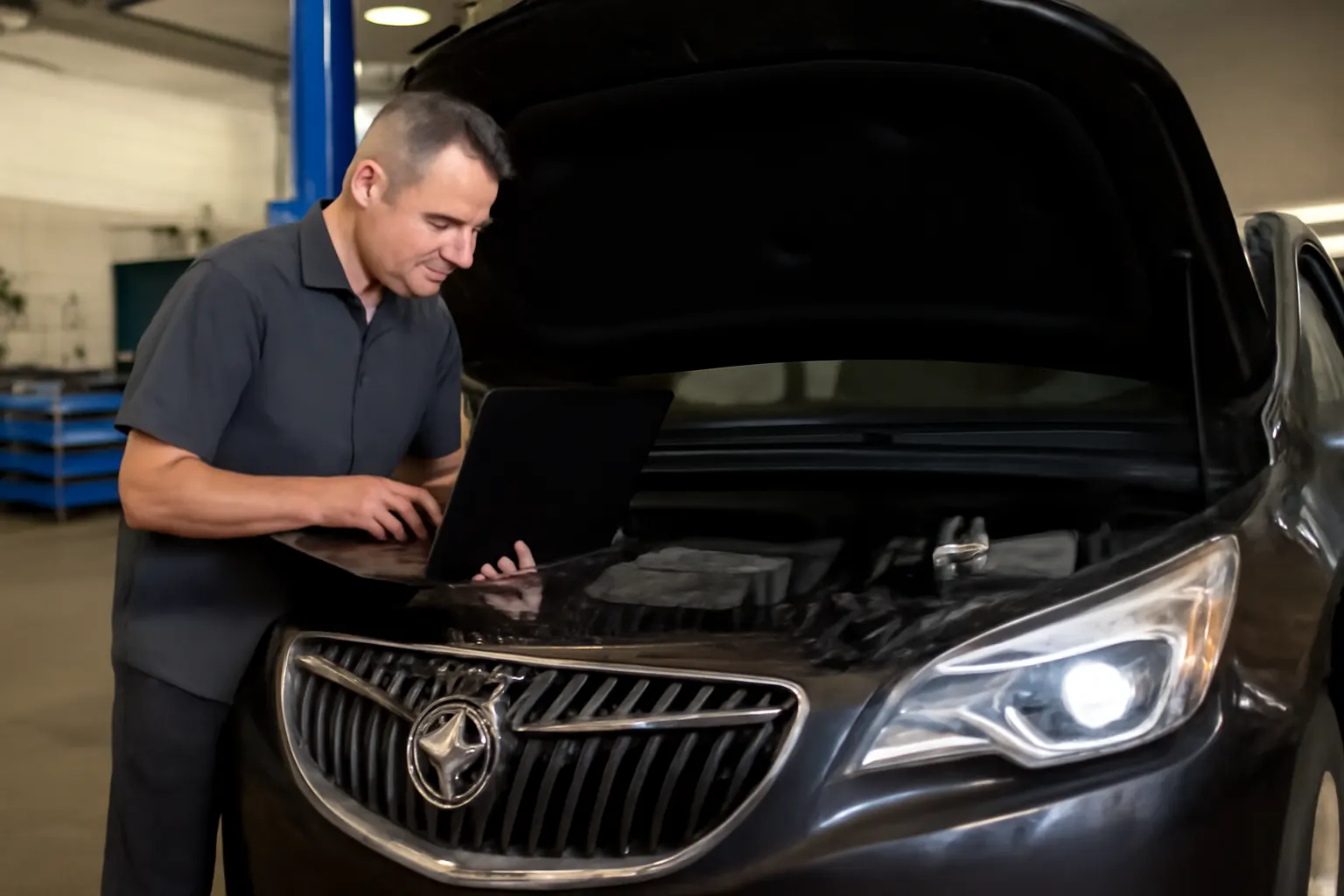
Essential Buick Maintenance Intervals
For Buick owners seeking maximum reliability, safety, and value, understanding essential maintenance intervals is the single most important step you can take. Whether you drive an Encore, Enclave, Regal, or any Buick model, adhering to recommended service schedules keeps your vehicle running smoothly, preserves resale value, and helps avoid costly repairs. This comprehensive guide from AutoPartEx details the key Buick maintenance intervals, common service items, and expert tips for cost-effective ownership.
Read More
Inspecting and Repairing Buick Brake Calipers and Related Wheel Components
Quick links: Buick Wheel (display w image). A seized or malfunctioning brake caliper can cause noticeable issues such as a pulling or shaking steering wheel. One way to detect this is by checking the temperature of the brakes after driving; if one side is significantly hotter, it may indicate a problem with that caliper. According to 1A Auto, you can check these components yourself and possibly replace them, but replacing the entire brake caliper is often easier and more common.
Read More
Diagnosing and Fixing Common Buick Wheel Problems
Quick links: Buick Wheel (display w image). Wheel wobble is a noticeable movement or shaking of the wheel while driving, which can be unsettling and may indicate an underlying issue. According to 1A Auto, if the wheel is wobbling, the cause might be a defective or noisy wheel bearing. This defect in the bearing can cause the wheel to move irregularly, affecting the vehicle's stability and ride quality.
Read More
Sourcing Rare Buick Parts: Pro Tips
Locating, verifying, and safely installing rare or discontinued Buick parts is a specialized skill that separates seasoned technicians from casual enthusiasts. Whether you’re restoring a classic Riviera, maintaining a dependable LeSabre, or keeping a Regal GS on the road, sourcing the right part is critical for both safety and authenticity.
Read More