
AMC Cab
AMC Cab Parts – OEM Fitment & Sourcing Guide | AutoPartEx
Explore the technical landscape of AMC cab components—essential for restoration, repair, or customization of classic AMC vehicles. The cab is more than just a shell: it’s the structural and ergonomic foundation for occupant safety, comfort, and vehicle identity. AMC’s diverse model history, spanning from the Rambler to the Eagle, means cab assemblies and subcomponents require exacting fitment and material insight. This page provides a focused resource for sourcing, diagnosing, and restoring AMC cab parts with confidence.
Owners and restorers of AMC vehicles often overlook several hidden challenges when sourcing cab parts. Supersession issues are widespread due to AMC’s defunct status and the cross-branding of cab assemblies between AMC, Jeep, and Eagle lines. Many AMC cab components are no longer available as new OEM, leading to a market of reproduction, NOS (new old stock), and reconditioned parts—each with varying quality standards. Fitment nuances, such as model-year changes and mid-cycle updates, can mean that even parts with identical outward appearance may have internal structural or mounting differences. Scarcity is a growing concern, as even salvageable cabs or replacement panels are becoming rarer, driving up cost and lead times. Diagnostic challenges also arise: subtle cab misalignments can result in water leaks, wind noise, and diminished crashworthiness, yet these symptoms are often mistaken for less critical cosmetic issues.
AMC cabs present a unique set of failure modes and compatibility pitfalls. Corrosion is a primary enemy; AMC’s body metal composition and seam-sealing methods from the 1960s-1980s are prone to rust, especially in floor pans, rocker panels, and cab corners. Vintage adhesives and weld points deteriorate, leading to structural flex, door alignment issues, and compromised safety in collisions. Installation problems often stem from the non-interchangeability of cab mounts, seat tracks, and dashboard anchor points across AMC model families—even when donor vehicles seem similar. When retrofitting or repairing, mismatched substructures can dramatically increase labor time, while missing or superseded part numbers complicate the sourcing process. Compatibility risks are amplified by aftermarket reproduction parts with unspecified steel gauges, incorrect mounting hole patterns, or inconsistent surface treatments, often requiring skilled modification during installation.
A successful AMC cab restoration or repair project demands an OEM-centric fitment strategy. Begin with a detailed VIN and model-year decode to pinpoint the exact cab variant required—this eliminates costly misorders and installation dead-ends. For diagnostics, assess the integrity of cab mounts, sills, and cross-members using both visual inspection and tap-testing for hidden corrosion. Leverage detailed technical guides like AMC Cab Restoration Guide for step-by-step cab disassembly, welding, and refitting techniques, and consult our AMC Cab Fitment Cross-Reference for model-specific nuances on AMC cab compatibility. For sourcing, prioritize original AMC part numbers and cross-reference with Jeep and Eagle interchange lists where applicable. When using reproduction panels, verify steel gauge and mounting geometry before purchase. AutoPartEx provides curated access to trusted NOS and OEM-equivalent cab parts, with expert support to help you navigate AMC’s unique fitment challenges.
Advertisement
No AMC Cab Found
We're currently updating our inventory for AMC cab.
Please check back soon or contact us for specific part availability.
Advertisement
More AMC Cab options
Filtering for AMC • CabScan nearby AMC cab inventory without leaving this page.
No Data Available
Please check back soon when more inventory is available for this part.
Advertisement
Expert AMC Cab Sourcing: Technical Precision and Real-World Results
For AMC Cab, long-term reliability depends on verified fitment, periodic inspection of wear components, and disciplined preventive maintenance. Confirm part numbers by VIN, check supersession notes, and compare mounting points before installation. Review service bulletins and historical failure patterns to prioritize high-risk systems, especially electrical connectors, seals, cooling components, and drivetrain interfaces.
AMC Cab Replacement: Practical Facts
Labor Time Estimate
Professional AMC cab restoration or replacement typically requires 15–30 labor hours, depending on rust severity, model, and panel availability.
Repair Cost Range
Total costs for AMC cab work range from $2,500 for minor repairs to $7,000+ for full replacement—including labor, materials, and paint.
Service Timeframe
Expect project durations from two weeks (minor patching) up to several months (complete cab swap and finish), subject to part sourcing and shop schedule.
Fitment Verification Steps
Decode VIN/build date, cross-reference model-year interchange charts, and physically measure cab mounts and panel geometry to within 3 mm of OEM spec.
References
- Vehicle, Car Seat, Tire, and Equipment Recalls - National Highway Traffic Safety Administration, accessed 2024-06-01Reference for AMC model safety, recall, and manufacturing changes affecting cab structure.
- Materials Technologies - United States Department of Energy, accessed 2024-06-01Source for steel gauge, body composition, and corrosion protection evolution in AMC cab assemblies.
- Fuel Efficiency - United States Department of Energy, accessed 2024-06-01Covers AMC’s transition to lighter cab materials for fuel efficiency in late 1970s–1980s models.
Related Guides & Articles

Amc Cab Restoration
Restoring the cab of a classic AMC vehicle centers on identifying structural and cosmetic issues, sourcing the right replacement panels or patch materials, and executing repairs according to safety and fitment standards. The process typically includes: Diagnosing rust, previous repairs, and accident damage. Selecting OEM or high-quality reproduction panels. Prepping and welding new or repaired sections. Ensuring cab alignment, fit, and finish. Verifying safety and compliance per NHTSA and SAE standards.
View Guide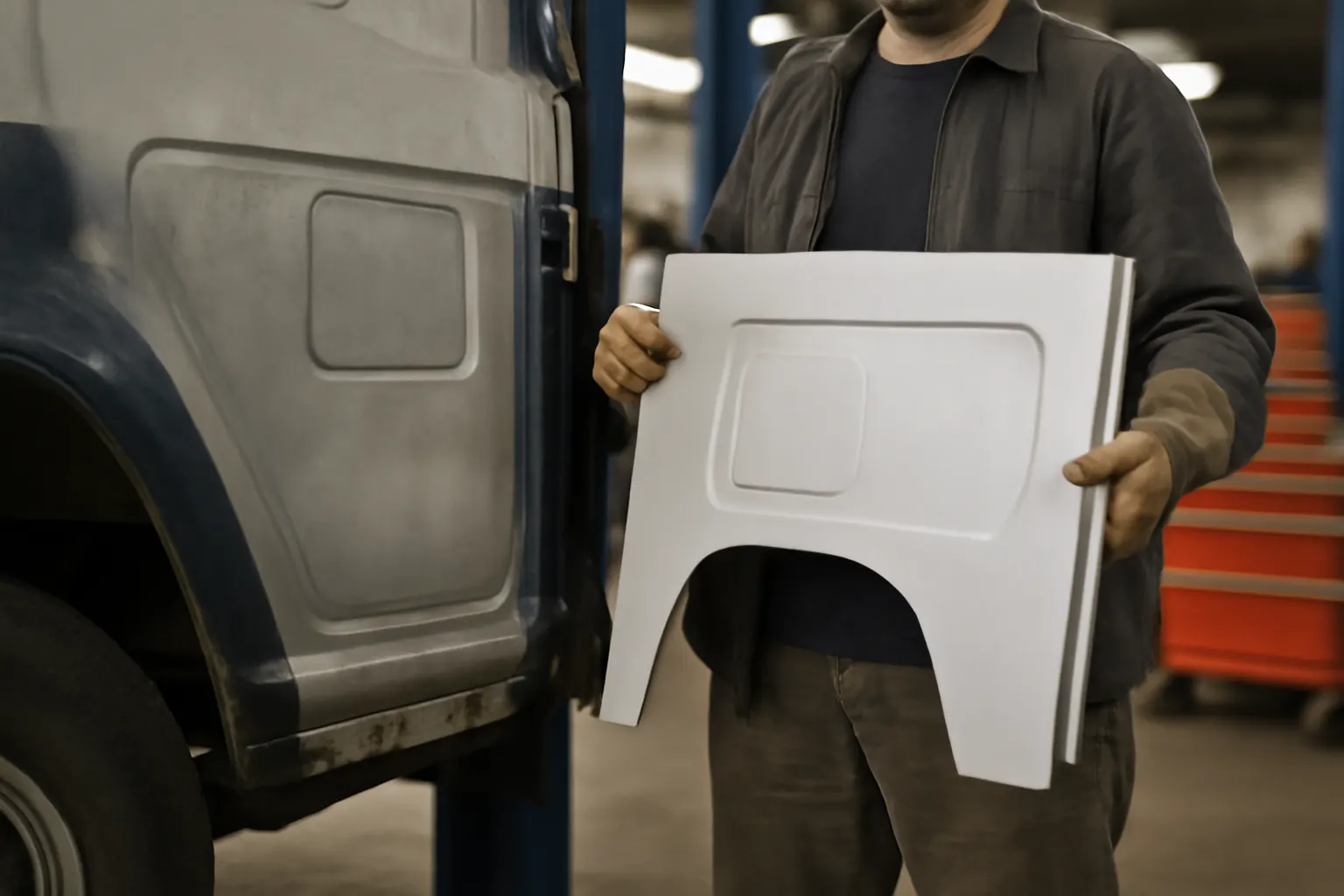
Amc Oem Vs Repro Cab Panels
For most AMC cab restoration or repair projects, genuine OEM or high-grade NOS (New Old Stock) panels remain the gold standard for fit, finish, and long-term durability. However, quality reproduction (repro) panels can be a viable alternative when OEM or NOS panels are unavailable or cost-prohibitive. The best choice depends on your project goals, budget, and willingness to invest time in prep and fitment work. Key Takeaway: Choose OEM or NOS for best fit, authenticity, and minimal modification.
Read More
Amc Cab Fitment Crossreference
AMC cab fitment is a nuanced topic—especially for restoration, repair, or modification projects involving American Motors Corporation (AMC) vehicles. If you’re seeking to cross-reference AMC cab patterns with Jeep and Eagle models, or want to avoid common installation pitfalls, this technical guide delivers immediate clarity. AMC cabs often share structural similarities with select Jeep and Eagle vehicles, but subtle differences in mounting points, panel contours, and reinforcement designs can lead to costly errors.
Read More
Amc Cab Interchange
Restoring or maintaining an AMC vehicle demands precise knowledge of which cab components interchange across model years and platforms. This comprehensive AMC cab interchange guide provides restoration professionals and enthusiasts with part numbers, steel gauge data, and detailed model-year compatibility to streamline sourcing, fitment, and compliance. Use this guide to avoid costly mistakes, ensure safety, and achieve factory-correct results for your AMC project.
View Guide