
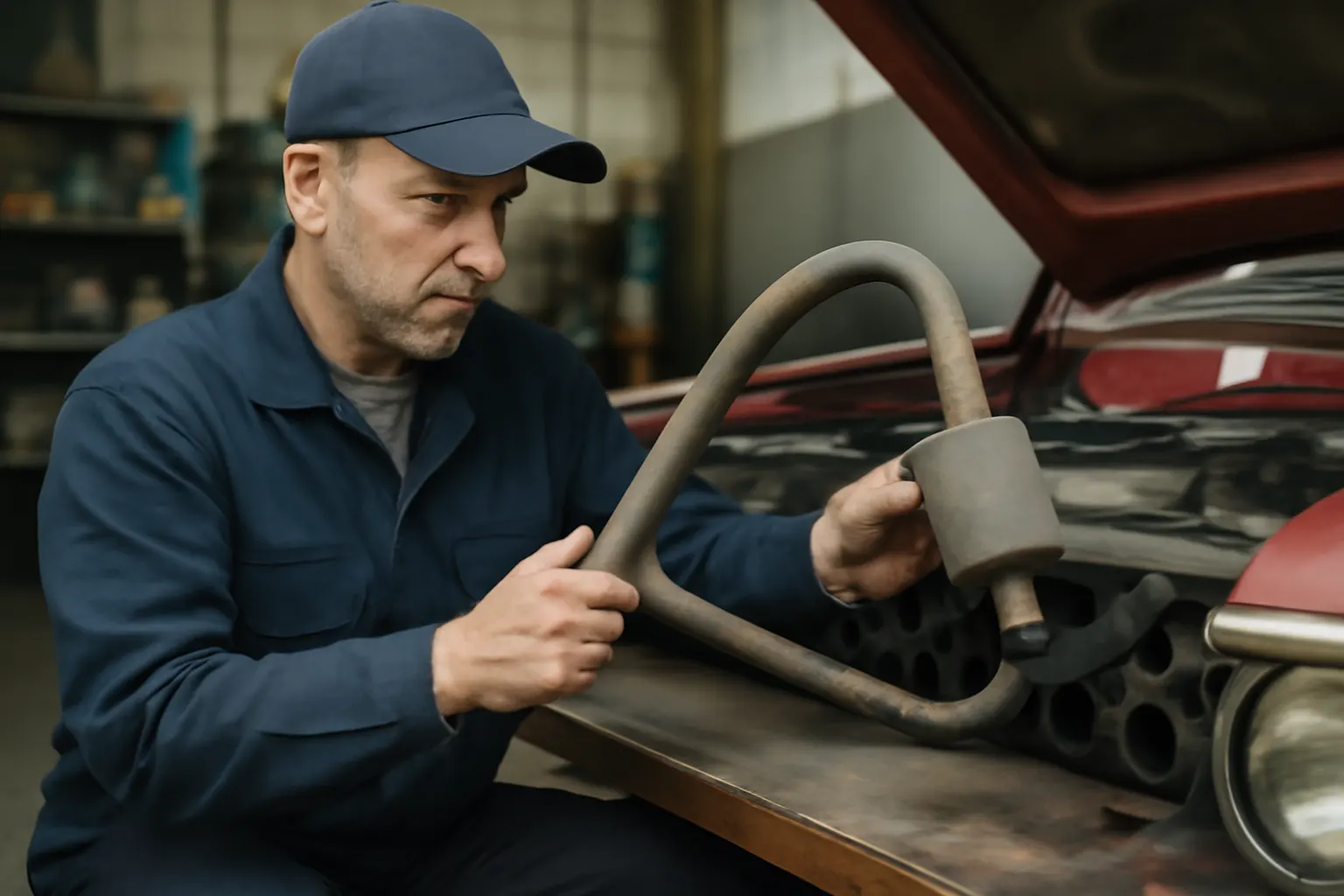
Restoring Amc Ambassador Parts
Restoring an AMC Ambassador to its original glory is a rewarding challenge, especially when it comes to sourcing, diagnosing, and installing rare components like the air tube and resonator assemblies. For enthusiasts and restoration professionals, understanding the unique fitment, safety, and materials requirements of these parts is key to a successful project. This comprehensive guide delivers direct, practical advice for working with scarce AMC Ambassador components—starting with immediate answers, then diving into the deeper technical and sourcing challenges that define this restoration journey.
For those seeking a broader fitment and parts overview, the AMC Ambassador Air Tube/Resonator Parts & Fitment Guide provides a detailed reference to complement the restoration strategies outlined below.
The Immediate Answer: Sourcing and Restoring AMC Ambassador Air Tube/Resonator Assemblies
If you need to restore an AMC Ambassador’s air tube or resonator assembly, your best approach is to:
- Source original or quality reproduction parts from reputable suppliers, enthusiast forums, and salvage networks.
- Inspect and diagnose the current assemblies for rust, cracks, or missing components.
- Use proper cleaning and materials-matching techniques to preserve or restore the original structure and function.
- Install with attention to fitment, safety, and emissions requirements, referencing technical documentation and standards.
- Maintain with periodic inspections and gentle cleaning to prolong the life of these rare components.
This approach ensures you meet both functional and safety expectations, while honoring the originality that AMC Ambassador collectors value.
The Hidden Problem: Scarcity and Degradation of AMC Ambassador Components
While the immediate restoration steps sound straightforward, the reality is more complicated. AMC Ambassador air tube and resonator assemblies are notoriously scarce. These parts, often made from specialized materials and unique to the model year or engine configuration, are susceptible to corrosion, fatigue, and physical damage after decades of use. Even when found, they may be incomplete, mismatched, or out-of-spec, complicating both fitment and compliance with safety standards.
Compounding the challenge, these assemblies play a critical role in the vehicle’s emissions system and intake resonance—meaning a poor repair or ill-fitting substitute can impact engine performance, fuel efficiency, and even compliance with safety and emissions regulations as outlined by the National Highway Traffic Safety Administration and the Department of Energy.
Understanding AMC Ambassador Air Tube and Resonator Assemblies
Technical Function and Importance
The air tube and resonator assembly in the AMC Ambassador serves multiple key functions:
- Directs intake air efficiently to the carburetor or throttle body.
- Reduces intake noise through resonance tuning.
- Supports emissions controls by regulating air flow for EGR (Exhaust Gas Recirculation) and other systems.
- Maintains fuel efficiency by optimizing the air-fuel mixture entering the engine.
These parts are engineered for precise fitment and material compatibility with the rest of the intake system. Any deviation in size, shape, or material can lead to air leaks, improper resonance, or emissions system malfunction.
Materials and Construction
Original AMC Ambassador air tubes and resonators were typically constructed from a mix of stamped steel, aluminum, and reinforced rubber or plastic. Over time, exposure to heat, moisture, and engine vibration leads to:
- Rust and corrosion in metal components.
- Cracking and hardening in rubber or plastic sections.
- Loss of internal baffles or resonator tuning elements.
According to the Department of Energy’s Materials Technologies research, material degradation is a primary concern in vintage vehicle restoration, directly affecting performance and longevity.
Diagnosing AMC Ambassador Air Tube/Resonator Issues
A systematic diagnostic approach is essential before attempting restoration or replacement. Use this checklist to assess the condition of your AMC Ambassador’s air tube and resonator assemblies:
Air Tube/Resonator Diagnostic Checklist
| Inspection Point | What to Look For | Action Needed |
|---|---|---|
| Surface condition | Rust, pitting, or corrosion | Clean, treat, or replace |
| Structural integrity | Cracks, dents, or missing sections | Repair if minor, replace if severe |
| Seals and connections | Loose, missing, or hardened gaskets | Replace gaskets, tighten clamps |
| Internal baffles (resonator) | Rattling, loose or missing baffles | Re-secure or rebuild as needed |
| Mounting hardware | Stripped threads, broken fasteners | Replace hardware |
| Fitment with intake | Air leaks, misalignment | Adjust or source correct part |
If issues are detected, prioritize replacement with original or reproduction parts. For minor corrosion or leaks, repair may be possible using period-correct materials and adhesives.
Sourcing Scarce AMC Ambassador Components
Where to Find Original and Reproduction Parts
Restorers face a significant challenge with AMC Ambassador components due to the limited production runs and the dissolution of American Motors Corporation. The best sourcing strategies include:
- Specialist salvage yards: Seek out yards that focus on AMC or classic American vehicles.
- Online enthusiast forums and groups: AMC-specific communities often have members willing to trade or sell rare parts.
- Reproduction part manufacturers: Some companies now fabricate air tubes and resonators to original specifications.
- Auto swap meets and classic car shows: These events can yield rare finds and valuable contacts.
- Online marketplaces: Platforms like eBay Motors and classic car parts sites occasionally list NOS (New Old Stock) or used assemblies.
Pro tip: When sourcing used parts, always request detailed photos and measurements to verify authenticity and condition.
Evaluating Reproduction vs. Original Parts
While original parts are ideal for concours-level restorations, high-quality reproductions can offer superior reliability and availability. When considering reproduction parts:
- Confirm that the manufacturer adheres to SAE Standards or equivalent quality benchmarks.
- Ensure materials match the original (steel, aluminum, correct plastics/rubber).
- Check that all mounting points and connection diameters match AMC specifications.
Cleaning, Refurbishing, and Protecting AMC Air Tubes and Resonators
Cleaning Techniques
Gentle cleaning is essential to avoid damaging vintage materials:
- Remove loose debris with compressed air or a soft brush.
- Degrease metal parts using a mild, non-acidic cleaner.
- Soak and scrub plastic/rubber sections with warm, soapy water.
- Avoid abrasive pads that can scratch or thin metal surfaces.
Rust and Corrosion Treatment
- Light surface rust can be removed with a wire brush or rust-dissolving gel.
- For deeper corrosion, use a rust converter or consider professional media blasting.
- Always repaint or treat exposed metal with a rust-inhibiting primer and finish coat.
Preserving Resonator Function
- Inspect internal baffles for looseness; re-secure with high-temp adhesive if salvageable.
- Replace missing or degraded sound-deadening material with period-appropriate equivalents.
Installation Guidance and Fitment Tips
Preparing for Installation
Before installing any air tube or resonator assembly:
- Test-fit the component to the intake and air cleaner housing.
- Replace all gaskets and seals to prevent air leaks.
- Verify clamp and fastener condition; replace as needed.
- Align the assembly to avoid stress or misalignment with adjacent parts.
Step-by-Step Installation
- Position the air tube/resonator into place, aligning all mounting points.
- Hand-tighten fasteners to confirm alignment.
- Torque fasteners to spec using a calibrated wrench (consult AMC service literature for values).
- Reconnect all hoses and vacuum lines using new clamps.
- Inspect for clearance from exhaust manifolds and moving components.
- Start the engine and check for air leaks or abnormal resonance.
Fitment Troubleshooting
If the assembly does not fit correctly, double-check:
- Part number and compatibility with your model year/engine.
- Condition of mounting brackets and hardware.
- Possible frame or intake modifications from prior owners.
For persistent fitment issues, consult the AMC Ambassador Air Tube/Resonator Parts & Fitment Guide for detailed model-year cross-references.
Ensuring Safety and Compliance
Why Safety Standards Matter
Intake and emissions assemblies are classified as critical vehicle equipment by the National Highway Traffic Safety Administration. Improper repairs or ill-fitting components can:
- Increase risk of engine fires due to air leaks or backfires.
- Cause emissions system malfunctions, potentially making the vehicle illegal for road use.
- Reduce crashworthiness if parts interfere with hood closure or engine mounts.
Safety Checklist for Restored Components
- Verify all connections are airtight and secure.
- Ensure no interference with throttle linkages or wiring.
- Inspect for sharp edges or protrusions.
- Test engine operation for smooth idle and acceleration.
- Check emissions system warning lights (if equipped).
Maintaining Restored Air Tube and Resonator Assemblies
Regular maintenance is essential to preserve the restored components:
- Inspect all connections and clamps every 3,000 miles or annually.
- Clean assemblies gently to remove dust and oil residue.
- Check for new signs of rust or cracking after temperature cycles.
- Replace gaskets and seals at the first sign of aging or leaks.
- Monitor engine performance for changes in idle quality or noise.
A proactive maintenance schedule will prevent minor issues from escalating into costly repairs or part failures.
Common Pitfalls in AMC Ambassador Restoration
Overlooking Subtle Differences
AMC made running changes to the Ambassador’s intake and emissions systems across model years and engine options. It’s easy to overlook:
- Slight diameter changes in air tubes.
- Variations in resonator design for 6-cylinder vs. V8 engines.
- Different mounting bracket configurations.
Always reference factory parts diagrams and cross-check part numbers before purchase or installation.
Using Incompatible Materials
Modern adhesives, paints, or sealants may not be compatible with vintage plastics or metals. Use period-correct materials whenever possible, and test any new product on a small, inconspicuous area first.
Neglecting Emissions and Fuel Efficiency Impact
Improper restoration can negatively affect both emissions output and fuel economy. According to the Department of Energy’s Fuel Efficiency guidelines, intake system leaks or misalignments can reduce fuel efficiency and increase harmful emissions. Always verify a tight seal and proper system operation post-restoration.
Expert Tips for Sourcing and Fitment
Building a Restoration Network
- Join AMC clubs and online communities for insider knowledge and leads on rare parts.
- Attend classic car events to network with vendors and other restorers.
- Document every part and step during disassembly for accurate reassembly.
Fitment Reference Table
| Year | Engine | Air Tube Part # | Resonator Part # | Notes |
|---|---|---|---|---|
| 1970 | 304 V8 | 448-1234 | 448-5678 | Early style, steel |
| 1972 | 360 V8 | 449-4321 | 449-8765 | Later emission spec |
| 1974 | 258 I6 | 450-1111 | 450-2222 | Different diameter |
Always verify against your vehicle’s VIN and original build sheet.
When to Repair Versus Replace
Not every air tube or resonator can be saved. Use this decision guide:
- Repair if: Only minor surface rust, no structural cracks, all mounting points intact.
- Replace if: Severe corrosion, cracks, or missing internal components.
- Rebuild if: Original part is unique but repairable with donor sections or custom fabrication.
Consult with a restoration professional for rare or borderline cases.
Going Beyond the Air Tube: Related AMC Ambassador Restoration Concerns
Restoring the air tube and resonator is just one aspect of AMC Ambassador intake and emissions system work. For a holistic approach, consider:
- Amc Ambassador Intake Diagnosis: In-depth troubleshooting for intake leaks, vacuum issues, and performance problems.
- Amc Ambassador Emissions Parts: Guidance on sourcing and restoring other emissions-related components.
- Amc V8 Intake Hardware Replacement: Step-by-step instructions for replacing intake bolts, gaskets, and related hardware.
These resources ensure your restoration covers every critical system for both performance and compliance.
AutoPartEx: Your Partner in AMC Ambassador Restoration
AutoPartEx specializes in rare, hard-to-source components for classic vehicles, including the AMC Ambassador. Our technical guides, fitment databases, and sourcing network are designed to support both DIY enthusiasts and professional restorers. Rely on our expertise to identify, evaluate, and acquire the right parts for your project—backed by verified technical standards and a commitment to authenticity.
Explore the AMC Ambassador Air Tube/Resonator Parts & Fitment Guide for detailed part numbers, diagrams, and sourcing tips.
Expert Action: Start Your Restoration With Confidence
Restoring AMC Ambassador air tube and resonator assemblies is a blend of detective work, technical precision, and passionate preservation. By following the diagnostic, sourcing, cleaning, and installation strategies outlined here, you can overcome the scarcity and complexity of these components. Leverage expert networks, period-correct materials, and up-to-date technical standards to ensure your restoration is both authentic and roadworthy. For deeper technical support or hard-to-find parts, connect with AutoPartEx and the broader AMC community.