Advertisement
Counterfeit Peterbilt parts are an escalating threat to truck safety, durability, and regulatory compliance. Whether you’re managing a fleet or maintaining a single Peterbilt, knowing how to verify genuine OEM components is essential for protecting your investment and ensuring roadworthiness. This guide delivers actionable insight to help you distinguish legitimate parts from fakes, mitigate risks, and keep your Peterbilt operating at peak performance.
If you’re seeking a comprehensive starting point for sourcing, fitment, and quality assurance, refer to our Peterbilt OEM & Aftermarket Truck Parts: Fitment, Quality, and Sourcing Guide for foundational best practices.
Why Counterfeit Peterbilt Parts Are a Critical Concern
The proliferation of counterfeit truck parts is not just a matter of lost revenue for manufacturers—it’s a direct threat to vehicle safety and operational reliability. Peterbilt, renowned for its engineering and durability, is a frequent target for counterfeiters who produce imitation components that may look authentic but fail to meet OEM standards. The risks introduced by counterfeit parts can range from premature wear and unexpected breakdowns to catastrophic failures that endanger drivers and cargo.
Truck operators, fleet managers, and independent technicians must recognize that counterfeit components are often visually indistinguishable from genuine parts. Modern counterfeiting operations use advanced manufacturing and packaging techniques, making detection increasingly difficult. This means that relying solely on appearance or price is no longer a viable strategy for ensuring part authenticity.
The Hidden Dangers: What Makes Counterfeit Parts So Risky?
Counterfeit parts do more than undermine brand integrity—they introduce real, measurable hazards. Unlike OEM Peterbilt components, which are designed, tested, and certified to meet stringent safety and performance standards, counterfeit parts are produced without regulatory oversight or quality control. The consequences can include:
- Compromised Safety: Non-genuine brake pads, steering components, and suspension parts may fail under load, leading to accidents or loss of vehicle control.
- Regulatory Noncompliance: Trucks equipped with counterfeit parts may not meet National Highway Traffic Safety Administration (NHTSA) requirements, risking fines and out-of-service orders.
- Reduced Fuel Efficiency: Substandard engine or drivetrain components can decrease fuel economy, raising operational costs (see DOE Fuel Efficiency).
- Accelerated Wear: Counterfeit materials often lack the strength or corrosion resistance of OEM-approved alloys, resulting in shorter service intervals and increased maintenance needs.
These issues are rarely apparent until after installation, when failure can have severe operational and financial repercussions.
Technical Deep Dive: How OEM Verification Protects Your Peterbilt
OEM (Original Equipment Manufacturer) verification is the process of ensuring that a part is made to the exact specifications, materials, and tolerances required by Peterbilt and regulatory agencies. Genuine OEM parts undergo rigorous testing for fit, strength, and durability, including:
- Materials Analysis: OEM components are made from certified alloys and polymers, as detailed by the U.S. Department of Energy’s Materials Technologies.
- Precision Manufacturing: Tight tolerances and advanced machining ensure seamless fitment and compatibility.
- Regulatory Compliance: OEM parts are designed to satisfy NHTSA safety standards (NHTSA Equipment) and are often traceable through batch codes and serial numbers.
- Performance Validation: Genuine Peterbilt parts are tested under simulated and real-world conditions to verify longevity and reliability.
Counterfeit parts bypass these controls, introducing unpredictable variables into critical truck systems.
Spotting Counterfeit Peterbilt Parts: Practical Inspection Checklist
While counterfeiters are increasingly sophisticated, careful inspection can reveal telltale signs of inauthenticity. Use this checklist when sourcing Peterbilt components:
Peterbilt Parts Authenticity Checklist:
- Packaging Inspection:
- Look for spelling errors, low-quality printing, or missing Peterbilt branding.
- Compare packaging to known OEM examples or Peterbilt catalogs.
- Part Markings:
- Verify the presence and accuracy of serial numbers, batch codes, and Peterbilt logos.
- Check for inconsistencies in font, placement, or engraving depth.
- Material Quality:
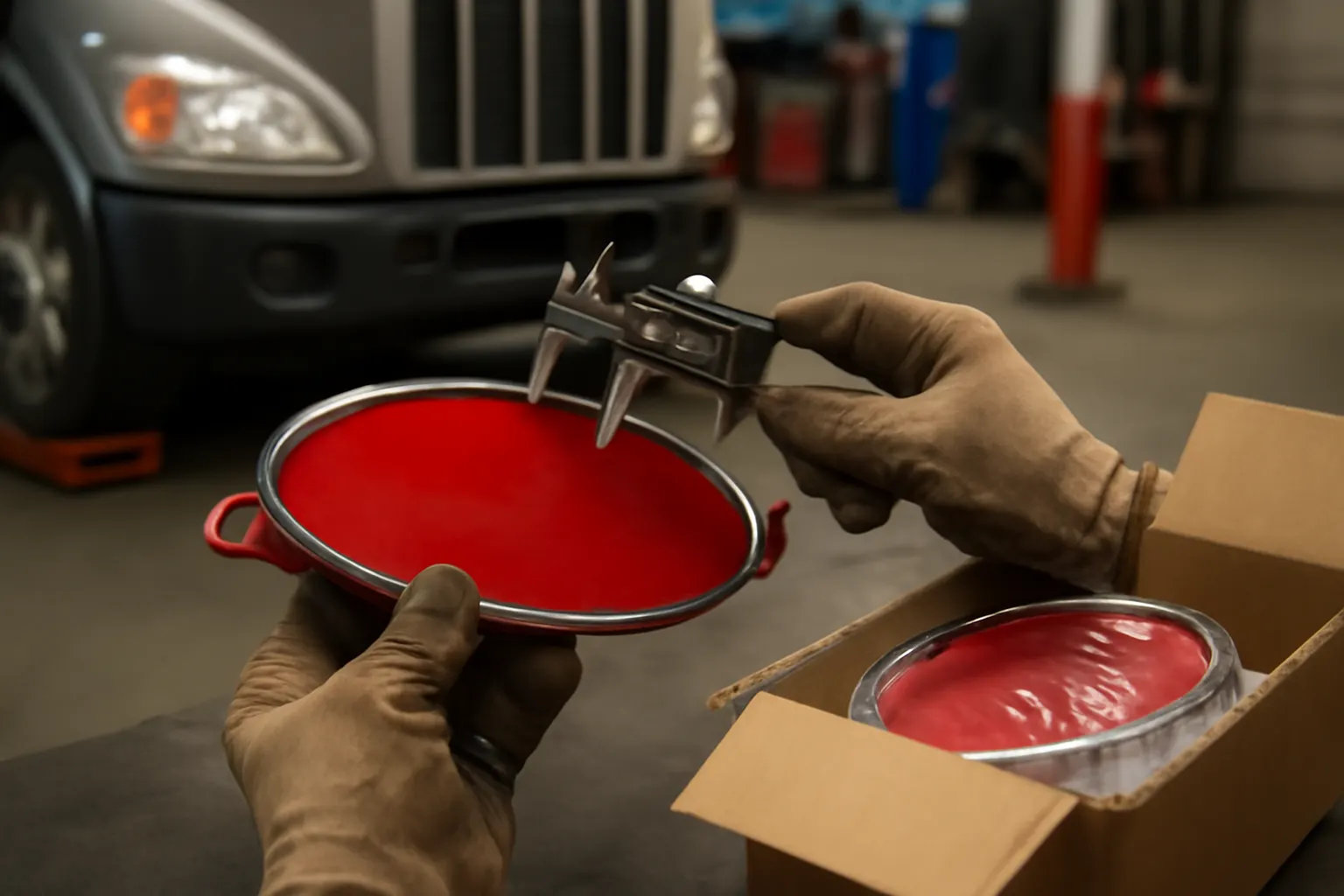
- Assess the weight and finish. Counterfeits may feel lighter, rougher, or have uneven surfaces.
- Examine welds, fasteners, and machined surfaces for imperfections.
- Documentation:
- Confirm the inclusion of installation guides, warranty cards, and regulatory compliance certificates.
- Cross-reference part numbers with the official Peterbilt parts database.
- Vendor Reputation:
- Purchase from authorized Peterbilt dealers or reputable aftermarket suppliers.
- Be wary of online marketplaces offering steep discounts or vague return policies.
Advertisement
Consistent use of this checklist can drastically reduce the likelihood of inadvertently installing counterfeit parts.
Regulatory and Safety Implications of Counterfeit Peterbilt Parts
The use of non-genuine components can have far-reaching legal and safety implications. According to the NHTSA, vehicles equipped with non-compliant parts may fail safety inspections and be subject to recalls or enforcement actions (NHTSA Equipment). Even seemingly minor parts, such as lighting assemblies or sensors, can trigger regulatory consequences if they do not meet federal standards.
Fleet operators and independent owners are responsible for ensuring that all installed parts are compliant with relevant safety regulations. Failure to do so can result in:
- Fines and Penalties: Vehicles found with counterfeit or non-compliant parts during roadside inspections may be fined or placed out of service.
- Liability Exposure: In the event of an accident, the use of counterfeit parts can complicate insurance claims and legal defense.
- Warranty Voids: Installing non-OEM components can void manufacturer warranties and reduce the resale value of the truck.
Staying compliant is not just a best practice—it’s a legal requirement for commercial vehicle operation.
The Economic Impact: Counterfeits Cost More Than You Think
Counterfeit Peterbilt parts may appear to offer short-term savings, but the true costs can be staggering. Subpar materials and poor fitment lead to:
- Increased Downtime: Unexpected failures mean more time off the road and lost revenue.
- Frequent Repairs: Counterfeit parts rarely last as long as genuine components, driving up maintenance costs.
- Reduced Efficiency: Poorly engineered parts can decrease fuel efficiency and strain other vehicle systems, as noted by the DOE Fuel Efficiency guidelines.
Moreover, the use of counterfeit parts can damage your reputation as a fleet operator or service provider. Customers and partners expect vehicles to be maintained with genuine, regulation-compliant components.
Advanced Verification: Serial Numbers, Batch Codes, and Digital Traceability
Peterbilt and its authorized suppliers have implemented increasingly sophisticated anti-counterfeiting measures. These include:
- Unique Serial Numbers: Each genuine part features a unique identifier, often etched or stamped onto the part itself.
- Batch Codes: OEM packaging includes batch codes that can be cross-referenced with Peterbilt’s official database.
- Digital Authentication: Some parts now include QR codes or RFID tags that can be scanned for instant verification.
When in doubt, contact your Peterbilt dealer or use manufacturer-provided online tools to confirm part authenticity. Never hesitate to request documentation or traceability information from your supplier.
Sourcing Guidance: Where to Buy Genuine Peterbilt Parts
Sourcing authentic Peterbilt parts requires diligence and a trusted supply network. Follow these best practices:
- Buy Direct: Purchase from authorized Peterbilt dealers or certified aftermarket distributors.
- Request Documentation: Always ask for proof of authenticity, especially for high-value or safety-critical components.
- Avoid Suspicious Sellers: Be wary of unfamiliar online retailers, auctions, or sellers offering parts at unrealistically low prices.
- Leverage Manufacturer Resources: Use Peterbilt’s official parts database or consult with their technical support for verification.
For a broader overview of sourcing strategies and trusted suppliers, refer to our Peterbilt OEM & Aftermarket Truck Parts: Fitment, Quality, and Sourcing Guide.
Fitment and Compatibility: Why OEM Matters for Peterbilt Trucks
Fitment is not just about whether a part bolts on—it’s about ensuring that the component integrates seamlessly with your vehicle’s systems. OEM Peterbilt parts are engineered to match precise specifications for:
- Mounting Points: Ensuring proper alignment and load distribution.
- Electrical Interfaces: Guaranteeing compatibility with wiring harnesses and control modules.
- System Integration: Maintaining the performance of safety, emissions, and telematics systems.
Counterfeit or non-OEM parts may introduce subtle incompatibilities that compromise vehicle performance, increase diagnostic complexity, and trigger warning lights or error codes.
For detailed fitment support, consult our Peterbilt Fitment & Compatibility Guide.
Diagnostic Strategies: Identifying Counterfeit-Induced Failures
If you suspect that a recently installed part may be counterfeit, prompt diagnosis is critical. Common symptoms of counterfeit part failure include:
Advertisement
- Unusual Noises: Grinding, squealing, or rattling from brakes, suspension, or drivetrain components.
- Premature Wear: Parts requiring replacement significantly ahead of schedule.
- Dashboard Warnings: Persistent ABS, check engine, or stability control lights.
- Fitment Issues: Difficult or impossible installation, misalignment, or improper sealing.
When these symptoms arise, remove the suspect part and compare it to a verified OEM equivalent. Use serial numbers, batch codes, and manufacturer support resources to confirm authenticity.
Maintenance Best Practices: Protecting Your Peterbilt from Counterfeit Risks
Routine maintenance is your first line of defense against the risks associated with counterfeit parts. Implement the following practices:
- Document All Repairs: Keep detailed records of parts sourced, installation dates, and supplier information.
- Inspect Parts Regularly: During scheduled service intervals, visually inspect critical components for signs of wear or irregularities.
- Train Your Team: Ensure that technicians and drivers are aware of counterfeit risks and know how to use the authenticity checklist.
- Schedule Preventive Replacements: Replace safety-critical components (brakes, steering, suspension) at manufacturer-recommended intervals, even if they appear functional.
For model-specific maintenance intervals, see our Heavy Truck Service Intervals: Peterbilt.
The Role of Standards and Regulations: SAE, NHTSA, and Beyond
OEM Peterbilt parts are designed and tested in compliance with international and national standards, including those established by SAE International (SAE Standards) and the NHTSA. These standards cover:
- Material Properties: Alloys, polymers, and composites must meet strict strength and corrosion resistance criteria.
- Dimensional Accuracy: Parts must conform to precise tolerances for safe operation.
- Functional Testing: Components are validated under simulated and real-world conditions for durability and performance.
Counterfeit parts are not subject to these controls, making them inherently riskier. Always confirm that replacement parts are certified to relevant standards before installation.
Real-World Examples: Counterfeit Part Failures in Peterbilt Trucks
The consequences of counterfeit part use are not hypothetical. Industry case studies have documented:
- Brake System Failures: Non-genuine brake pads disintegrating under load, causing loss of stopping power and increased accident risk.
- Steering Component Breakage: Counterfeit tie rods and drag links fracturing, leading to loss of steering control.
- Electrical System Malfunctions: Fake sensors and wiring harnesses triggering false alarms or disabling safety systems.
Each of these failures could have been prevented by rigorous OEM verification and sourcing discipline. The cost of a single catastrophic failure far exceeds any perceived savings from counterfeit parts.
Solution Path: How to Build a Counterfeit-Resistant Parts Program
Fleet managers and independent operators can take proactive steps to eliminate counterfeit risks:
- Centralize Parts Procurement: Limit sourcing to a shortlist of trusted, vetted suppliers.
- Implement Verification Protocols: Require serial number and batch code checks for all incoming parts.
- Standardize Training: Educate technicians and purchasing staff on counterfeit risks and inspection techniques.
- Audit Suppliers Regularly: Periodically review supplier performance and authenticity documentation.
- Leverage Digital Tools: Use manufacturer-provided apps or online databases for instant verification.
By institutionalizing these practices, you can dramatically reduce the likelihood of counterfeit part installation in your Peterbilt fleet.
AutoPartEx: Your Partner in Genuine Peterbilt Parts Sourcing
At AutoPartEx, we recognize that the integrity and performance of your Peterbilt depend on the authenticity of every component you install. Our platform is engineered to connect you with verified OEM and high-quality aftermarket parts, complete with fitment intelligence, authenticity resources, and supplier vetting. We empower fleet managers, owner-operators, and service professionals to make informed, regulation-compliant parts decisions—reducing risk and maximizing uptime.
Whether you need diagnostic support, sourcing guidance, or maintenance best practices, AutoPartEx is your trusted source for reliable Peterbilt parts content and solutions. Explore our Peterbilt OEM & Aftermarket Truck Parts: Fitment, Quality, and Sourcing Guide to get started.
Staying Ahead: Continuous Education and Community Vigilance
The fight against counterfeit parts is ongoing. Counterfeiters adapt quickly, so staying informed is crucial. Engage with the Peterbilt owner and technician community, share experiences, and report suspected counterfeit parts to both your supplier and regulatory authorities.
Regularly review updates from the NHTSA, Department of Energy, and SAE International to keep abreast of new regulations, material technologies, and verification tools. Being proactive not only protects your vehicles but also strengthens the entire commercial trucking ecosystem.
References
Advertisement