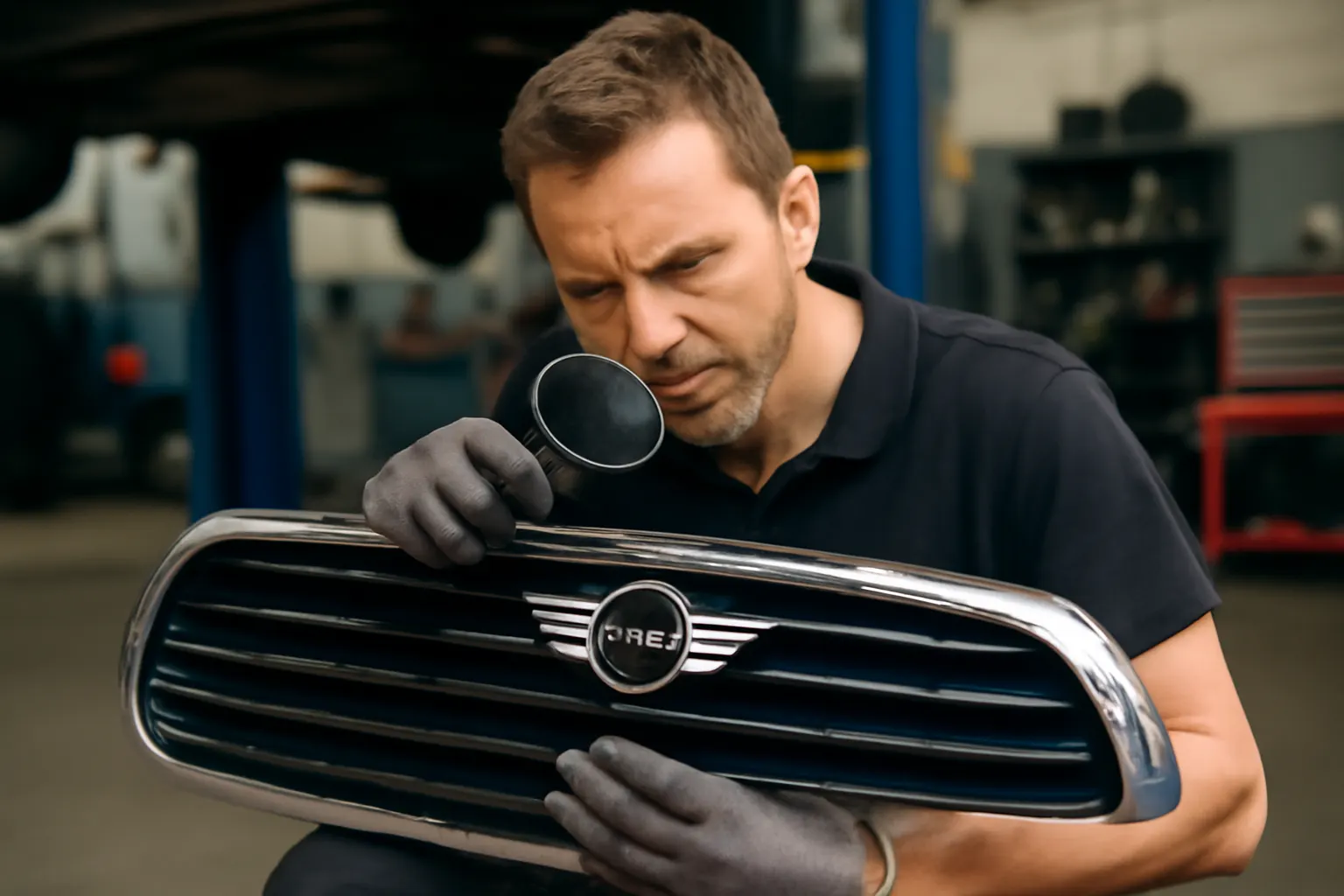
How to Spot Genuine Mini Cooper Parts
When maintaining or upgrading your Mini Cooper, ensuring that you use genuine OEM parts is critical for safety, fitment, and long-term performance. However, the automotive parts market is flooded with counterfeits and low-quality aftermarket alternatives. This comprehensive guide from AutoPartEx will show you exactly how to identify authentic Mini Cooper components, decode part numbers, and avoid common pitfalls—so you can drive with confidence.
If you're searching for a deep-dive into Mini Cooper fitment, heritage, and technical guidance, visit our Mini Cooper OEM & Aftermarket Auto Parts | Fitment, Heritage, and Technical Guide page for even more resources.
Immediate Answer: Quick Ways to Identify Genuine Mini Cooper Parts
Genuine Mini Cooper parts are specifically engineered for your vehicle’s unique requirements and are produced under strict quality controls. To quickly determine if a Mini Cooper part is authentic:
- Check for the official MINI logo or BMW Group branding on the part and packaging.
- Examine the part number: Genuine parts use unique, standardized BMW/MINI part numbers.
- Inspect packaging quality: Authentic parts come in high-quality, tamper-evident packaging with clear labeling.
- Look for country of origin and manufacturing details—these should match known MINI production sites.
- Purchase only from authorized MINI dealerships or reputable, certified suppliers.
If in doubt, always cross-reference with your VIN and consult trusted sources. Counterfeit or substandard parts can compromise safety, void service agreements, and negatively affect your Mini’s performance and value.
The Hidden Problem: Counterfeit and Substandard Parts in the Mini Cooper Market
While aftermarket options can provide value and flexibility, the presence of counterfeit and substandard parts poses a significant risk to Mini Cooper owners. The National Highway Traffic Safety Administration (NHTSA) has repeatedly flagged the dangers of non-genuine, untested, or poorly manufactured components in terms of safety, reliability, and compliance [NHTSA Equipment].
Counterfeiters have become increasingly sophisticated, making it harder to distinguish fakes from genuine parts at first glance. Even seasoned enthusiasts can be fooled by high-quality replicas or reused OEM boxes. The consequences can be severe:
- Compromised safety systems (e.g., brakes, airbags, suspension)
- Reduced fuel efficiency due to improper fitment or lower-quality materials
- Accelerated wear and tear on adjacent components
- Potential for recalls or failed inspections
- Loss of resale value and invalidation of service records
The cost of installing a counterfeit part often far exceeds any upfront savings. Understanding the risks is the first step in protecting your Mini Cooper investment.
Why Authenticity Matters: Safety, Fitment, and Performance
Genuine Mini Cooper parts are engineered to meet rigorous standards established by MINI and the BMW Group, and are often tested to comply with SAE International and NHTSA requirements [SAE Standards]. Using authentic parts ensures:
- Exact fitment: OEM parts are designed using precise specifications, eliminating guesswork and reducing installation time.
- Material quality: Genuine parts use advanced materials for durability, corrosion resistance, and weight savings, supporting the performance characteristics of your Mini [DOE Materials Technologies].
- System integration: Safety-critical systems (brakes, airbags, sensors) rely on components that interact seamlessly.
- Fuel efficiency: Proper fit and material composition help maintain the vehicle’s designed fuel economy [DOE Fuel Efficiency].
Non-genuine or inferior parts can lead to misalignment, sensor errors, and even catastrophic failures. For a detailed look at how proper maintenance boosts longevity, see our Mini Cooper Maintenance Schedule & Service Intervals.
Decoding Mini Cooper Part Numbers: The Key to Verification
Every genuine Mini Cooper part is assigned a unique part number—typically a seven- or eleven-digit code used across BMW Group vehicles. Understanding this system is the foundation for authenticating any component.
How to Read a Mini Cooper Part Number
- Format: Most modern Mini parts use the 11-digit BMW Group format (e.g., 34 11 6 789 123).
- The first two digits denote the main group (e.g., 34 = brakes).
- The next two specify the subgroup (e.g., 11 = brake disc).
- The remaining digits are unique identifiers.
- Location: Part numbers are usually stamped, etched, or labeled directly on the part and on the packaging.
- Cross-referencing: Use official parts catalogs or trusted databases to verify that the part number matches your Mini’s model, year, and trim.
If you need guidance on using your VIN to find the right part number, our Decoding Mini Cooper VINs for Accurate Parts Sourcing guide offers step-by-step instructions.
Packaging and Labeling: What to Look For
Authentic Mini Cooper parts packaging is a crucial indicator of legitimacy. Here’s what to check:
- Branding: The MINI logo or BMW Group branding should be clear, crisp, and free of typographical errors.
- Holograms or security seals: Many parts feature tamper-evident holographic stickers or seals.
- Barcodes and QR codes: Scannable codes should match the part number and vehicle application.
- Country of origin: MINI sources globally, but known manufacturing sites include the UK, Germany, and select EU countries.
- High-quality materials: Packaging should be sturdy, with consistent printing and no signs of tampering or resealing.
Beware of faded or pixelated printing, missing seals, or poor-quality boxes—these are red flags for counterfeiting.
Physical Inspection: Spotting Genuine vs. Fake Parts
In addition to packaging, the part itself provides clues to authenticity. Use this checklist during inspection:
Mini Cooper Genuine Parts Authenticity Checklist
| Feature | Genuine Part | Counterfeit/Aftermarket |
|---|---|---|
| Branding | Clear MINI/BMW logo, part number, and markings | Missing, faded, or incorrect markings |
| Material Quality | High-grade metal/plastic, uniform finish | Rough edges, inconsistent materials |
| Weight | Matches OEM spec (not too light/heavy) | Noticeably lighter or heavier |
| Fit and Finish | Precise, clean edges, no burrs | Poor fit, rough casting, or sharp edges |
| Manufacturing Codes | Date codes, batch numbers present | Codes absent or nonsensical |
| Sensor/Connector Quality | OEM-style connectors, tight fit | Loose, generic, or mismatched connectors |
If you’re installing brake components, refer to our Mini Cooper Brake System Upgrades for details on correct fitment and performance benchmarks.
Sourcing: Where to Buy Genuine Mini Cooper Parts
Your choice of supplier is as important as the part itself. To minimize risk:
- Authorized MINI dealers: The safest option, especially for safety-critical components.
- Reputable independent specialists: Look for suppliers with established track records, physical locations, and transparent return policies.
- Online marketplaces with manufacturer certification: Only purchase from sellers that provide verifiable proof of authenticity (photos of packaging, part numbers, and seals).
- Avoid unknown or unverified sellers: Steer clear of deals that seem too good to be true or sellers who cannot provide documentation.
If possible, request the part’s manufacturing documentation or supply chain traceability for added peace of mind.
Diagnostic Steps: Confirming Authenticity Before Installation
Before installing any replacement part, follow these diagnostic steps:
- Compare with the original: Place the new part side-by-side with the one being replaced. Look for differences in markings, weight, and connectors.
- Cross-check part numbers: Verify the part number against official MINI or BMW Group catalogs.
- Test fitment: Without final installation, check that the part aligns perfectly with mounting points and connectors.
- Scan barcodes/QR codes: Use a smartphone or scanner to confirm the code matches MINI records.
- Consult your VIN: Ensure the part is correct for your specific model and production year.
For complex systems (e.g., electronics, sensors), consider having a MINI-certified technician perform a pre-installation diagnostic.
Risks of Using Non-Genuine or Counterfeit Parts
Installing counterfeit or subpar components exposes your Mini Cooper to a host of risks:
- Safety hazards: Faulty brakes, suspension, or airbags can fail in critical situations.
- System incompatibility: Modern Minis use integrated electronic systems that require precise component matching.
- Diagnostic errors: Non-genuine sensors or modules can trigger warning lights or cause system malfunctions.
- Accelerated wear: Poorly fitting parts can damage adjacent components, leading to expensive repairs.
- Recall complications: Counterfeit parts may not be traceable in the event of a safety recall [NHTSA Recalls].
The risks are not worth the marginal savings. Always prioritize safety and reliability.
Maintenance and Record-Keeping: Protecting Your Investment
Proper documentation is essential for maintaining your Mini’s value and ensuring future serviceability:
- Keep all receipts and packaging: Store documentation for every part purchased and installed.
- Document part numbers and suppliers: Maintain a logbook with part numbers, purchase dates, and supplier details.
- Request installation verification: For major repairs, ask your technician to certify the use of genuine parts in your service records.
- Participate in recalls and updates: Register your Mini with MINI USA or your local distributor to stay informed about recalls or technical service bulletins.
Good record-keeping streamlines warranty claims and resale transactions.
Advanced Verification: Using Technology to Authenticate Parts
The automotive industry is increasingly adopting technology-driven solutions to combat counterfeiting:
- Blockchain traceability: Some manufacturers are piloting blockchain-based systems to provide a digital “passport” for each part.
- Mobile authentication apps: MINI and BMW have explored mobile apps that allow customers to verify parts by scanning QR codes or NFC chips.
- Online databases: Use trusted online resources to cross-check part numbers, batch codes, and application data.
If a supplier offers digital verification, take advantage of it for additional assurance.
What to Do If You Suspect a Counterfeit Part
If you believe you’ve received a fake or substandard part:
- Do not install the part.
- Contact the supplier immediately and request a return or exchange.
- Report the incident to MINI customer service and, if necessary, to the NHTSA for safety tracking.
- Document everything: Take photos of the part, packaging, and correspondence.
- Consult a certified MINI technician for further inspection and advice.
Prompt action helps prevent further harm and supports enforcement against counterfeiters.
The AutoPartEx Advantage: Trusted Sourcing and Technical Expertise
At AutoPartEx, we are committed to helping Mini Cooper owners navigate the complexities of parts sourcing with confidence. Our platform:
- Connects you with verified suppliers of genuine MINI and high-quality aftermarket components.
- Provides technical guides written by automotive experts, ensuring you have the latest fitment, diagnostic, and maintenance information.
- Leverages industry standards and government resources to keep you informed about recalls, safety, and material innovations.
Explore our Mini Cooper OEM & Aftermarket Auto Parts | Fitment, Heritage, and Technical Guide for comprehensive resources, or reach out to our team for personalized advice.
Conclusion: Protect Your Mini Cooper with Genuine Parts
Spotting genuine Mini Cooper parts requires a combination of technical knowledge, attention to detail, and the right resources. By understanding part numbers, inspecting packaging and materials, choosing reputable suppliers, and leveraging technology, you can safeguard your Mini’s safety, performance, and value. Don’t let counterfeit components undermine your investment—trust in verified sources and maintain rigorous documentation for every repair or upgrade.
For more on maintaining your Mini, see our Mini Cooper Maintenance Schedule & Service Intervals and Mini Cooper Brake System Upgrades.