Avoiding Counterfeits: The Mercedes Parts Buyer’s Checklist
Counterfeit Mercedes parts present a real and growing threat to vehicle safety, performance, and long-term value. Whether you’re a seasoned technician, a DIY enthusiast, or a Mercedes owner looking to protect your investment, knowing how to spot and avoid fake parts is essential. This comprehensive checklist arms you with practical, actionable steps to ensure that every Mercedes component you purchase is genuine, meets strict quality standards, and delivers the fit and performance you expect.
If you’re sourcing Mercedes parts, always start from reputable sources. AutoPartEx’s Mercedes OEM & Aftermarket Parts hub is designed to connect you directly to approved suppliers and provide the latest fitment and sourcing guidance. But even with trusted vendors, vigilance is crucial—counterfeiters have become increasingly sophisticated, making it imperative to know what to look for, regardless of where you shop.
Why Counterfeit Mercedes Parts Are a Hidden Threat
At first glance, counterfeit parts may look identical to genuine Mercedes components. However, beneath the surface, these parts often use substandard materials, lack rigorous testing, and fail to meet the safety and performance standards set by Mercedes-Benz and regulatory agencies like the National Highway Traffic Safety Administration (NHTSA). The consequences of installing counterfeit parts can range from premature wear and poor fitment to catastrophic failures affecting braking, suspension, or engine operation.
Counterfeiters target high-demand items such as Mercedes brake pads, suspension components, filters, and electronic modules. The impact on your vehicle can be immediate or delayed, but the risks are always significant: compromised safety, voided insurance, reduced fuel efficiency, and expensive repairs down the road.
The Real-World Impact: Safety, Efficiency, and Value
Genuine Mercedes parts are engineered for precise fitment, durability, and compatibility with advanced vehicle systems. According to the NHTSA, equipment that does not meet OEM or regulatory standards can undermine vehicle safety, affect diagnostics, and lead to recalls or compliance issues [National Highway Traffic Safety Administration]. The U.S. Department of Energy also notes that inferior materials and poor-quality substitutes can reduce fuel efficiency and increase emissions [U.S. Department of Energy: Fuel Efficiency].
Counterfeit parts may not only fail prematurely but can also damage associated systems—think of a fake oil filter shedding debris into your engine, or a non-genuine suspension arm failing under stress. These failures can quickly escalate from inconvenient to dangerous, especially in high-performance or safety-critical systems.
The Mercedes Parts Buyer’s Checklist: Step-by-Step
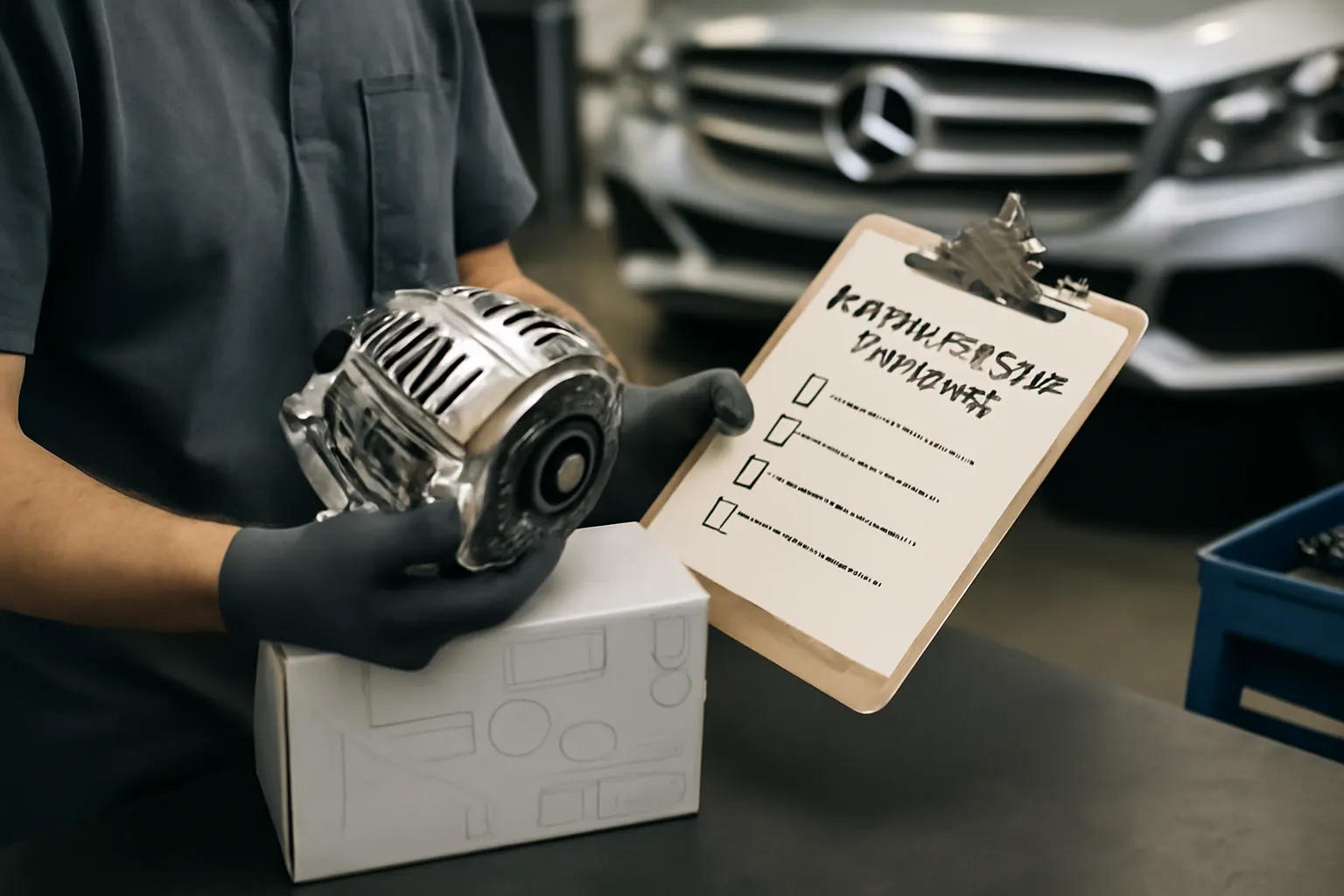
Below is a comprehensive checklist to help you identify, verify, and source authentic Mercedes parts. Use this list before, during, and after any parts purchase—whether you’re shopping online, at a dealership, or through a third-party supplier.
Mercedes Parts Authenticity Checklist
-
Source Verification
- Buy only from authorized Mercedes dealers, reputable online retailers, or certified distributors.
- Cross-reference supplier credentials with the official Mercedes-Benz website or trusted directories.
- Avoid “too good to be true” prices or sellers with limited contact information.
-
Part Number Confirmation
- Request and verify the Mercedes OEM part number for every component.
- Use the Mercedes Fitment Guide: How to Decode VINs and Platform Codes to ensure compatibility.
- Confirm part numbers against your vehicle’s VIN and official Mercedes catalogs.
-
Packaging Inspection
- Look for high-quality packaging: crisp printing, correct fonts, and Mercedes holograms or security seals.
- Check for spelling errors, mismatched logos, or missing manufacturer details.
- Inspect for tampered or resealed boxes.
-
Physical Quality Examination
- Compare the weight, finish, and materials to known genuine parts.
- Inspect for casting marks, part numbers, and Mercedes logos in the correct locations.
- Watch for rough edges, inconsistent coloring, or signs of poor workmanship.
-
Documentation and Certification
- Request certificates of authenticity or manufacturer statements, especially for high-value or safety-critical parts.
- Review any included installation instructions for accuracy and branding.
-
Price Comparison
- Compare prices across multiple reputable sources.
- Be cautious of steep discounts or “bulk deals” on essential components.
-
Warranty and Return Policy
- Genuine parts are backed by clear warranty and return policies.
- Avoid suppliers with vague or non-existent guarantees.
-
Supplier Communication
- Ask technical questions—genuine suppliers can answer specifics about fitment, material, and application.
- Avoid sellers who evade questions or provide generic answers.
-
Review and Reputation
- Check supplier reviews and ratings on independent platforms.
- Investigate any history of counterfeit complaints or unresolved disputes.
-
Post-Purchase Verification
- Upon receipt, compare the part to your original (if available).
- Test fit non-electrical parts before full installation.
- Report any discrepancies immediately to both the supplier and your payment provider.
The Counterfeit Problem: How Fakes Enter the Market
Counterfeit Mercedes parts are not limited to obscure online auctions or unregulated marketplaces. They increasingly appear in mainstream channels, including online “marketplaces,” local parts stores, and even some unauthorized dealerships. The global nature of the automotive supply chain makes it difficult to track every product’s origin, and counterfeiters have improved their packaging, labeling, and documentation to mimic genuine parts convincingly.
Many fakes originate from regions with lax intellectual property enforcement. They may be assembled with recycled or inferior materials, and often bypass essential quality control steps. Electronic parts such as sensors, ECUs, and ignition modules are particularly vulnerable because they are difficult to inspect visually and often fail only after installation.
Technical Red Flags: Material and Performance Shortcomings
Counterfeiters often cut costs by using subpar materials—cheaper metals, plastics that lack the heat or chemical resistance required, or friction materials in brake pads that don’t meet safety standards. The U.S. Department of Energy emphasizes that advanced materials are critical for vehicle performance, weight, and safety [U.S. Department of Energy: Materials Technologies]. Inferior substitutes may be lighter, weaker, or chemically unstable, leading to premature failure or dangerous malfunction.
For example:
-
Brake Pads: Counterfeit pads may use non-compliant friction compounds, causing rapid wear, noise, and loss of stopping power.
-
Suspension Components: Fake control arms or bushings may crack under load, affecting handling and alignment.
-
Filters: Non-genuine filters may have poor sealing or filtration, risking engine or transmission damage.
The Fitment Factor: Why Genuine Matters
Mercedes-Benz vehicles are engineered to precise tolerances. Genuine parts ensure correct fitment, seamless integration with vehicle systems, and compatibility with advanced diagnostics. Even a minor deviation in dimensions or materials can trigger warning lights, cause system malfunctions, or create safety hazards.
Incorrectly fitting parts can also lead to cascading failures. For instance, a non-genuine suspension bushing may introduce unwanted movement, accelerating wear on adjacent components and affecting ride quality. Use resources like the Mercedes Fitment Guide: How to Decode VINs and Platform Codes to match parts to your exact chassis and engine code.
Regulatory and Safety Implications
Regulatory bodies such as the NHTSA have strict standards for replacement parts, especially those affecting safety, emissions, and diagnostics [National Highway Traffic Safety Administration]. Installing counterfeit or non-compliant components can void your insurance, lead to failed inspections, or even result in legal penalties in some jurisdictions. More importantly, it puts you and your passengers at risk.
Always verify that the part meets or exceeds SAE or Mercedes-Benz standards for safety and performance. If in doubt, request documentation or certification from the supplier. For critical components like brakes, steering, or suspension, insist on OEM or certified aftermarket alternatives.
Digital Tools: VIN Decoding and Online Verification
Modern Mercedes vehicles use complex VIN and platform coding to identify exact part requirements. Before purchasing any component, decode your VIN using Mercedes’ official resources or trusted guides. This step is essential for avoiding both counterfeit and incorrect parts.
Many reputable suppliers now offer online part verification tools—enter your part number or scan a QR code to confirm authenticity. Use these digital resources whenever available, and avoid suppliers who cannot provide traceable part histories.
Case Study: Spotting a Counterfeit Mercedes Brake Pad
Let’s walk through a practical example. You’re shopping for Mercedes brake pads and find a set at a steep discount from an online vendor. The packaging looks professional, but you notice:
- The Mercedes logo appears slightly blurred compared to your original pads.
- The part number sticker is misaligned and lacks a holographic security strip.
- The pads themselves feel lighter and have a rougher finish than your current set.
- The included warranty card is generic and not printed in the usual Mercedes format.
In this scenario, all signs point to a counterfeit product. Reject the purchase, report the seller, and source your pads from an authorized distributor with a clear track record.
Installation and Post-Purchase Checks
Even after sourcing a part, your responsibility doesn’t end at checkout. Upon delivery, inspect the component thoroughly before installation. Compare it side-by-side with the original part, if possible, and test-fit non-electrical items before committing to full assembly.
For electronic modules, ensure that all connectors, pins, and housings match exactly. Use diagnostic tools to confirm proper function before closing up assemblies. If any aspect of the part feels off—weight, color, markings, or fit—pause and consult with an expert or reach out to the supplier for clarification.
Maintenance and Monitoring: Staying Ahead of Counterfeits
Regular maintenance is your first line of defense against hidden counterfeit parts. Document every replacement, including supplier details, part numbers, and dates of installation. Keep packaging and receipts for future reference—this is especially important for warranty claims or if issues arise later.
Monitor your vehicle for unusual symptoms after any parts replacement:
-
New noises, vibrations, or warning lights.
-
Changes in braking, handling, or ride quality.
-
Premature wear or failure of recently replaced components.
If you suspect a part is counterfeit, remove it immediately and report the issue to both the supplier and relevant authorities. Document the issue with photos and detailed descriptions to assist in any investigation.
Where to Buy: Sourcing Genuine Mercedes Parts
To minimize risk, prioritize the following sources:
-
Authorized Mercedes-Benz dealerships.
-
Certified online retailers with transparent sourcing and clear return policies.
-
Trusted automotive parts specialists with verifiable credentials.
-
AutoPartEx’s Mercedes OEM & Aftermarket Parts platform, which connects you to vetted suppliers and provides up-to-date fitment data.
Avoid purchasing critical components from auction sites, unverified third-party sellers, or informal marketplaces. When in doubt, consult with a Mercedes specialist or reference the Mercedes Fitment Guide before making a purchase.
The Role of AutoPartEx: Your Partner in Genuine Parts Sourcing
AutoPartEx is committed to helping Mercedes owners and technicians navigate the complexities of parts sourcing, fitment, and authenticity. Our curated selection of genuine and certified aftermarket Mercedes components, combined with expert guides and fitment tools, takes the guesswork out of buying. Whether you need Mercedes suspension parts, brake system upgrades, or advice on classic models, our platform is built to ensure quality, safety, and peace of mind.
Explore our Mercedes OEM & Aftermarket Parts hub for direct access to the latest sourcing resources and expert guidance.
What to Do If You Suspect a Counterfeit
If you encounter or suspect a counterfeit Mercedes part:
-
Stop installation and isolate the part.
-
Document the issue: take photos, note supplier details, and retain all packaging.
-
Contact the supplier for clarification and request a return or exchange.
-
Report the incident to Mercedes-Benz customer service and relevant authorities such as the NHTSA.
-
Share your experience on reputable forums or review sites to warn other buyers.
By following these steps, you not only protect your own vehicle but help safeguard the broader Mercedes community from the dangers of counterfeit parts.
Conclusion: Buy Smart, Drive Safe
Counterfeit Mercedes parts are a persistent threat, but with vigilance, technical know-how, and the right buying strategy, you can avoid costly mistakes and keep your vehicle performing at its best. Use the buyer’s checklist as your standard operating procedure for every purchase, and leverage trusted resources like AutoPartEx to ensure authenticity, safety, and value. Remember: the cheapest option is rarely the best when it comes to your Mercedes. Invest in genuine quality and drive with confidence.