Spotting Counterfeit Jeep Parts: Practical Advice
Counterfeit Jeep parts pose a significant risk to your vehicle’s safety, reliability, and performance. To protect your investment and ensure your Jeep continues to deliver the legendary durability it’s known for, you need to know how to spot fake components—before they wreak havoc on your ride or your wallet. This guide delivers actionable steps for identifying counterfeits by examining packaging, markings, and supplier credibility, so you can avoid costly mistakes and keep your Jeep running strong.
For a comprehensive look at sourcing, fitment, and engineering behind Jeep OEM and aftermarket parts, visit our Jeep OEM & Aftermarket Parts: Technical Sourcing, Fitment, and Engineering Guide.
Why Counterfeit Jeep Parts Are a Hidden Threat
While many Jeep owners focus on performance upgrades, routine maintenance, or restoration, the threat of counterfeit parts often goes unnoticed—until a critical failure occurs. Counterfeits are not always obvious; they can look nearly identical to genuine parts, making them difficult to spot without technical know-how. But these fakes can compromise everything from safety systems to drivetrain reliability.
The scale of the problem is significant. The National Highway Traffic Safety Administration (NHTSA) has repeatedly warned about the dangers of non-compliant and counterfeit automotive parts, citing increased risks of component failure, diminished crash protection, and even voided vehicle warranties. Jeep vehicles, prized for their ruggedness and off-road capability, are prime targets for counterfeiters looking to exploit high replacement part demand.
Immediate Tactics: How to Spot a Counterfeit Jeep Part
Spotting a counterfeit Jeep part requires a blend of observational skill and technical knowledge. Here are the most effective tactics you can use immediately:
1. Inspect Packaging Closely
- OEM packaging is high-quality, with sharp printing, correct logos, and proper barcodes.
- Counterfeit packaging often features blurry text, off-color logos, inconsistent fonts, or missing authentication seals.
- Check for tampering—broken seals or resealed boxes are red flags.
2. Examine Markings and Serial Numbers
- Genuine parts will have precise casting or stamping, correct part numbers, and often include QR codes or holograms.
- Fake parts may have misspelled words, inconsistent fonts, or numbers that don’t match Jeep’s official parts catalog.
3. Vet the Supplier
- Authorized dealers and reputable online sources provide verifiable part numbers and manufacturer documentation.
- Suspiciously low prices or sellers without a physical address are warning signs.
For a detailed breakdown of fitment and compatibility, refer to our Jeep Model Fitment & Compatibility Guide.
The Hidden Costs and Dangers of Counterfeit Jeep Parts
Choosing a counterfeit part isn’t just a matter of saving money—it can lead to catastrophic consequences. Here’s why:
- Safety Risks: Substandard materials and poor engineering mean fake parts may fail unexpectedly, especially under harsh conditions. Brake components, airbags, and suspension parts are particularly dangerous when counterfeited.
- Performance Degradation: Counterfeits often use inferior metals or plastics, leading to premature wear, poor fuel efficiency, and degraded off-road performance.
- Legal and Insurance Issues: Installation of non-compliant parts can void insurance coverage and leave you liable in the event of an accident.
The NHTSA maintains a database of recalls and safety issues, many of which stem from the use of unauthorized or counterfeit components. Jeep’s reputation for durability is only as strong as the weakest part installed.
Technical Deep Dive: What Makes a Jeep Part Genuine?
Understanding what distinguishes a genuine Jeep part from a counterfeit requires a look at manufacturing standards and materials.
OEM Standards and Regulatory Compliance
- Original Equipment Manufacturer (OEM) parts are built to the exact specifications set by Jeep and must comply with SAE (Society of Automotive Engineers) standards. These standards cover everything from material composition to dimensional tolerances and safety testing [SAE Standards].
- Aftermarket parts from reputable brands also adhere to these standards, though not all aftermarket parts are created equal.
Material Quality
- Metallurgy: Genuine parts use high-grade steel, aluminum, or engineered composites tested for fatigue, corrosion resistance, and durability.
- Plastics and Rubbers: OEM plastics and seals are formulated for UV resistance, flexibility, and chemical stability—critical for components exposed to the elements.
Engineering and Fitment
- Precision Machining: OEM parts are manufactured with tight tolerances for proper fitment and function.
- Testing: Every genuine Jeep part undergoes rigorous testing for performance, safety, and longevity, as mandated by the NHTSA and SAE.
Counterfeit parts often cut corners in all these areas, leading to misfit, premature failure, and safety risks.
The Most Commonly Counterfeited Jeep Parts
Certain Jeep parts are more frequently counterfeited due to high demand and replacement frequency. Here’s a list of the most targeted components:
- Brake pads and rotors
- Oil filters and air filters
- Suspension components (bushings, control arms, shocks)
- Lighting (headlights, taillights, bulbs)
- Badges and trim pieces
- Body panels and grilles
- Electronic modules and sensors
If you’re sourcing any of these, extra vigilance is warranted.
Visual Diagnostic Checklist: How to Identify a Counterfeit Part
Use this checklist to quickly assess whether a Jeep part is likely to be counterfeit:
| Inspection Point | Genuine Part Characteristics | Counterfeit Red Flags |
|---|---|---|
| Packaging | Crisp printing, correct logos, security seals | Blurry text, misspelled logos, resealed boxes |
| Markings | Clear, consistent font; correct part numbers | Faded ink, spelling errors, missing info |
| Material Quality | Uniform finish, proper weight, solid feel | Flimsy, lightweight, rough castings |
| Supplier | Authorized dealer, positive reviews | No address, poor ratings, cash-only sales |
| Price | Consistent with market rates | Unusually low or “too good to be true” |
| Documentation | Includes warranty card, instructions | Missing paperwork, generic instructions |
If any red flags are present, verify further before installation.
Supplier Vetting: The Key to Safe Sourcing
The most effective way to avoid counterfeit Jeep parts is to buy from trusted sources. Here’s how to vet your supplier:
1. Confirm Authorization
- Ask for proof: Authorized Jeep parts dealers should provide documentation or proof of their relationship with the manufacturer.
- Check Jeep’s official website: Use the dealer locator to find approved retailers.
2. Research Online Reputation
- Read reviews: Look for consistent positive feedback regarding authenticity and service.
- Watch for complaints: Multiple reports of fake or defective parts are a clear warning.
3. Evaluate Transaction Security
- Secure payment methods: Use credit cards or reputable platforms that offer buyer protection.
- Physical address and contact info: Avoid sellers who only provide a PO box or lack a customer service line.
4. Request Documentation
- Demand paperwork: Genuine parts come with installation instructions, warranty cards, and sometimes authentication certificates.
Technical Verification: Cross-Checking Part Numbers and Standards
Even with a reputable supplier, mistakes or mix-ups can occur. Always cross-verify:
- Part Numbers: Use Jeep’s official parts catalog or dealer resources to confirm the part number matches your vehicle’s year, make, and model.
- SAE and NHTSA Standards: Genuine parts will typically reference compliance with SAE standards and NHTSA safety requirements. Look for these markings on packaging or the part itself [Vehicle Safety and Equipment].
If in doubt, consult with a Jeep-certified technician or use the VIN (Vehicle Identification Number) to ensure compatibility.
The Role of Fitment and Compatibility in Identifying Fakes
Counterfeiters often produce generic parts that “fit” multiple Jeep models, but lack precise engineering for your vehicle’s specific year or trim package. This can lead to:
- Improper fitment: Resulting in rattles, leaks, or premature wear.
- Compatibility issues: Electrical components may not communicate correctly with your Jeep’s onboard systems.
- Safety risks: Critical tolerances in suspension or braking components may not be met.
Always reference a trusted fitment guide, such as our Jeep Model Fitment & Compatibility Guide, to ensure the part is engineered for your exact vehicle.
Installation and Post-Installation Checks
Even after sourcing what appears to be a genuine part, it’s critical to perform post-installation checks:
1. Visual Inspection
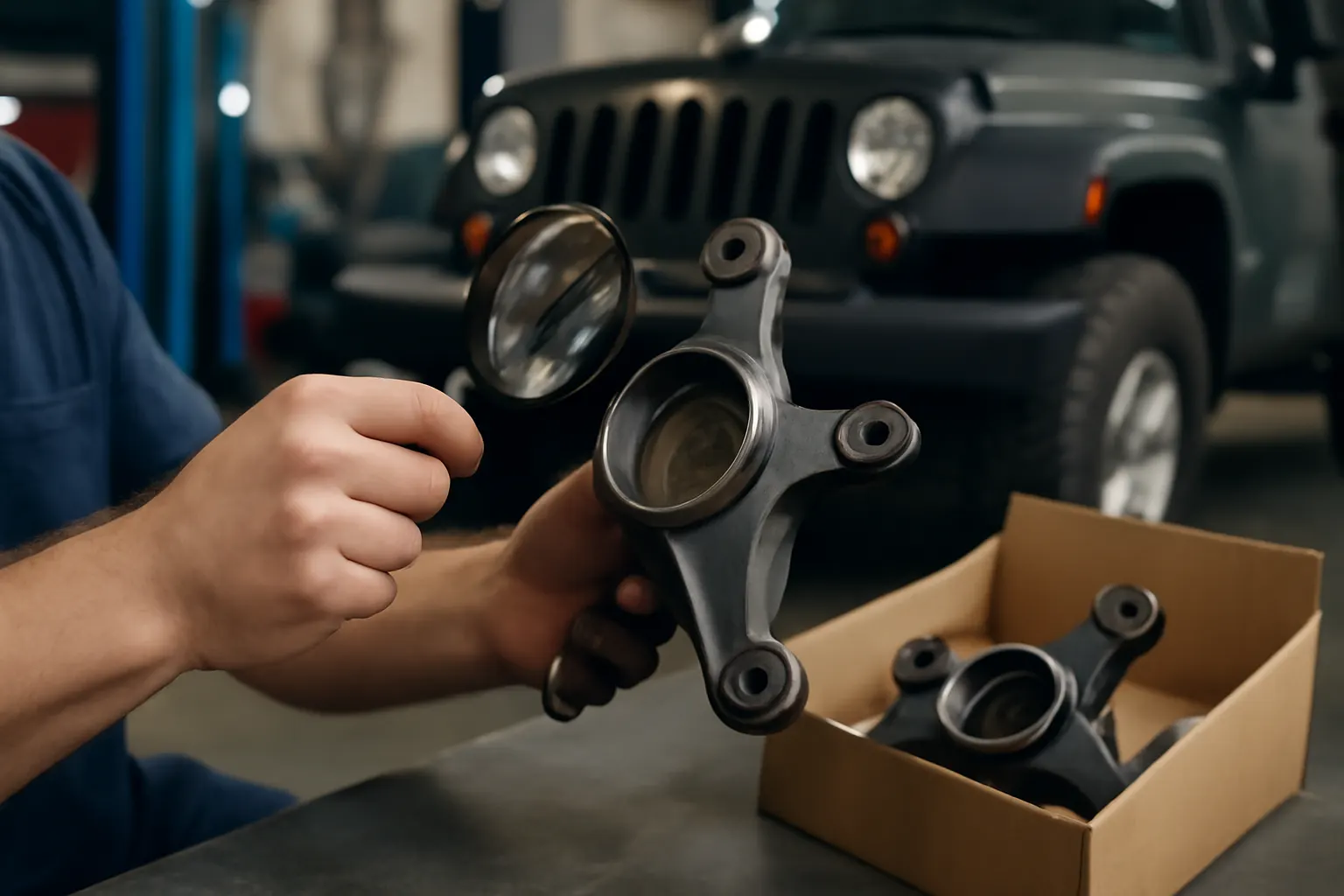
- Compare old and new: Place the new part alongside the original. Look for differences in casting, color, or markings.
- Check for fit: The part should install without excessive force or modification.
2. Functional Testing
- Run diagnostics: For electronic components, use an OBD-II scanner to ensure proper communication.
- Test under load: For brakes, suspension, or drivetrain parts, perform test drives in controlled conditions.
3. Monitor Performance
- Listen and feel: Unusual noises, vibrations, or warning lights may indicate a counterfeit or defective part.
- Track wear: If the new part wears out quickly, it may be a sign of substandard materials.
Maintenance Implications: Long-Term Risks of Counterfeit Parts
Installing counterfeit Jeep parts can lead to a cascade of maintenance issues:
- Accelerated wear: Fake filters or lubricants can allow contaminants to damage your engine or transmission.
- Unpredictable failures: Counterfeit electronic modules may work intermittently, causing diagnostic headaches.
- Chain reactions: A single counterfeit suspension component can accelerate wear on bushings, tires, and steering parts.
These problems often surface outside the initial installation window, making them difficult to trace back to the counterfeit component. That’s why vigilance at the sourcing stage is so critical.
For a proactive approach to maintenance, see our Top Jeep Maintenance Intervals & Service Tips.
The Engineering Perspective: Why Counterfeits Can’t Match Jeep Quality
Jeep’s engineering process is rigorous and tightly controlled. Every genuine part is designed, tested, and validated for:
- Extreme conditions: Jeep components are engineered to withstand off-road abuse, temperature swings, and exposure to mud, water, and UV rays.
- System integration: Parts are designed to work seamlessly with Jeep’s mechanical and electronic systems.
- Regulatory compliance: All OEM parts must meet or exceed NHTSA and SAE requirements for safety and performance [SAE Standards].
Counterfeiters, motivated by profit, cannot replicate this process. They skip critical steps, use cheaper materials, and ignore the standards that keep your Jeep safe and reliable.
Real-World Scenarios: Case Studies in Counterfeit Jeep Parts
Case 1: Counterfeit Brake Pads
A Jeep Wrangler owner purchased “OEM-style” brake pads from an online marketplace at a price 40% below dealer cost. Within 3,000 miles, the pads disintegrated, scoring the rotors and causing a near-miss accident. NHTSA later confirmed the pads failed all safety and material tests.
Case 2: Fake Oil Filter Catastrophe
A Jeep Grand Cherokee received an oil filter with misspelled packaging from a discount retailer. The filter’s bypass valve failed, starving the engine of oil and resulting in a $4,000 repair.
Case 3: Suspension Component Failure
A set of counterfeit control arms purchased from an unauthorized seller snapped during off-road use, leading to loss of steering control. The parts were found to be made from substandard steel with poor welds.
These cases highlight the very real dangers of counterfeit Jeep parts and underscore the importance of vigilance.
The Solution Path: Best Practices for Sourcing Authentic Jeep Parts
To protect your Jeep and ensure optimal performance, follow this solution path:
- Always buy from authorized dealers or reputable suppliers.
- Cross-verify part numbers and compatibility using official resources.
- Inspect packaging, markings, and documentation upon arrival.
- Perform a side-by-side comparison with the original part.
- Consult technical guides and fitment databases for confirmation.
- Keep records of purchase and installation for future reference.
If you suspect a part may be counterfeit, contact Jeep customer service or your local dealer for verification. Report confirmed counterfeits to the NHTSA to help prevent future incidents.
AutoPartEx: Your Partner in Safe, Reliable Jeep Parts Sourcing
At AutoPartEx, we are committed to helping Jeep owners and technicians source only genuine, high-quality components. Our editorial team rigorously reviews supplier networks, part compatibility, and engineering standards to deliver the most accurate and actionable guidance in the industry.
Explore our Jeep OEM & Aftermarket Parts: Technical Sourcing, Fitment, and Engineering Guide for in-depth resources, or consult our Jeep Wrangler Evolution: Engineering Highlights to learn more about the technology and standards behind Jeep’s legendary performance.
Whether you’re tackling a routine repair or a full restoration, trust AutoPartEx to help you avoid costly mistakes and keep your Jeep adventure-ready.