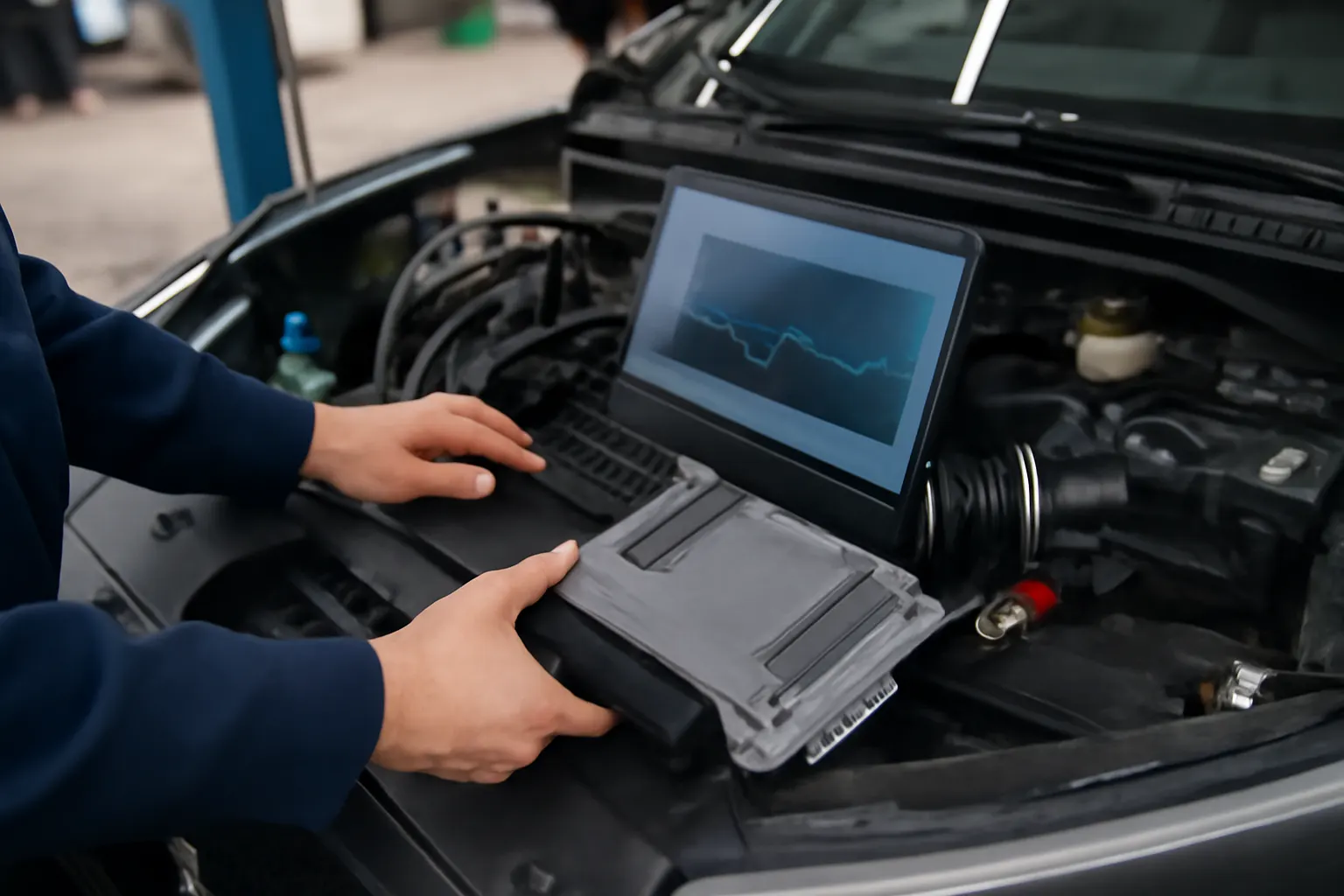
Why Modern Engines Depend on Accurate ECU Integration
Modern engines are marvels of precision engineering, and at the heart of this evolution lies the Engine Control Unit (ECU), also known as the engine computer box. Accurate ECU integration is not just a technical requirement—it’s the linchpin that enables real-time coordination between sensors, actuators, and other electronic modules for optimal engine performance, safety, and efficiency. Without a properly integrated ECU, even the most advanced engines will fall short of their potential. This article explores how and why accurate ECU integration is essential, what risks arise from poor integration, and how professionals can ensure seamless operation in today’s vehicles.
If you’re looking for more in-depth technical resources on ECUs, be sure to reference our Engine Computer Box (ECU/PCM) Technical Guide: Diagnostics, Replacement, and Performance Insights, which provides foundational context for the topics covered here.
The Immediate Answer: ECU Integration Is the Nerve Center of Modern Engine Management
Every modern vehicle depends on the ECU to coordinate a complex web of sensors, actuators, and modules. The ECU’s real-time data processing ensures that fuel injection, ignition timing, variable valve actuation, turbocharger boost, emissions controls, and even adaptive transmission shifts are precisely synchronized. This integration is what enables engines to achieve tight emission standards, maximize fuel efficiency, and deliver responsive power—all while maintaining safety and reliability.
In practical terms, without accurate ECU integration, the engine cannot adapt to changing conditions such as altitude, load, or temperature. The result? Poor drivability, increased emissions, suboptimal fuel economy, and a higher risk of component failure. As automakers push the boundaries of efficiency and performance, the role of the ECU as the central coordinator becomes even more critical.
The Hidden Problem: Integration Errors Undermine Performance and Safety
The risks of inaccurate ECU integration often remain hidden until symptoms manifest as drivability issues, diagnostic trouble codes, or even safety recalls. Unlike a failed mechanical part, integration errors can be intermittent, difficult to trace, and may not trigger immediate warning lights. This is especially true when non-OEM or poorly programmed ECUs are installed, or when sensors and actuators are replaced without proper calibration and coding.
Vehicles today are designed around tightly integrated electronic systems. A mismatch in sensor calibration, a corrupted ECU firmware update, or an improperly coded replacement module can cause cascading issues—ranging from rough idling and hesitation to complete engine shutdown or loss of critical safety features such as traction control.
Expanding the Problem: Why ECU Integration Is Increasingly Complex
The Proliferation of Sensors and Actuators
A typical modern engine now includes dozens of sensors: mass airflow (MAF), manifold absolute pressure (MAP), oxygen (O2), crankshaft and camshaft position, knock, coolant temperature, throttle position, and more. Each sensor provides real-time data that the ECU must interpret and act upon with millisecond precision. Actuators—such as fuel injectors, ignition coils, variable valve timing solenoids, and electronic throttle bodies—respond to ECU commands to adjust engine operation dynamically.
As vehicle technology advances, the number and diversity of sensors and actuators continue to grow, increasing the complexity and the need for robust integration protocols.
The Rise of Networked Control Modules
Beyond the engine itself, the ECU often communicates with other control modules over high-speed networks like CAN (Controller Area Network) bus. Transmission control units (TCU), body control modules (BCM), ABS/ESC modules, and even infotainment systems all share data, making accurate integration essential for coordinated operation and safety.
The Impact of Regulatory and Efficiency Demands
Stringent emissions and fuel efficiency standards, such as those enforced by the U.S. Department of Energy and the National Highway Traffic Safety Administration (NHTSA), require precise engine management. The ECU must integrate data from advanced sensors (e.g., wideband O2 sensors, NOx sensors) to meet these requirements. Small integration errors can lead to non-compliance, increased emissions, or even mandatory recalls.
Technical Deep Dive: How ECU Integration Works
Core Functions of the ECU
At its core, the ECU is a specialized computer programmed to:
- Collect data from all engine and vehicle sensors.
- Process this data using embedded algorithms.
- Output control signals to actuators to adjust fuel, air, spark, and emissions systems.
- Communicate with other modules to share status and coordinate functions.
Real-Time Data Processing and Control Loops
The ECU operates in real-time, using closed-loop and open-loop control strategies. For example, closed-loop fuel control uses O2 sensor feedback to fine-tune the air-fuel ratio, while open-loop modes rely on pre-programmed maps during cold starts or wide-open throttle.
The Importance of Accurate Sensor Calibration
Every sensor must be correctly identified and calibrated within the ECU’s programming. Even small deviations—such as a MAF sensor with a slightly different output curve—can cause the ECU to miscalculate fueling or ignition, leading to drivability issues or engine damage.
Coding and Programming: The Linchpin of Integration
When ECUs, sensors, or actuators are replaced, they often require coding or programming to match the vehicle’s configuration. This process ensures that the ECU recognizes all components and applies the correct control strategies. Improper coding is a leading cause of integration failures.
Common Integration Pitfalls and Their Consequences
Aftermarket and Non-OEM ECUs
Aftermarket ECUs or remanufactured units are a frequent source of integration problems. These units may lack the latest firmware updates, use generic programming, or be incompatible with certain sensor configurations. While they can offer performance tuning capabilities, they must be programmed to factory specifications to avoid integration errors. For more on this topic, see The Hidden Risks of Aftermarket ECUs: What Every Technician Should Know.
Sensor and Actuator Mismatches
Mixing sensors or actuators from different model years, engine variants, or manufacturers can create subtle integration issues. Even if the connectors fit, the electrical characteristics or data output may not match what the ECU expects.
Firmware and Software Update Errors
Software updates are essential for fixing bugs, improving efficiency, and ensuring compliance with new standards. However, incomplete or corrupted updates can disrupt integration, causing unpredictable behavior or diagnostic trouble codes.
Physical Installation Errors
Improper grounding, connector pin misalignment, or damaged wiring can disrupt communication between the ECU and other modules, leading to intermittent faults that are difficult to diagnose.
Diagnostic Strategies for ECU Integration Issues
A systematic approach is essential for diagnosing integration-related problems. Here’s a checklist for technicians and advanced DIYers:
ECU Integration Diagnostic Checklist
- Scan for Diagnostic Trouble Codes (DTCs): Use a scan tool to retrieve all stored and pending codes. Pay special attention to codes indicating communication errors (e.g., U-codes).
- Check ECU Part Numbers and Software Versions: Verify that the installed ECU matches the vehicle’s requirements, including software and calibration levels.
- Inspect Sensor and Actuator Compatibility: Confirm that all sensors and actuators are correct for the vehicle’s year, make, model, and engine code.
- Review Recent Repairs or Modifications: Identify any recent changes that could affect integration, such as ECU replacement, sensor swaps, or wiring repairs.
- Test Network Communication: Use an oscilloscope or advanced scan tool to check CAN bus signal integrity and module communication.
- Perform Adaptation and Coding Procedures: If components have been replaced, follow the manufacturer’s procedures for coding and adaptation.
- Verify Grounding and Power Supply: Check all ground points and power supplies to the ECU and related modules for voltage drops or corrosion.
- Update Firmware as Needed: Ensure the ECU and related modules have the latest firmware and calibration files.
- Road Test and Monitor Live Data: After repairs, perform a road test while monitoring live data to confirm proper integration and system response.
The Role of ECU Integration in Fuel Efficiency and Emissions
Accurate ECU integration is a direct enabler of advanced fuel-saving and emissions-reducing technologies. According to the U.S. Department of Energy, modern fuel efficiency improvements rely on precise electronic control of fuel delivery, ignition, and variable valve timing—all managed by the ECU1. Integration errors can negate these gains, causing excessive fuel consumption and increased tailpipe emissions.
For example, an incorrectly integrated O2 sensor can cause the ECU to run the engine rich, increasing fuel usage and emissions. Similarly, failure to integrate turbocharger boost sensors can result in overboost or underboost conditions, risking engine damage and regulatory non-compliance.
Safety Implications: Beyond Engine Performance
The ECU’s influence extends to critical safety systems. Modern vehicles use integrated electronic stability control (ESC), traction control, and even advanced driver assistance systems (ADAS), all of which rely on data from the ECU and its networked modules. The National Highway Traffic Safety Administration (NHTSA) highlights that faulty electronic integration can compromise safety systems, potentially leading to recalls or hazardous driving conditions2.
For example, loss of communication between the ECU and ABS/ESC modules can disable stability control, increasing the risk of accidents. Accurate ECU integration is therefore a non-negotiable requirement for both performance and safety.
Best Practices for ECU Replacement and Integration
When replacing or upgrading an ECU, following best practices is essential for seamless integration:
ECU Replacement and Integration Checklist
- Source the Correct ECU: Use OEM or approved remanufactured units matching the vehicle’s VIN, engine code, and calibration.
- Update Firmware and Calibrations: Install the latest manufacturer-approved firmware and calibration files.
- Perform Required Coding/Programming: Use factory scan tools or equivalent to code the ECU to the vehicle’s configuration.
- Adapt Sensors and Actuators: Run adaptation routines for throttle, idle, variable valve timing, and other systems as specified.
- Test All Functions: Verify engine start, idle quality, throttle response, and network communication with other modules.
- Document All Steps: Keep detailed records for future diagnostics or warranty purposes.
For a step-by-step technical walkthrough, see our guide on Programming and Coding Your Replacement ECU: A Technical Walkthrough.
The Evolution of ECU Integration: Materials, Design, and Future Trends
Material and design advances play a crucial role in enabling robust ECU integration. According to the U.S. Department of Energy’s research on materials technologies, lighter and more thermally stable materials enable ECUs to operate reliably in harsh under-hood environments3. Improved connector designs, circuit board layouts, and electromagnetic shielding further enhance integration by minimizing interference and signal loss.
Looking ahead, the trend toward centralized vehicle computers (domain controllers) and over-the-air (OTA) software updates will make accurate integration even more critical. As vehicles become increasingly software-defined, maintaining a secure and up-to-date ECU integration strategy will be essential for both performance and cybersecurity.
Troubleshooting Integration Issues: Real-World Scenarios
Case Study 1: Intermittent Engine Stalling After ECU Swap
A 2018 sedan exhibited intermittent stalling following an ECU replacement. Initial diagnostics revealed no DTCs, but live data showed erratic throttle position readings. Investigation uncovered a mismatch between the replacement ECU’s software version and the vehicle’s original throttle actuator. Reprogramming the ECU with the correct calibration resolved the issue.
Case Study 2: Failed Emissions Test Due to Sensor Mismatch
A late-model SUV failed a state emissions test after an O2 sensor replacement. The new sensor, though physically identical, had a different response curve than the original. The ECU could not properly interpret the readings, resulting in a persistent rich condition and failed emissions. Installing the correct sensor and performing an adaptation reset restored compliance.
Case Study 3: Traction Control Warning After Aftermarket ECU Installation
A performance enthusiast installed an aftermarket ECU for tuning purposes. While the engine ran well, the dashboard displayed a permanent traction control warning. The aftermarket ECU lacked the necessary communication protocols for the factory ABS/ESC module, disabling stability control. The owner reverted to the OEM ECU and had it reprogrammed, restoring all safety functions.
Maintenance and Long-Term Reliability
Maintaining accurate ECU integration is not a one-time event but an ongoing process. Regular software updates, periodic inspections of wiring and connectors, and attentive response to warning lights or drivability changes are all part of long-term reliability.
Maintenance Checklist for ECU Integration
- Schedule Regular Software/Firmware Updates: Check for manufacturer updates at every major service interval.
- Inspect Connectors and Wiring: Look for corrosion, loose pins, or damaged insulation during routine maintenance.
- Monitor for New Warning Lights or Codes: Investigate any new dashboard warnings promptly.
- Replace Sensors and Actuators with OEM Parts: Avoid generic substitutes unless confirmed compatible.
- Document All Repairs and Updates: Keep a detailed service history for future reference.
Sourcing the Right ECU and Integration Components
With the proliferation of aftermarket and used ECUs, sourcing the right component is critical. Work with reputable suppliers who provide units matched to your vehicle’s VIN and calibration. Always verify the part number, software version, and compatibility before installation. Avoid units with missing or altered identification labels, as these may be incompatible or previously tampered with.
AutoPartEx offers a comprehensive selection of OEM and high-quality remanufactured ECUs, along with technical support to ensure proper integration. Our platform cross-references part numbers, software versions, and vehicle applications to minimize the risk of integration errors.
AutoPartEx: Your Partner in Advanced Engine Electronics
As engine management systems evolve, the need for precise ECU integration will only grow. At AutoPartEx, we combine expert technical guidance, up-to-date product listings, and robust diagnostic resources to help technicians, enthusiasts, and fleet operators achieve seamless integration—whether you’re replacing a failed ECU, upgrading for performance, or troubleshooting complex drivability issues.
For more technical articles and product support, explore our Engine Computer Box (ECU/PCM) Technical Guide: Diagnostics, Replacement, and Performance Insights, or connect with our team for personalized assistance.
Conclusion: Integration Is the Foundation of Modern Engine Performance
Accurate ECU integration is not just a technical detail—it is the foundation that supports the performance, efficiency, and safety of every modern engine. As vehicles become more complex and interconnected, the risks posed by poor integration grow exponentially. By following best practices for diagnostics, replacement, programming, and maintenance, automotive professionals and enthusiasts can ensure that their vehicles operate at peak potential—today and into the future.
References
- Vehicle Safety and Equipment – National Highway Traffic Safety Administration
- Fuel Efficiency – United States Department of Energy
- Materials Technologies – United States Department of Energy