Detecting Counterfeit McLaren Parts: A Field Report
Counterfeit McLaren parts are a growing threat to vehicle safety, performance, and value. This field report provides real-world examples, practical detection methods, and expert guidance for identifying fake McLaren components—before they compromise your car. Whether you’re a McLaren owner, technician, or parts buyer, this guide equips you to confidently verify authenticity and protect your investment. For comprehensive access to genuine McLaren parts and fitment data, see McLaren Auto Parts: Heritage Engineering, Genuine OEM Fitment & Performance | AutoPartEx.
The Immediate Answer: How to Spot Counterfeit McLaren Parts
Counterfeit McLaren parts can often be detected before installation by a combination of visual inspection, part number verification, material quality checks, and sourcing diligence. Key indicators include:
- Inconsistent or misspelled branding
- Incorrect or missing part numbers
- Subpar materials (weight, finish, or texture)
- Packaging anomalies
- Unusual pricing or sourcing from unauthorized vendors
Immediate detection is possible by cross-referencing parts with official McLaren documentation, using trusted suppliers, and applying hands-on diagnostic techniques. The consequences of installing fake components are severe: compromised safety, diminished performance, and potential legal or insurance complications.
The Hidden Problem: The Scope and Impact of Counterfeit McLaren Components
While the luxury car aftermarket thrives on innovation and restoration, it also attracts sophisticated counterfeiters. McLaren’s reputation for precision engineering and lightweight materials makes its components especially attractive targets. Counterfeiters have grown increasingly adept at replicating surface details, making it difficult to distinguish fakes from genuine parts at a glance.
The real risk lies beneath the surface. Counterfeit parts may fit, but they often fail to meet the rigorous safety, material, and performance standards set by McLaren and enforced by bodies such as the National Highway Traffic Safety Administration (NHTSA) and SAE International. Substandard materials can lead to catastrophic failures—brake fade, suspension collapse, electrical fires, or engine damage. The threat extends to both mechanical and cosmetic parts, from carbon fiber panels to sensors and fasteners.
Deeper Technical Explanation: Why Counterfeit Parts Are Dangerous
Engineering, Materials, and Safety Standards
McLaren’s components are engineered to exacting tolerances and manufactured using advanced materials such as aerospace-grade alloys and proprietary carbon fiber composites. These materials are selected for optimal weight, strength, and heat resistance—factors directly affecting vehicle dynamics, safety, and fuel efficiency (DOE: Materials Technologies). Counterfeiters usually cannot match these specifications; they substitute inferior metals or plastics, resulting in:
- Increased weight (reducing performance and fuel economy)
- Lower structural integrity (higher risk of failure)
- Poor thermal properties (risking overheating or fire)
Testing and Certification
Authentic McLaren parts undergo extensive testing to comply with regulatory and manufacturer standards. This includes:
- SAE engineering standards (SAE Standards)
- NHTSA safety and equipment regulations (NHTSA: Vehicle Safety and Equipment)
Counterfeit parts bypass these controls, placing occupants and the vehicle at risk.
Real-World Examples: Field-Identified Counterfeit McLaren Parts
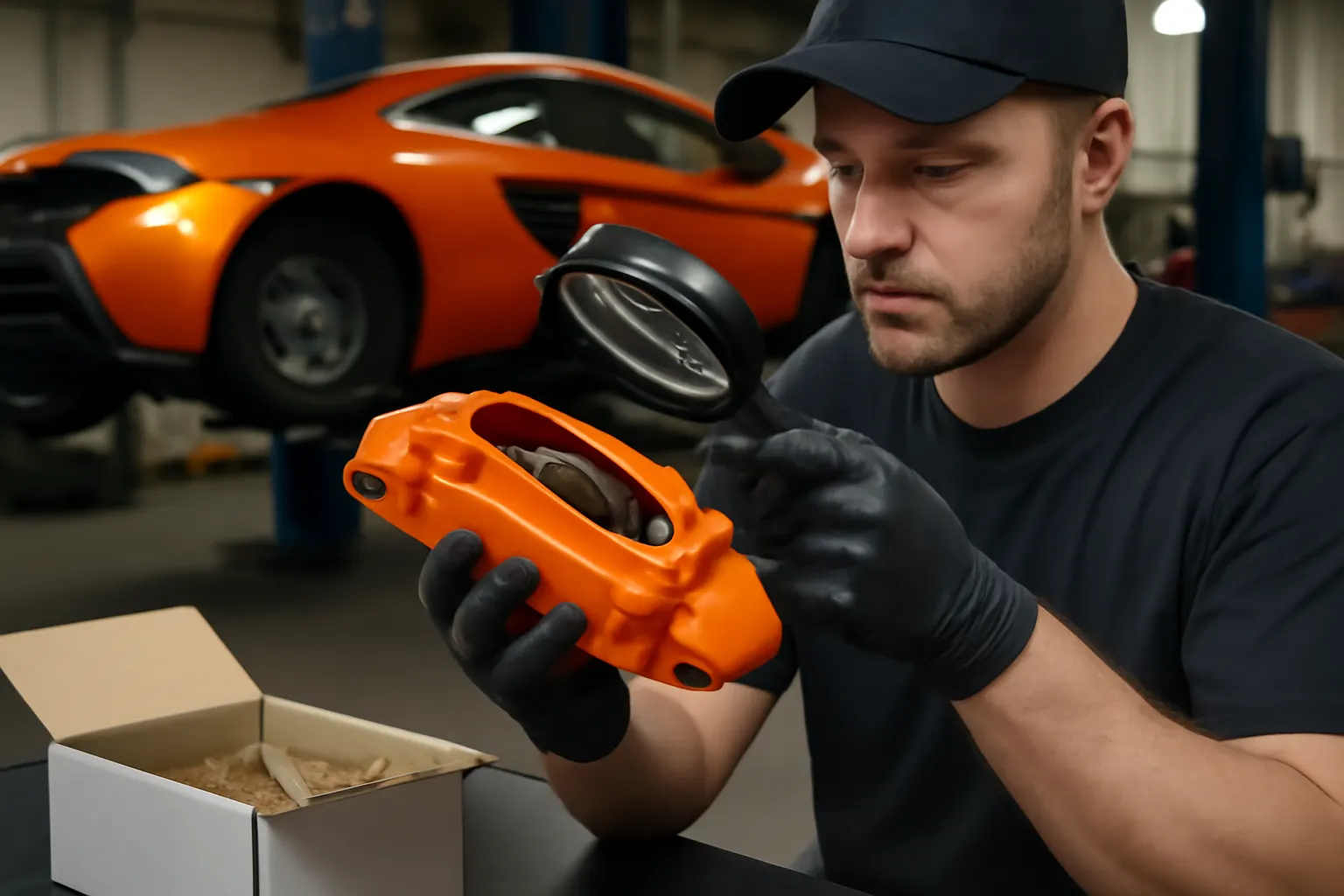
Case Study 1: Carbon Fiber Brake Calipers
A McLaren 720S owner purchased what appeared to be OEM carbon ceramic brake calipers from an online marketplace at a significant discount. Upon inspection:
- The calipers were 8% heavier than genuine McLaren units.
- The McLaren logo was laser-etched, not painted, and the font was subtly incorrect.
- After installation, the calipers overheated during moderate track use, causing brake fade and rotor damage.
Case Study 2: Suspension Control Arms
A performance shop received a batch of McLaren control arms from an overseas supplier. The arms fit correctly, but:
- The anodized finish wore off after a few months.
- Cracks formed near the bushing mounts under normal driving.
- Metallurgical analysis showed the use of generic aluminum, not the heat-treated alloy specified by McLaren.
Case Study 3: Body Panels and Aero Parts
A 570S owner fitted replacement front splitters and side skirts labeled as “OEM-style.” The parts:
- Were slightly warped, requiring excessive force to install.
- Lacked the embedded RFID chips found in genuine McLaren panels.
- Developed stress cracks after limited exposure to sunlight and vibration.
Visual Inspection Checklist: Authenticity at a Glance
Use this checklist to screen McLaren parts before installation:
| Inspection Point | Authentic Part | Counterfeit Clues |
|---|---|---|
| Branding/Logo | Crisp, correct font and placement | Fuzzy, misspelled, or off-center logos |
| Part Number | Matches McLaren catalog, etched or stickered | Missing, altered, or generic numbering |
| Material/Finish | Consistent weight, smooth finish | Heavier/lighter, rough or uneven texture |
| Packaging | Branded, with barcodes and security seals | Plain, damaged, or missing documentation |
| Hardware/Fasteners | High-quality, corrosion-resistant | Cheap or mismatched bolts/screws |
| RFID/Serial Tag | Present on many major components | Absent or nonfunctional |
| Supplier | Authorized McLaren dealer or trusted vendor | Unknown, unverified, or ‘gray market’ |
Sourcing and Documentation: The First Line of Defense
Authorized Dealers and Trusted Suppliers
Always source McLaren parts from authorized dealers or highly reputable suppliers. Confirm vendor credentials and look for direct ties to McLaren or official distribution channels. Avoid online marketplaces or auction sites that cannot guarantee authenticity.
Documentation and Traceability
Genuine McLaren parts are accompanied by:
- Manufacturer’s documentation (certificate of authenticity, warranty card)
- Barcoded labels and tamper-evident security seals
- OEM part numbers that can be cross-checked with McLaren’s official parts catalog
If documentation is missing or appears altered, treat the part as suspect.
Advanced Diagnostic Techniques: Beyond the Surface
Material and Weight Analysis
If you have access to a precision scale, compare the part’s weight to McLaren’s published specifications. Even minor discrepancies can indicate counterfeit construction.
RFID and Serial Number Verification
Many modern McLaren components, especially structural and electronic parts, include embedded RFID chips or unique serial numbers. Use a compatible scanner to verify authenticity with McLaren’s database or your trusted supplier.
Metallurgical and Structural Testing
For critical components (brakes, suspension, chassis parts), consider professional testing:
- Metallurgical analysis (X-ray fluorescence, hardness testing)
- Dimensional checks against OEM blueprints
- Non-destructive testing for cracks or voids
While not always practical for every part, these tests are essential for high-value or safety-critical components.
The Cost of Counterfeits: Safety, Performance, and Value
Safety Risks
Counterfeit parts can lead to catastrophic failures:
- Brake system malfunctions
- Suspension collapse
- Electrical shorts and fires
According to the NHTSA, substandard replacement parts are a leading cause of vehicle safety incidents.
Performance Degradation
Non-genuine parts often lack the precision and material quality required for McLaren’s advanced engineering. This can result in:
- Reduced acceleration and handling
- Increased fuel consumption (DOE: Fuel Efficiency)
- Premature wear and costly repairs
Resale and Insurance Implications
Using counterfeit parts can void insurance claims and diminish your McLaren’s resale value. Many buyers and collectors require documentation of OEM parts during pre-purchase inspections.
The Role of Regulatory Standards and Recalls
Regulatory Oversight
The NHTSA and SAE International set stringent standards for automotive parts and equipment (SAE Standards; NHTSA: Vehicle Safety and Equipment). Authentic McLaren components are designed and tested to comply with these standards. Counterfeit parts evade regulatory oversight, increasing the risk of recalls, accidents, and legal liability.
Recall Scenarios
Counterfeit parts have been implicated in several high-profile recall events across the industry (NHTSA Recalls). If a component is not traceable to the OEM, your McLaren may not be eligible for recall-related repairs or replacements.
Proactive Diagnostic and Installation Guidance
Pre-Installation Steps
Before installing any McLaren part:
- Verify source: Confirm supplier authenticity.
- Inspect packaging: Look for McLaren branding, barcodes, and security features.
- Check part numbers: Cross-reference with McLaren’s parts database or an official guide like McLaren OEM Parts Guide: Compatibility & Sourcing.
- Weigh and measure: Compare with OEM specifications.
- Scan RFID/serial tags: Authenticate with McLaren or your trusted supplier.
- Document findings: Record photos and notes for future reference.
Installation Red Flags
During installation, watch for:
- Parts requiring excessive force to fit
- Misaligned mounting holes or connectors
- Abnormal noises or resistance during operation
- Early signs of wear or material failure
If any of these occur, halt installation and consult with a McLaren specialist.
Maintenance and Post-Installation Monitoring
Scheduled Inspections
After installing new components, especially if there’s any doubt about their authenticity, perform regular inspections:
- Visual checks for cracks, corrosion, or abnormal wear
- Torque checks on fasteners
- Functional tests (brakes, suspension articulation, electronics)
Refer to Service Intervals & Maintenance for McLaren Models for model-specific inspection schedules.
Early Warning Signs
Be alert for:
- Dashboard warning lights
- Unusual handling or braking behavior
- Fluid leaks or electrical faults
Early detection of part failure can prevent accidents and further damage.
Buying Guidance: How to Avoid Counterfeit McLaren Parts
Do’s
- Use authorized McLaren dealers or AutoPartEx-vetted suppliers
- Request full documentation and traceability
- Consult McLaren’s official parts catalog or McLaren OEM Parts Guide: Compatibility & Sourcing
- Ask for photos of packaging, labels, and part markings before purchasing
- Keep a record of all purchases and communications
Don’ts
- Don’t buy from unverified online marketplaces or auction sites
- Don’t accept parts without OEM part numbers or documentation
- Don’t install parts that feel, weigh, or fit differently than expected
- Don’t ignore pricing that seems too good to be true
The AutoPartEx Solution: Your Trusted Source for Genuine McLaren Parts
AutoPartEx is committed to safeguarding McLaren owners and technicians from the risks of counterfeit components. Our platform provides:
- Direct access to verified OEM McLaren parts
- Comprehensive fitment data and compatibility guides
- Supplier vetting and traceability
- Expert technical support for diagnostics and installation
Explore the full range of authentic McLaren parts and technical resources at McLaren Auto Parts: Heritage Engineering, Genuine OEM Fitment & Performance | AutoPartEx. For insights into McLaren’s engineering evolution, see McLaren Model Evolution: Engineering Breakthroughs.
Expert Action: What to Do If You Suspect a Counterfeit Part
- Do not install the part: Set it aside and document all details.
- Contact your supplier: Request proof of authenticity and return/refund procedures.
- Report the incident: Notify McLaren, AutoPartEx, and regulatory bodies such as the NHTSA.
- Share your findings: Help the community by posting verified cases to forums and technical groups.
- Schedule an inspection: Have a McLaren-certified technician review your vehicle for signs of counterfeit parts.
Conclusion
Counterfeit McLaren parts pose a serious threat to safety, performance, and the legacy of your vehicle. With vigilance, technical know-how, and trusted sourcing, you can protect your investment and enjoy the full potential of McLaren engineering. Rely on AutoPartEx and official McLaren resources for guidance, diagnostics, and genuine parts. Don’t let fakes undermine your drive—detect, verify, and act with confidence.
References
- Materials Technologies – United States Department of Energy
- Fuel Efficiency – United States Department of Energy
- Vehicle Safety and Equipment – National Highway Traffic Safety Administration
- SAE Standards – SAE International
- Vehicle, Car Seat, Tire, and Equipment Recalls – National Highway Traffic Safety Administration