
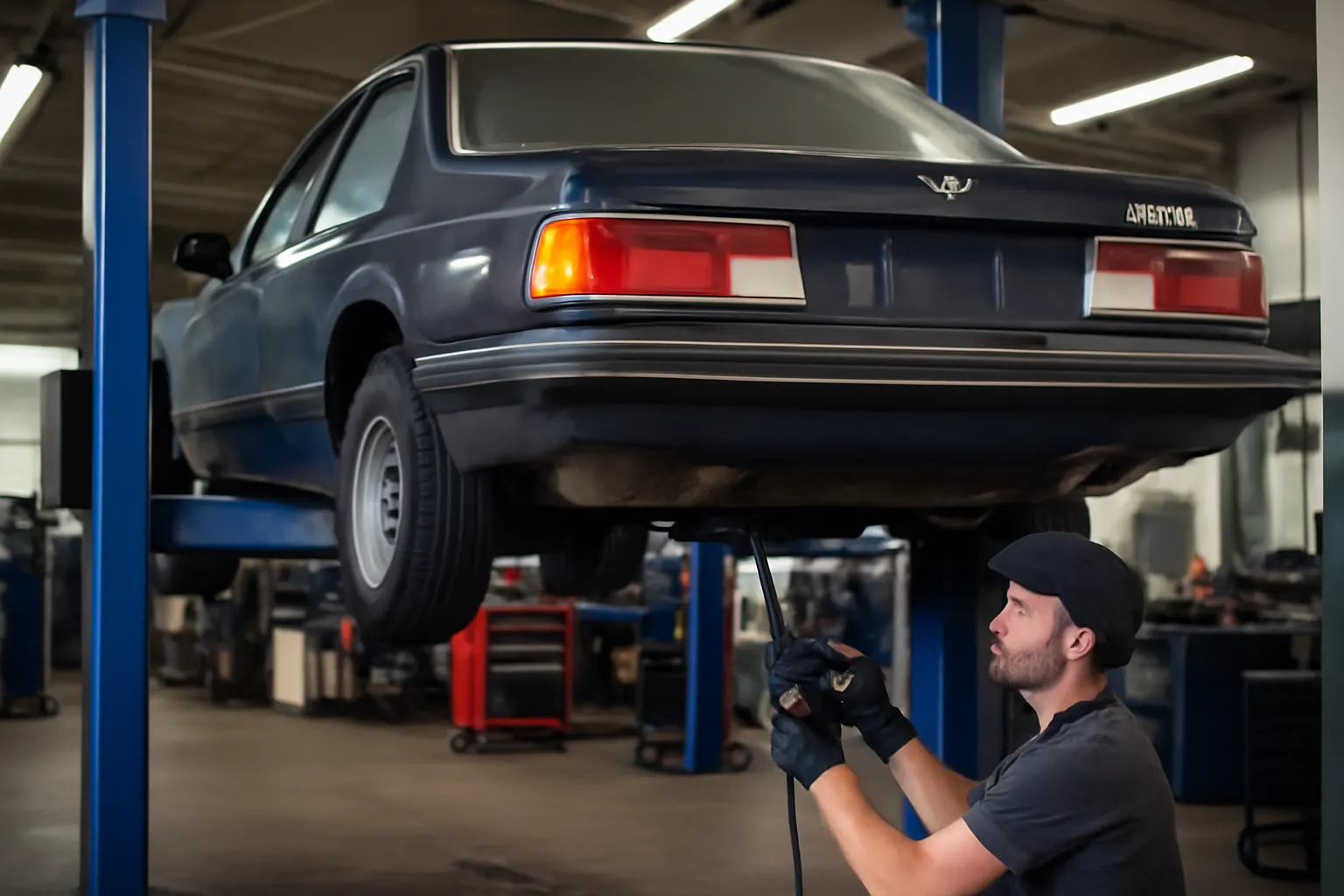
Bmw 630csi Restoration Case Study
Restoring a BMW 630CSi is a rewarding pursuit for any classic car enthusiast, but the process is rife with pitfalls—especially when it comes to parts compatibility and sourcing. This case study breaks down a real-world restoration, exposing critical issues owners face and providing a strategic, field-tested roadmap for success. If you’re planning to bring a 630CSi back to its former glory, or simply want to maintain your E24 at its best, this guide delivers the detail and technical depth you need. For more comprehensive information on compatible parts and technical support, see our BMW 630CSi Parts & Technical Guide.
The Immediate Answer: What to Expect in a BMW 630CSi Restoration
A full BMW 630CSi restoration demands meticulous planning, deep technical knowledge, and a robust sourcing strategy. The most common hurdles are:
- Parts compatibility confusion due to mid-production changes and overlapping E24/E12/E28 components.
- Limited availability of original or high-quality replacement parts.
- Unexpected safety and regulatory requirements (such as lighting, seatbelt, and braking system standards).
- Material degradation in body, trim, and interior components.
This case study details the restoration of a 1977 BMW 630CSi from initial teardown to final road test, highlighting both the pitfalls encountered and the solutions that led to a successful, roadworthy result.
The Hidden Problem: Parts Compatibility Pitfalls
Many 630CSi owners underestimate the complexity of sourcing compatible parts. The E24 platform evolved rapidly, and BMW made running changes throughout the model's lifespan (1976–1979 for the 630CSi). Differences in wiring, sensors, suspension geometry, and even trim mounting points can derail a restoration if not identified early.
Key Compatibility Challenges
- Drivetrain: Early E24s (including 630CSi) share some components with the E12 5 Series, but not all. Transmission mounts, driveshaft lengths, and differential ratios often differ.
- Electrical: Wiring harnesses, relays, and fuse layouts changed mid-production. Later E24s share more with the E28, but early 630CSi models do not.
- Body and Trim: Bumpers, window regulators, and door cards can look similar but have subtle fitment differences.
- Brakes and Suspension: Caliper mounts, rotor sizes, and bushings are not always interchangeable, even when part numbers are close.
Problem Expansion: The Real-World Impact of Incompatible Parts
In our case study, the restoration team sourced a used steering box from a donor E24, only to discover that the mounting points did not align with the original subframe. The error cost weeks of lost time and required custom fabrication. Similarly, an aftermarket fuel pump listed as “E24 compatible” lacked the correct pressure specification for the 630CSi’s L-Jetronic injection system, resulting in unreliable starts and poor idle.
Common Scenarios
- Electrical Gremlins: Swapping in later-model instrument clusters can trigger warning lights and non-functional gauges due to pinout changes.
- Brake System Mismatches: Attempting to fit later E24 calipers on early 630CSi spindles led to misaligned pads and rotor contact issues.
- Interior Fitment: Door panels from later E24s required trimming and re-drilling, as mounting clips were positioned differently.
Technical Deep Dive: Why Compatibility Issues Arise
BMW’s platform strategy in the 1970s and 1980s prioritized modularity, but manufacturing realities meant that many “carryover” parts were subtly revised. For the 630CSi, the following technical factors are critical:
Platform Overlap
- E24 vs. E12: The earliest E24s (630CSi, 633CSi) share their floorpans and suspension layouts with the E12 5 Series, but body electrical and some drivetrain components are unique.
- Transition to E28 Underpinnings: From 1982, E24s switched to E28-based running gear, but this does not apply to the 630CSi.
- Metric vs. Imperial Fasteners: Early E24s mix metric and imperial hardware, complicating repairs and replacements.
Regulatory and Safety Updates
- NHTSA Requirements: U.S.-bound cars received reinforced bumpers, different lighting, and safety equipment not found on Euro models NHTSA Equipment.
- Emissions Equipment: U.S. 630CSi models feature additional vacuum lines, sensors, and catalytic converters that affect sourcing and installation.
Diagnostic Strategies: Verifying Parts Fitment Before Purchase
Avoiding costly mistakes starts with a robust diagnostic and verification process. The following checklist, based on field experience, helps ensure parts compatibility and fitment:
BMW 630CSi Parts Compatibility Checklist
| Step | Action | Details |
|---|---|---|
| 1 | VIN Decoding | Use the full VIN to identify build date, market, and original equipment. |
| 2 | Cross-Reference Part Numbers | Use BMW ETK and reputable catalogs to verify part numbers for your build date. |
| 3 | Inspect Mounting Points | Compare physical mounting locations (brackets, holes, tabs) against your vehicle. |
| 4 | Check Electrical Connectors | Ensure plug shapes, pin counts, and wire colors match. |
| 5 | Confirm Regulatory Compliance | For safety-critical parts (brakes, lighting), confirm compliance with NHTSA standards. |
| 6 | Consult Forums and Technical Guides | Reference community wisdom and technical guides for known pitfalls. |
| 7 | Test Fitment | Whenever possible, perform a dry fit before final installation. |
Sourcing Strategies: Navigating the Classic BMW Parts Market
Sourcing for the 630CSi requires a multi-pronged approach:
Original vs. Aftermarket
- OEM Parts: Often available through BMW Classic or specialized resellers, but may be expensive or back-ordered.
- Aftermarket: Quality varies widely. Some suppliers produce high-quality reproduction parts, while others cut corners on materials or fitment.
- Used/Refurbished: Salvage yards and online auctions can be goldmines, but always inspect for wear, corrosion, or prior repairs.
Supplier Vetting
- Reputation: Prioritize suppliers with proven track records in the BMW classic community.
- Return Policies: Ensure you can return incorrectly listed or ill-fitting parts.
- Technical Support: Look for suppliers who offer technical assistance or detailed fitment data.
Case Study Walkthrough: 1977 BMW 630CSi Restoration
Let’s break down this restoration into its main phases, highlighting specific challenges and solutions:
Phase 1: Teardown and Assessment
The vehicle arrived with extensive corrosion in the sills and trunk floor, a non-functional fuel system, and brittle interior plastics. The team cataloged all removed parts, labeling each with its BMW part number and noting any deviations from factory specifications.
Phase 2: Drivetrain and Suspension
- Engine: The M30B30 engine was rebuilt using OEM gaskets, bearings, and timing components. The water pump, listed as compatible with both E12 and E24, required a different pulley offset, necessitating a custom spacer.
- Transmission: The 4-speed manual’s mounts differed from later 5-speed units. Aftermarket mounts required modification to fit the subframe.
- Suspension: Front struts sourced from a later E24 were too tall, altering ride height and camber. The team sourced period-correct E12-based strut assemblies.
Phase 3: Braking and Safety Upgrades
- Brakes: The team initially installed calipers from a 633CSi, but pad alignment was off due to spindle differences. Correct 630CSi calipers were sourced from a specialist.
- Seatbelts: Original belts failed to meet modern NHTSA safety standards. New-old-stock (NOS) belts were located, and mounting points reinforced per current guidelines.
Phase 4: Electrical and Fuel System
- Wiring: The main harness was intact, but connectors for the fuel pump relay differed from later E24s. Custom adapters were fabricated.
- Fuel Pump: An aftermarket pump failed to deliver consistent pressure. Switching to a Bosch OEM unit resolved starting and idle issues.
- Lighting: U.S.-spec headlamps required updated bulbs to meet current safety regulations.
Phase 5: Interior and Trim
- Dashboard: Cracks and sun damage were addressed with a dashboard cap, as replacements are NLA (no longer available).
- Seats: Period-correct seat upholstery was sourced from a European supplier specializing in E24 interiors.
- Door Panels: Later-model panels required reworking of mounting clips and minor trimming for a factory fit.
Materials and Structural Considerations: Body, Frame, and Weight
Material technology plays a significant role in restoration durability and performance. The E24 chassis features:
- High-Strength Steel: Used in key structural areas to provide rigidity and crash protection DOE Materials Technologies.
- Galvanized Panels: Some later E24s feature galvanized panels for corrosion resistance, but early 630CSi models do not—making rust repair more critical.
Corrosion Mitigation
- Rust Treatment: All affected areas were sandblasted and treated with epoxy primer before welding in patch panels.
- Weight Management: Care was taken to replicate factory seam sealing and undercoating, preserving original weight distribution and handling.
Fuel Efficiency and Drivetrain Modernization: Balancing Authenticity and Usability
Restored classics often face criticism for poor fuel economy by modern standards. The 630CSi’s M30 inline-six, while robust, benefits from careful tuning and maintenance to maximize efficiency.
Upgrades and Tuning
- Ignition: An upgraded ignition module improved cold starts and combustion efficiency.
- Fuel Injection: The L-Jetronic system was serviced with new injectors and sensors, restoring factory fuel economy DOE Fuel Efficiency.
- Drivetrain: Synthetic fluids reduced friction losses in the differential and gearbox.
The result was a 630CSi that achieved fuel economy within 10% of its original EPA ratings, a notable achievement for a 1970s coupe.
Regulatory and Safety Compliance: Meeting Modern Standards
Classic restorations must consider current safety regulations, especially when the vehicle will be registered for road use.
- Lighting: All exterior lighting was upgraded to meet NHTSA equipment standards.
- Brakes: Hoses and master cylinder were sourced from DOT-approved suppliers.
- Seatbelts: As previously noted, seatbelt assemblies must comply with current anchorage and strength requirements.
Maintenance Planning: Keeping the Restored 630CSi Reliable
A successful restoration is only the beginning. Ongoing maintenance is critical to preserve both performance and safety.
Maintenance Schedule
- Fluids: Replace engine oil, transmission fluid, and coolant every 5,000 miles or annually.
- Brakes: Inspect pads, rotors, and hoses every 10,000 miles.
- Suspension: Check bushings, ball joints, and shock absorbers for wear.
- Electrical: Test lighting, charging, and starting systems monthly.
For a detailed schedule, consult our Classic Bmw Maintenance Schedule.
Sourcing Insights: Lessons Learned from the Field
Key takeaways from this restoration include:
- Never assume cross-model compatibility—always verify part numbers and physical fitment.
- Document every step with photos and notes, especially when modifying or adapting parts.
- Build relationships with suppliers who understand the nuances of classic BMWs.
- Participate in owner forums and technical communities for real-world feedback on parts and procedures.
For troubleshooting specific E24 issues, see our Bmw E24 Troubleshooting Guide.
The AutoPartEx Advantage: Supporting Your BMW 630CSi Project
AutoPartEx offers a curated selection of BMW 630CSi parts, technical guides, and expert support. Our platform emphasizes:
- Verified compatibility—all listings are cross-referenced with BMW OEM data.
- Technical depth—our guides and articles provide step-by-step restoration and maintenance advice.
- Community engagement—connect with other E24 owners and restoration professionals.
Start your restoration journey with confidence—explore our BMW 630CSi Parts & Technical Guide for model-specific resources and the latest parts availability.
Expert Action: Your Next Steps
- Assess your 630CSi’s current state with a thorough teardown and documentation process.
- Use the compatibility checklist to vet every part before purchase.
- Source from reputable suppliers and be prepared for custom adaptation when necessary.
- Prioritize safety and regulatory compliance in all repairs and upgrades.
- Leverage AutoPartEx resources and the BMW community for ongoing support.
A successful BMW 630CSi restoration is within reach—armed with the right knowledge, tools, and sourcing strategy, you’ll enjoy a classic coupe that delivers both performance and timeless style.