
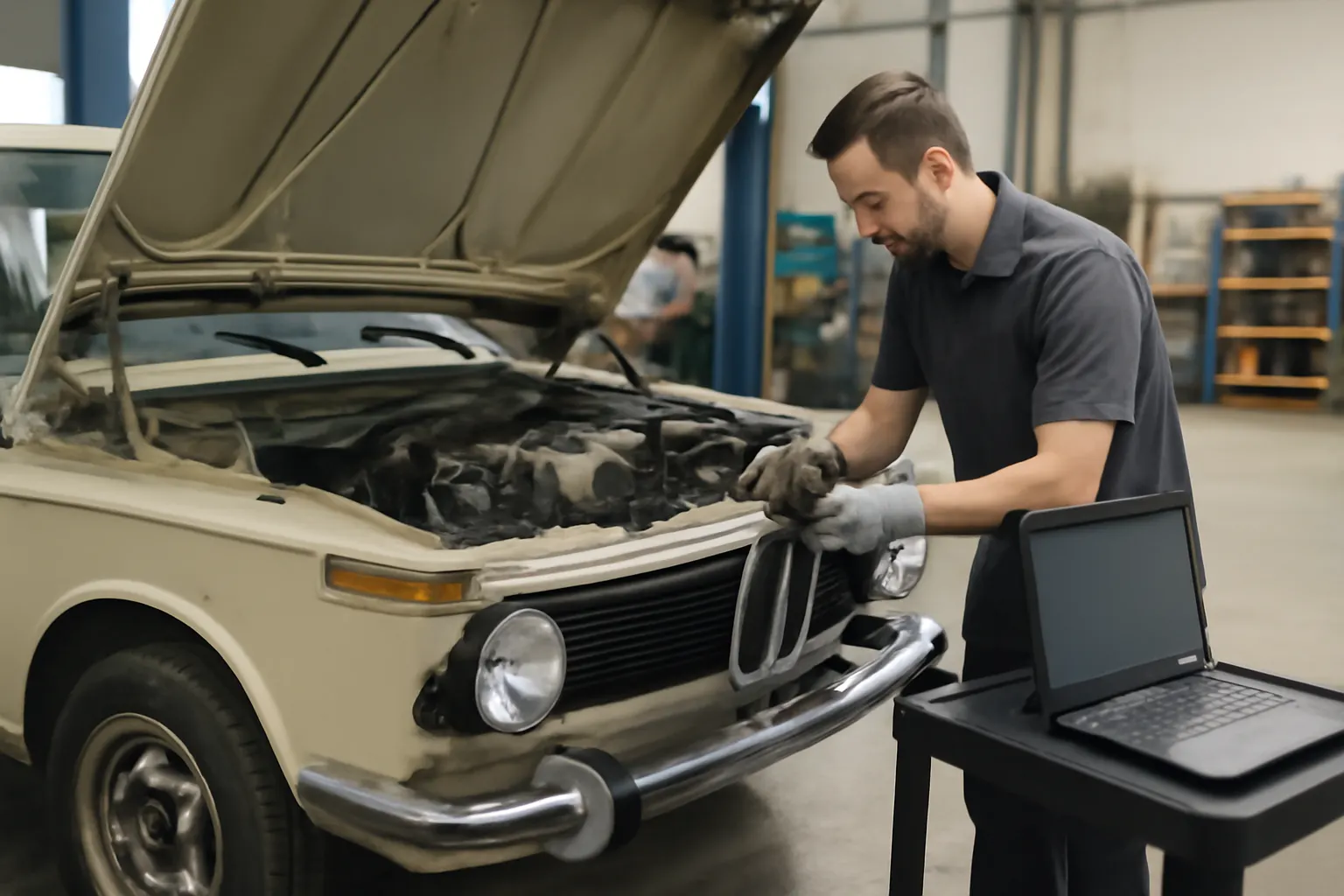
Bmw 2002 Tii Restoration Case Study
Restoring a 1974 BMW 2002 tii to its original specification is a comprehensive project that demands precision, technical knowledge, and a reliable sourcing plan for authentic parts. This case study delivers a step-by-step field report from a professional restoration shop, providing a practical roadmap for enthusiasts and specialists aiming to return a classic 2002 tii to its former glory. Whether you’re considering a full restoration or a targeted refresh, this guide covers critical stages from initial assessment to final road test, with diagnostic tips, sourcing advice, and a focus on safety and authenticity. For a complete overview of compatible parts and technical references, visit our BMW 2002 Auto Parts & Model Guide | AutoPartEx.
Immediate Answer: The Restoration Blueprint
A successful BMW 2002 tii restoration involves a structured, multi-phase process:
- Assessment and Planning: Begin with a full inspection, documenting rust, wear, and missing parts.
- Disassembly and Cataloging: Carefully remove and label all components, especially unique tii injection parts.
- Body and Chassis Restoration: Address structural rust, replace panels as needed, and restore the unibody to specification.
- Drivetrain and Engine Rebuild: Overhaul the Kugelfischer injection system, engine internals, and transmission.
- Suspension and Braking: Rebuild front and rear suspension with new bushings, shocks, and brake components.
- Electrical and Safety Systems: Replace aged wiring, check all safety equipment, and upgrade to modern standards where possible.
- Interior and Trim: Restore or source correct upholstery, dash, and trim pieces.
- Final Assembly and Quality Control: Refit all components, test systems, and perform a comprehensive road test.
Each stage requires technical rigor and careful sourcing of OEM or equivalent parts. The following sections expand on hidden restoration challenges, technical considerations, and expert solutions.
Hidden Problem: The Underestimated Complexity of Tii Restorations
Many BMW 2002 tii projects stall due to underestimating the unique complexity of the tii model. While the 2002 series shares a common platform, the tii’s Kugelfischer mechanical fuel injection, unique suspension geometry, and model-specific trim introduce sourcing, diagnostic, and fitment challenges not present in base models. Additionally, many tii-specific parts are NLA (no longer available) or only available as remanufactured units.
Restorers often discover that previous owners have retrofitted non-tii components or performed undocumented repairs, complicating the return to original specification. Safety-critical systems—such as braking and fuel delivery—may be compromised by age, wear, or incompatible replacements.
Deeper Technical Explanation: Why the 2002 Tii Restoration Is Unique
The BMW 2002 tii stands apart due to its advanced (for its time) mechanical fuel injection system, higher compression engine, and reinforced chassis elements. The Kugelfischer injection pump is both the tii’s performance centerpiece and its most intricate subsystem, requiring specialized rebuild skills and precise calibration. The tii also features:
- Larger front brakes and master cylinder
- Reinforced front subframe and control arms
- Unique intake and exhaust manifolds
- Model-specific fuel delivery and return lines
- Distinctive trim, badging, and instrumentation
These technical distinctions mean that a generic 2002 restoration approach will not suffice. Ensuring originality and roadworthiness demands a disciplined, detail-oriented methodology, adherence to SAE Standards, and a commitment to sourcing genuine or high-quality reproduction parts.
Step 1: Initial Assessment and Documentation
A thorough initial assessment sets the tone for the entire project. The shop begins with a comprehensive inspection checklist:
- Body and Chassis: Inspect for rust in common areas (rocker panels, front shock towers, spare tire well, floor pans, windshield cowl).
- Mechanical Systems: Evaluate engine compression, check for oil leaks, and assess the condition of the injection pump.
- Suspension and Steering: Test for play in ball joints, tie rods, and bushings.
- Brakes: Inspect calipers, rotors, lines, and master cylinder for corrosion and leaks.
- Electrical: Check wiring harness integrity, lighting, and fuse box for signs of modification or degradation.
- Interior and Trim: Document missing or damaged pieces, focusing on tii-specific components.
All findings are photographed and logged. This documentation is essential for sourcing correct replacement parts and tracking restoration progress. For more on common maintenance areas, review our Bmw 2002 Maintenance Guide.
Step 2: Disassembly and Cataloging
Disassembly is performed methodically to avoid damaging rare tii components. The team uses labeled bags, digital photos, and a spreadsheet to track all parts. Special care is taken with:
- Kugelfischer Injection System: Remove pump, lines, and injectors with dedicated tools to prevent damage.
- Wiring Harness: Photograph routing before removal to aid reinstallation.
- Body Trim and Badging: Store original emblems and trim pieces separately to avoid loss or mix-up.
A cataloged approach prevents confusion during reassembly and ensures every original part is evaluated for restoration or replacement.
Step 3: Body and Chassis Restoration
Addressing rust and structural integrity is non-negotiable for safety and authenticity. The shop employs a multi-stage process:
- Media Blasting: Strip paint and undercoating to expose all corrosion.
- Rust Repair: Cut out and replace affected panels using reproduction or fabricated steel, ensuring welds match factory appearance.
- Subframe and Mounts: Inspect for cracks (especially in the front subframe), reinforce as needed per SAE Standards.
- Paint and Protection: Apply epoxy primer, color-matched paint, and modern rust-inhibiting coatings for longevity.
Fitment of panels is checked against factory measurements, and all repairs are documented for provenance and future reference.
Step 4: Drivetrain and Engine Overhaul
The tii’s M10 engine, paired with the Kugelfischer injection system, requires expert attention:
- Engine Block and Head: Clean, inspect for cracks, and machine as necessary. Replace bearings, gaskets, and seals.
- Pistons and Valvetrain: Use OEM or high-quality equivalents to match original compression and performance.
- Kugelfischer Pump: Send to a specialist for rebuild and bench calibration.
- Fuel System: Replace all lines with ethanol-safe, correct-diameter hose. Clean or replace injectors and filter.
- Transmission: Inspect synchros, bearings, and seals. Replace clutch and pilot bearing.
All components are reassembled to factory torque specs, and the engine is test-run on a stand to verify oil pressure and fuel delivery.
Step 5: Suspension and Braking Systems
Restoring the tii’s handling and stopping ability involves:
- Front and Rear Suspension: Replace bushings, ball joints, and shocks (Bilstein HD or OEM equivalent). Verify tii-specific control arms and anti-roll bars.
- Brakes: Rebuild calipers, install new rotors and pads, and replace all rubber lines with DOT-approved equivalents. Confirm correct tii master cylinder and booster are fitted.
- Alignment: Set to factory specs, checking for worn steering components.
A roadworthiness checklist (see below) is used to verify all systems meet or exceed original safety standards as outlined by the National Highway Traffic Safety Administration.
Step 6: Electrical System and Safety Equipment
Aging wiring is a frequent source of restoration headaches and safety risks. The shop’s approach:
- Wiring Harness: Inspect for brittle insulation, corrosion, or splices. Replace or repair as needed with correct gauge and color coding.
- Lighting: Install new bulbs, clean connectors, and upgrade to halogen or LED (if originality is not strictly required).
- Safety Equipment: Replace seat belts with new, DOT-approved units; inspect and replace worn pedal pads and switches.
- Fuses and Relays: Clean or replace all fuses, relays, and connectors to prevent intermittent faults.
All circuits are tested with a multimeter, and grounding points are cleaned to ensure reliability.
Step 7: Interior and Trim Restoration
Restoring the classic 2002 tii interior is both an aesthetic and functional task:
- Seats and Upholstery: Reupholster in OEM-style vinyl or cloth; replace seat foam and springs as needed.
- Dashboard and Instruments: Repair cracks, recalibrate gauges, and refinish wood or plastic trim.
- Carpet and Headliner: Install high-quality reproductions to factory patterns.
- Trim and Badges: Source missing tii-specific emblems, door cards, and shift knobs.
Attention to detail in the interior enhances both resale value and the driving experience.
Step 8: Sourcing and Authenticity—Navigating the Parts Maze
Finding the right parts is one of the most challenging aspects of a tii restoration. The shop utilizes a multi-pronged sourcing strategy:
- OEM and NOS Parts: Prioritize new old stock (NOS) and original equipment manufacturer (OEM) components, especially for safety and injection system parts.
- Reproduction Parts: Use reputable suppliers for trim, weatherstripping, and interior pieces where originals are unavailable.
- Specialist Rebuilders: Engage experts for rebuilding the Kugelfischer pump, instrument clusters, and brake boosters.
- Community Networks: Leverage BMW clubs, forums, and swap meets to source rare or discontinued items.
Refer to our Bmw 2002 Oem Parts Guide for a detailed list of recommended sources and part numbers.
Step 9: Assembly and Quality Control
With all systems restored and parts sourced, reassembly follows a strict quality assurance protocol:
- Torque Specs: All fasteners are torqued to BMW factory specifications.
- System Testing: Each subsystem (fuel, brakes, electrical, HVAC) is tested individually before integration.
- Fluids and Lubrication: Use modern equivalents that meet or exceed BMW’s original specifications.
- Final Fitment: Panels, doors, and trim are aligned for correct gaps and operation.
A multi-point checklist is used throughout to catch errors and ensure nothing is overlooked.
Step 10: Road Test and Final Adjustments
No restoration is complete without a thorough road test regimen:
- Initial Shakedown: Short, low-speed tests to check for leaks, noises, or warning lights.
- System Calibration: Adjust idle, timing, and fuel mixture; verify brake balance and suspension alignment.
- Extended Drive: Simulate varied driving conditions, monitoring temperature, oil pressure, and fuel delivery.
Any issues are logged and addressed before the vehicle is considered finished.
Diagnostic Checklist: BMW 2002 Tii Post-Restoration Inspection
A detailed diagnostic checklist ensures ongoing reliability and safety:
| System | Inspection Points | Action if Needed |
|---|---|---|
| Engine | Oil pressure, leaks, idle quality | Adjust/repair |
| Fuel Injection | Cold/hot start, injector spray pattern | Recalibrate/replace |
| Brakes | Pedal feel, stopping distance, fluid leaks | Bleed/replace components |
| Suspension | Ride height, noise, alignment | Re-torque/replace bushings |
| Electrical | Light function, charging, starting | Trace/repair wiring |
| Safety Equipment | Seat belts, horn, wipers | Replace/repair |
| Body/Trim | Door fitment, window seals, trim alignment | Adjust/replace |
Fuel Efficiency and Modern Upgrades
While the 2002 tii offers respectable fuel efficiency for its era, modern fuels and driving conditions can affect performance. The Department of Energy recommends considering ethanol-compatible fuel lines and seals, and tuning for optimal efficiency (Fuel Efficiency). Upgrades such as electronic ignition or improved cooling fans can enhance reliability without sacrificing originality if chosen carefully.
Common Pitfalls and How to Avoid Them
Even experienced shops face pitfalls during BMW 2002 tii restorations:
- Misidentifying Parts: Many 2002 parts look similar but are not interchangeable with tii components. Always cross-check part numbers.
- Overlooking Safety Recalls: Before final assembly, review the NHTSA Recall Database for any outstanding recalls on your VIN.
- Cutting Corners on Rust Repair: Superficial fixes will not last; invest in complete panel replacement where necessary.
- Neglecting Documentation: Keep a detailed log of all work, including parts used and specifications. This is critical for future maintenance and resale value.
Solution Path: Structured Approach for Success
- Research and Planning: Study technical manuals, parts guides, and factory service bulletins.
- Sourcing: Build relationships with trusted suppliers and specialist rebuilders.
- Documentation: Photograph and log each step for reference and provenance.
- Quality Control: Use checklists and test procedures at every stage.
- Community Engagement: Participate in forums and clubs for support and sourcing tips.
For production history and technical context, see our Bmw 2002 Production History.
Expert Action: Ensuring a Lasting Restoration
After completing the restoration, ongoing maintenance is vital. Schedule regular inspections, fluid changes, and system checks. Keep records of all work performed. For owners seeking to maintain or upgrade their 2002 tii, AutoPartEx offers curated parts lists, technical guides, and expert support. Our BMW 2002 Auto Parts & Model Guide | AutoPartEx remains the definitive resource for sourcing and technical data.