Advertisement
The bed side of a pickup truck is more than just an exterior panel—it’s a core structural element that directly impacts vehicle safety, performance, and occupant protection. Whether you’re hauling cargo, navigating tough job sites, or relying on your truck for daily driving, the integrity of your bed side panels is essential to your vehicle’s function and your personal safety. In this in-depth guide, we’ll examine how bed side, pickup components influence crash protection, load management, and overall vehicle dynamics, and provide actionable advice for diagnostics, maintenance, and replacement.
For a comprehensive overview of technical specifications, fitment, and OEM replacement options, visit our Bed Side, Pickup: Technical Guide & OEM Replacement | AutoPartEx.io page.
The Immediate Answer: Why Bed Side, Pickup Safety Matters
Bed side panels on pickup trucks do much more than define the truck’s silhouette. These panels:
- Reinforce the structural integrity of the truck bed and rear frame.
- Absorb and distribute impact forces in side collisions, reducing injury risk.
- Secure cargo and protect critical components from external damage.
- Maintain vehicle alignment and support suspension geometry.
If your bed side is compromised—by corrosion, impact, or improper installation—your vehicle’s safety, handling, and ability to protect occupants in a crash are all at risk. Ensuring your bed side, pickup is intact and properly fitted is a non-negotiable aspect of responsible truck ownership.
The Hidden Problem: Overlooked Structural Vulnerabilities
Many truck owners underestimate the critical safety role of the bed side. It’s common to focus on high-profile systems like brakes or airbags, while structural body panels receive less attention. However, a damaged or poorly repaired bed side can create several hidden risks:
- Reduced crash energy absorption: Weak panels fail to dissipate forces, transmitting more energy to the cabin in a collision.
- Compromised cargo security: Deformed or rusted sides can’t restrain loads, increasing the chance of cargo shift or ejection.
- Frame misalignment: Even minor dents or weld cracks can affect rear suspension geometry, leading to unpredictable handling.
- Increased risk of equipment recalls: Structural issues may go unnoticed until a recall is issued for a safety defect (NHTSA Recalls).
These vulnerabilities are often invisible until a critical failure occurs. Proactive inspection and prompt repair are vital.
Technical Deep Dive: How Bed Side, Pickup Panels Affect Safety and Performance
1. Crash Protection and Occupant Safety
Bed side panels are engineered to deform in a controlled manner during side impacts, absorbing and redistributing crash energy away from the passenger compartment. The National Highway Traffic Safety Administration (NHTSA) sets standards for side-impact protection, including requirements for body panel strength and integrity (NHTSA Equipment). If panels are weakened by rust or poorly executed repairs, they can collapse unpredictably, increasing injury risk.
2. Load Management and Cargo Security
The bed side must support the truck’s rated cargo capacity. OEM panels are designed to handle dynamic loads—such as shifting cargo or tie-down stresses—without bending or cracking. A compromised bed side can lead to:
- Cargo loss on the highway (a major safety hazard)
- Damage to the truck bed floor and frame rails
- Increased wear on suspension and tires
3. Structural Contribution to Vehicle Dynamics
Modern pickup beds are integral to the vehicle’s overall structure. Bed sides help resist torsional flex, maintain alignment of the rear axle, and contribute to the rigidity needed for safe towing and hauling. Any deformation can alter handling characteristics, causing unpredictable sway or loss of control—especially under load.
4. Material Technologies and Weight Efficiency
Advances in materials science have led to the use of high-strength steels, aluminum alloys, and composites in bed side construction (DOE Materials Technologies). These materials are chosen to balance strength, weight, and corrosion resistance. Incorrect repairs or the use of substandard aftermarket panels can negate these benefits, leading to premature failure or excess weight.
Advertisement
Diagnosing Bed Side, Pickup Safety Issues
Early detection of bed side issues is crucial for maintaining safety and performance. Here’s a step-by-step diagnostic checklist:
Bed Side, Pickup Safety Diagnostic Checklist
- Visual Inspection
- Look for visible dents, cracks, or rust—especially around weld seams and mounting points.
- Check for paint bubbling, which may indicate hidden corrosion.
- Panel Alignment
- Ensure bed sides are flush with cab and tailgate. Misalignment can signal frame or bed rail damage.
- Structural Integrity
- Gently press on the panel at several points. Excessive flexing or creaking suggests weakened metal.
- Examine the inner bed structure for signs of stress or weld separation.
- Cargo Securement
- Inspect tie-down points and bed rails for deformation.
- Confirm that cargo stays secure during normal driving.
- Suspension and Handling
- Note any new noises, vibrations, or handling changes, especially when loaded.
- Inspect rear wheel alignment for signs of shifting.
- Manufacturer Recalls
- Search your VIN at the NHTSA Recalls Database to check for bed side or body panel recalls.
If you detect any structural issues or suspect your truck has been involved in a collision, consult a professional body technician for a thorough assessment.
Installation and Replacement: Getting It Right for Safety
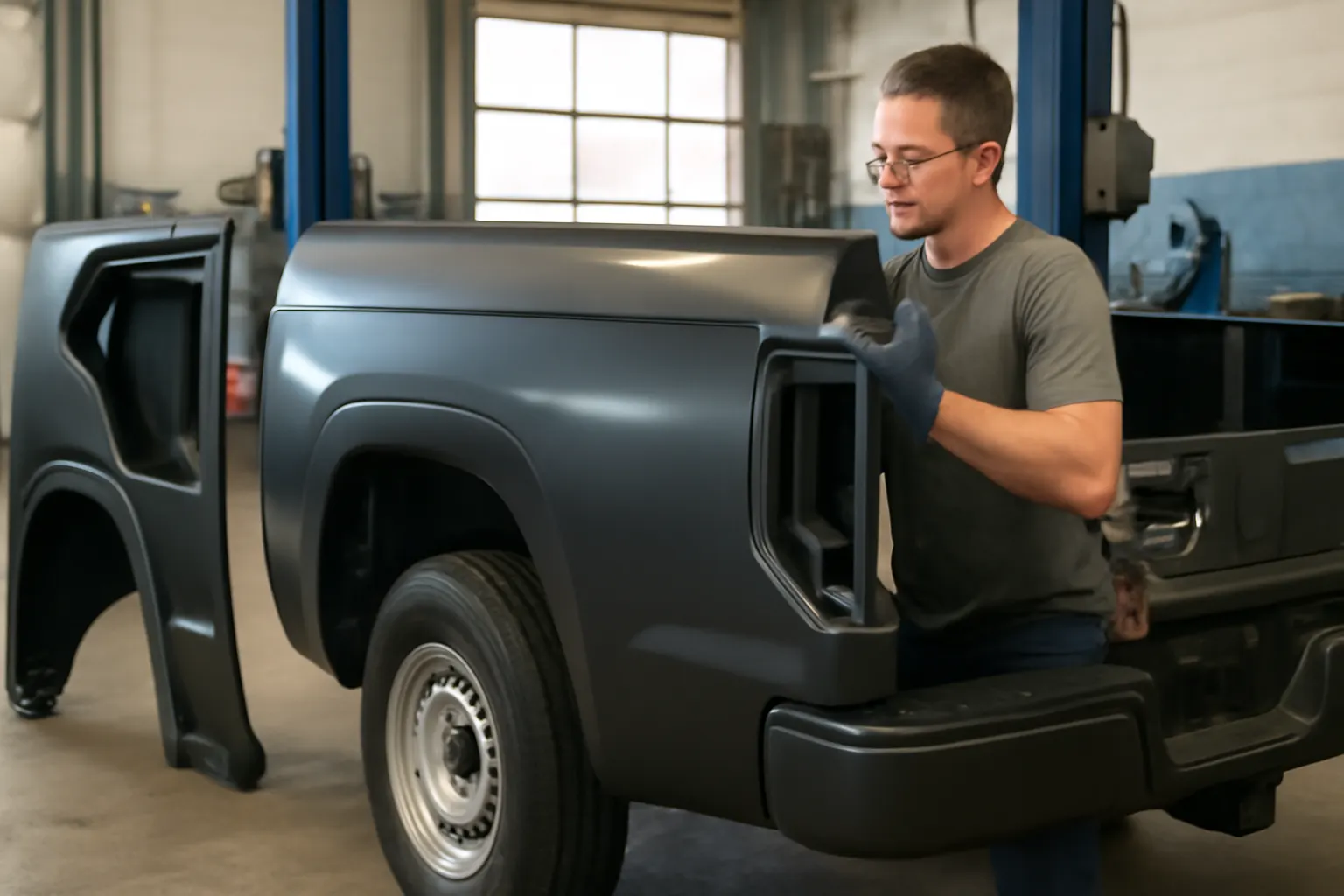
Replacing or repairing a bed side, pickup panel isn’t just a cosmetic job—it’s a structural repair that demands precision. Here’s what you need to know:
OEM vs. Aftermarket Panels
- OEM (Original Equipment Manufacturer): Guaranteed fit, material strength, and crash performance. Meets all manufacturer and federal safety standards.
- Aftermarket: Varies widely in quality. Some panels may lack reinforcement, use thinner metal, or omit critical mounting features. Always verify certifications and fitment data.
For a detailed comparison, see OEM vs Aftermarket Bed Side, Pickup: Quality and Performance Comparison.
Installation Best Practices
- Professional Welding: Most bed side replacements require cutting, welding, and advanced corrosion protection. Poor welds can weaken the structure.
- Seam Sealing and Rustproofing: All seams must be sealed to prevent water intrusion and rust.
- Panel Alignment: Panels must be precisely aligned to the cab, tailgate, and bed floor to maintain structural integrity and appearance.
- Paint Matching: Proper paint application is essential to protect against corrosion and maintain resale value.
For a step-by-step guide, refer to our Bed Side, Pickup Replacement: Installation and Safety Guide.
Maintenance and Protection: Extending Bed Side Service Life
Preventive maintenance is key to maximizing the safety and performance of your bed side, pickup. Here’s how:
Regular Cleaning
- Wash the bed and sides regularly to remove road salt, mud, and debris that can trap moisture and accelerate corrosion.
- Pay special attention to the inner bed seams and drain holes.
Rust Prevention
- Inspect for chips and scratches in the paint. Touch up exposed metal immediately.
- Apply a high-quality rust inhibitor or undercoating to the inner bed and seams—especially in harsh climates.
Damage Control
- Repair dents and scratches promptly. Even minor damage can allow water to penetrate and start rusting from the inside.
- Avoid overloading or improper cargo tie-downs that can deform the bed side panels.
For additional protection tips, see Preventing Bed Side, Pickup Damage: Maintenance and Protection.
Recognizing When Replacement Is Necessary
Not all bed side damage can be safely repaired. Replacement is often the only option if:
- Rust has penetrated through the metal or affected structural seams.
- The panel is severely deformed or creased, especially near mounting points.
- Welds have cracked or separated.
- The bed side no longer aligns with the cab, tailgate, or bed floor.
Attempting to repair severely compromised panels can leave hidden weaknesses that may fail in a crash or under load.
Advertisement
The Role of Bed Side, Pickup in Modern Truck Engineering
Today’s pickup trucks are engineered as integrated systems, not just a frame with panels attached. The bed side is a load-bearing, crash-absorbing, and style-defining component. Advances in materials and manufacturing have made these panels lighter, stronger, and more corrosion-resistant than ever before (DOE Materials Technologies). However, this also means that improper repairs or the use of low-quality replacements can undermine the entire safety system.
Key engineering functions of modern bed side panels include:
- Crash Energy Management: Designed crumple zones and reinforcements.
- Torsional Rigidity: Prevents bed and frame twist, especially during towing/hauling.
- Aerodynamic Integration: Reduces drag for improved fuel efficiency.
- Accessory Mounting: Supports tonneau covers, racks, and tie-downs without compromising strength.
Compliance with Safety and Quality Standards
All replacement bed side, pickup panels must comply with federal safety and quality standards. The NHTSA sets minimum requirements for body panel strength, corrosion resistance, and fitment (NHTSA Equipment). SAE International provides additional engineering and testing standards (SAE Standards). When sourcing panels, always:
- Request documentation of compliance or certification.
- Avoid panels without clear manufacturer identification or safety data.
- Choose suppliers with a track record of meeting OEM specifications.
Sourcing Bed Side, Pickup Panels: What to Look For
Selecting the right replacement panel is critical for safety, fitment, and longevity. Here’s what to check:
Bed Side, Pickup Panel Sourcing Checklist
- OEM or Certified Aftermarket: Prioritize panels with OEM or SAE certification.
- Material Match: Ensure material type (steel, aluminum, composite) matches the original.
- Corrosion Protection: Look for panels with factory-applied primer or e-coating.
- Fitment Guarantee: Confirm compatibility with your truck’s year, make, and model.
- Mounting Provisions: Check for all necessary holes, brackets, and reinforcements.
For a curated selection, visit our truck bed side and truck bed side parts categories.
Addressing Recalls and Safety Bulletins
Bed side, pickup panels are occasionally subject to manufacturer recalls due to welding defects, corrosion issues, or improper reinforcement. Always:
- Register your vehicle with the manufacturer to receive recall notifications.
- Regularly check the NHTSA Recalls Database for updates.
- Address any recall promptly—delaying repair can void coverage or increase risk.
If you purchase a used truck, verify that all body-related recalls have been completed.
Professional Installation vs. DIY: Safety Considerations
While some cosmetic repairs can be handled by experienced DIYers, structural bed side replacement typically requires:
- Specialized welding and bodywork tools
- Experience with automotive structural repairs
- Access to corrosion protection and paint facilities
- Knowledge of OEM repair procedures
Improper installation can result in misalignment, weak welds, or unprotected seams—all of which compromise safety. When in doubt, trust the job to a certified collision repair specialist.
AutoPartEx: Your Partner in Bed Side, Pickup Safety
At AutoPartEx, we understand that your truck’s safety and performance depend on every component working as designed—including the bed side panels. We offer:
- Expert-curated selection of OEM and certified aftermarket panels
- Detailed fitment data for all major makes and models
- Technical support and installation guides written by automotive professionals
- Commitment to quality, safety, and customer satisfaction
Explore our Bed Side, Pickup: Technical Guide & OEM Replacement | AutoPartEx.io category for the latest products, technical specifications, and installation resources.
Expert Action: Steps to Ensure Bed Side, Pickup Safety
- Inspect your bed side panels regularly for damage, rust, or alignment issues.
- Address any structural or cosmetic damage promptly—don’t wait for minor issues to become major safety hazards.
- Choose certified OEM or high-quality aftermarket panels when replacement is needed.
- Rely on professional installation for structural repairs.
- Stay informed about recalls and safety bulletins affecting your vehicle.
- Consult AutoPartEx resources for technical guidance, parts sourcing, and installation support.
Your truck’s bed side is a frontline defender of safety, performance, and value. Treat it with the same care and attention as any other critical system.
References
Advertisement