
Audi Rs3 Service Insights
Audi RS3 owners and professional technicians alike face a unique blend of challenges and opportunities when it comes to diagnosing and repairing this high-performance compact. In this field report, we’ll deliver actionable service insights drawn from real-world shop experiences, focusing on the RS3’s drivetrain and electrical systems—areas most likely to impact reliability, performance, and long-term ownership satisfaction. If your goal is to keep your RS3 running at its peak or to resolve persistent issues efficiently, this guide is your technical resource.
For a broader overview of parts fitment and technical recommendations, see our Audi RS3 Parts & Fitment: Technical Guide for Owners and Professionals.
Immediate Answers: Common Audi RS3 Drivetrain and Electrical Issues
What are the most frequent drivetrain and electrical issues encountered in the Audi RS3, and how can you address them promptly?
- Drivetrain: The most recurring issues are related to the Haldex all-wheel-drive system, dual-clutch (S tronic) transmission mechatronics, and driveshaft couplings.
- Electrical: Persistent faults include sensor failures (especially camshaft and crankshaft position sensors), malfunctioning door modules, and intermittent issues with the virtual cockpit and MMI infotainment systems.
- Prompt Fixes: Regular Haldex fluid changes, software updates for control modules, and thorough diagnostic scans with OEM-level tools are the fastest routes to resolution.
The Hidden Problem: Why RS3 Issues Persist Despite Modern Engineering
Many RS3 owners and even some independent shops are surprised by the frequency of drivetrain and electrical problems in a car known for its advanced engineering. The root cause is often a combination of high-stress component loads (due to the RS3’s performance focus), tight packaging, and the complexity of integrated electronic systems. These factors mean that minor issues—such as a failing sensor or contaminated Haldex fluid—can rapidly escalate if not addressed with model-specific knowledge and the right diagnostic approach.
Digging Deeper: Technical Context of RS3 Drivetrain and Electrical Failures
RS3 Drivetrain: Demanding Loads and Precision Parts
The RS3’s 2.5 TFSI engine and performance-oriented quattro drivetrain deliver remarkable output for a compact, but this comes at the price of higher-than-average wear on transfer cases, axles, and especially the Haldex coupling. The S tronic dual-clutch transmission, while quick-shifting, is sensitive to fluid quality and mechatronic control issues. Even minor deviations from Audi’s maintenance schedule can result in sudden drivability problems or warning lights.
Electrical Systems: Sophisticated, But Sensitive
Audi’s push toward digitalization—seen in the RS3’s virtual cockpit, advanced driver assistance, and extensive sensor networks—means that even a single failed sensor can cascade into multiple warning messages and limp-home modes. Door modules, window regulators, and the central convenience control unit are especially prone to faults in high-mileage or humid environments. The complexity of CAN bus networks also increases the risk of intermittent or hard-to-trace issues.
Why Standard Diagnostics Often Fall Short
Generic OBD-II scanners frequently miss RS3-specific codes, especially those related to proprietary control modules or advanced drivetrain features. Without access to VAG-COM (VCDS) or similar OEM-level scan tools, misdiagnosis is common, leading to unnecessary part replacements or unresolved faults.
Field Diagnostics: Step-by-Step Approach for RS3 Drivetrain and Electrical Troubles
Drivetrain Diagnostic Checklist
- Haldex System:
- Check for stored faults in the all-wheel-drive control module.
- Inspect Haldex fluid for contamination or metallic debris.
- Listen for abnormal noises during low-speed tight turns (indicates clutch or pump wear).
- Transmission (S tronic):
- Scan for DTCs related to mechatronics or clutch position sensors.
- Check transmission fluid level and condition.
- Test for delayed engagement, hesitation, or harsh shifting.
- Driveshafts and Couplings:
- Inspect for torn CV boots, leaks, or play in the joints.
- Check for vibrations or clunks during acceleration.
Electrical Diagnostic Checklist
- Sensor Failures:
- Use VCDS to scan for intermittent or stored sensor codes.
- Track live data for camshaft, crankshaft, and wheel speed sensors.
- Inspect wiring harnesses for chafing or corrosion.
- Door Modules and Comfort Systems:
- Test window and lock operation from all switches.
- Scan the central convenience module for communication errors.
- Check for water ingress in door panels and footwells.
- Infotainment and Virtual Cockpit:
- Perform a hard reset of the MMI system.
- Update firmware if glitches or freezing occur.
- Inspect fuse panel and power supply circuits.
Case Study 1: Haldex Pump Failure and Fluid Contamination
A 2018 RS3 presented with intermittent traction control warnings and jerky launches. The shop’s initial scan revealed a “Haldex pump activation: mechanical failure” code. Upon draining the Haldex unit, the fluid was dark and contained metallic flakes—a clear sign of pump wear and clutch debris. The solution involved replacing the pump, flushing the system twice, and updating the control module software. The issue was resolved, and the owner reported improved traction and smoother launches.
Key Takeaway: Haldex systems require fluid changes every 20,000-30,000 miles under spirited driving. Ignoring this interval leads to pump and clutch failures.
Case Study 2: Intermittent Virtual Cockpit Blackouts
A 2020 RS3 experienced random blackouts of the digital instrument cluster. Standard OBD-II scans showed no codes, but VCDS revealed intermittent communication errors with the gateway module. Inspection found a partially dislodged connector behind the dash, likely due to aftermarket dashcam installation. Re-seating the connector and clearing codes restored full function.
Key Takeaway: Electrical faults often trace back to disturbed wiring or aftermarket accessory installation. Always inspect connectors and wiring integrity before assuming component failure.
The Role of Materials and Engineering in RS3 Reliability
The RS3 benefits from advanced materials technologies—lightweight aluminum suspension arms, high-strength steel subframes, and composite body panels—all designed to improve performance and fuel efficiency without sacrificing safety or durability (DOE Materials Technologies). However, these materials require precise torque specs and careful handling during service. Over-tightening or incorrect fastener replacement can cause stress fractures or galvanic corrosion, especially in areas exposed to road salt or moisture.
Maintenance Intervals: The Overlooked Key to RS3 Longevity
Strict adherence to Audi’s maintenance schedule is not just a recommendation—it’s a requirement for RS3 reliability. Key intervals include:
- Engine oil and filter: Every 5,000–7,500 miles, using VW 502.00/504.00 spec oil.
- Haldex fluid: Every 20,000–30,000 miles, with filter replacement where applicable.
- Transmission fluid (S tronic): Every 40,000 miles, including filter.
- Spark plugs: Every 30,000–40,000 miles.
- Brake fluid: Every 2 years.
Delaying any of these can cause cascading failures, especially in the drivetrain.
For a more detailed maintenance schedule, consult our Audi Rs3 Maintenance Checklist.
Advanced Diagnostic Tools: Why VCDS and ODIS Are Essential
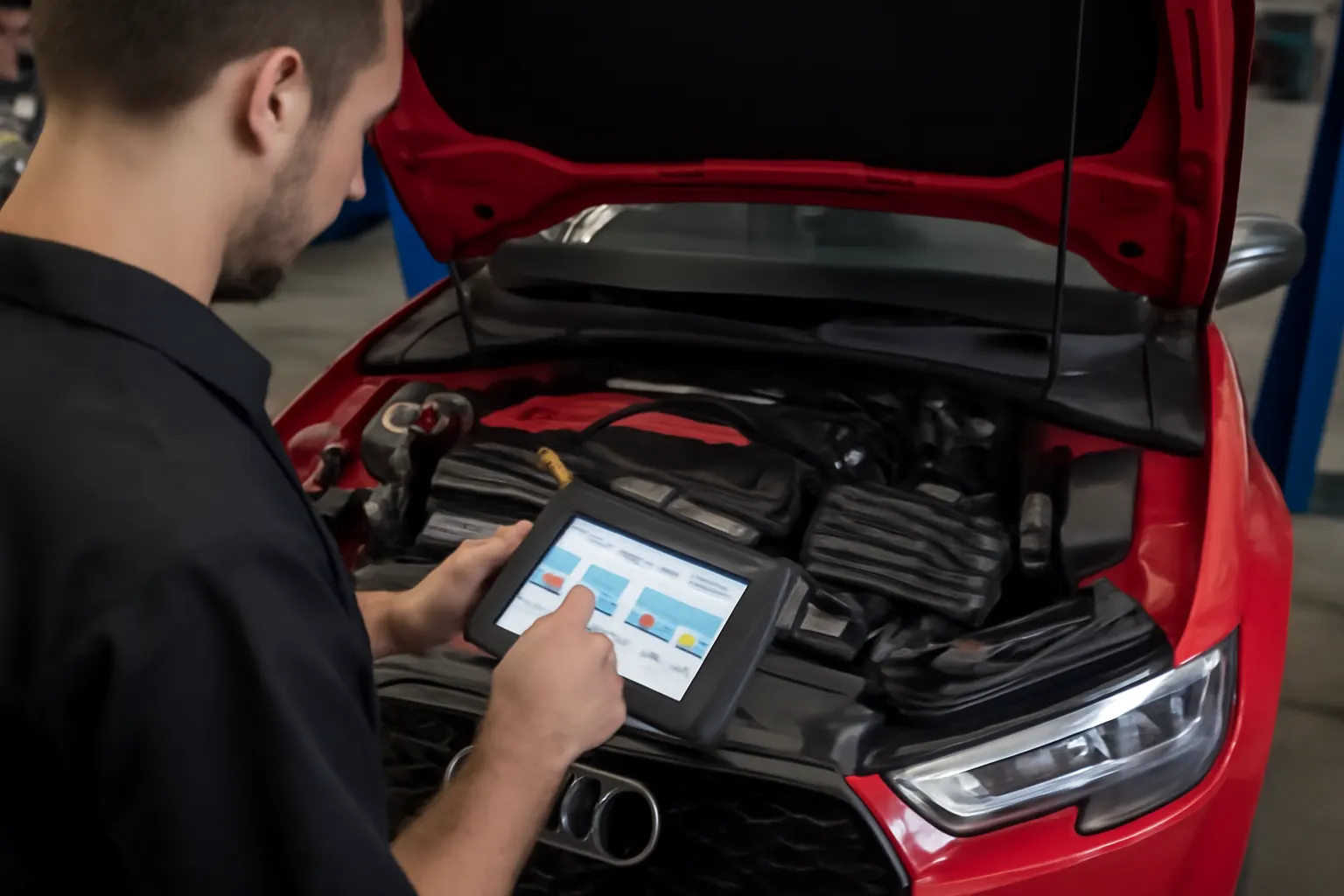
Professional shops servicing the RS3 rely on VCDS (VAG-COM Diagnostic System) or the factory ODIS (Offboard Diagnostic Information System) for access to proprietary Audi codes, module adaptations, and guided fault tracing. These tools allow:
- Real-time monitoring of sensor data.
- Coding and adaptation of replacement modules.
- Service interval resets and software updates.
Without these, both drivetrain and electrical diagnostics become guesswork—potentially leading to expensive trial-and-error parts replacement.
OEM vs. Aftermarket Parts: Sourcing for Reliability and Fitment
The RS3’s tight tolerances and high-performance demands mean that not all aftermarket parts are equal. For drivetrain components (Haldex pumps, clutch packs, sensors), OEM or OE-supplier parts are strongly recommended. Aftermarket options may lack the necessary durability or precise fit, leading to premature failure or system incompatibility.
When sourcing parts, verify:
- Compatibility with your RS3’s VIN and build date.
- Supplier reputation and warranty terms.
- Inclusion of necessary seals, fasteners, or gaskets.
For sourcing guidance, see our Audi Rs3 Oem Parts Sourcing article.
Fitment and Installation: Avoiding Common Pitfalls
Drivetrain Parts
- Haldex Pump: Always use new seals and torque to specified values. Prime the system with fluid before first start.
- Mechatronics Unit: Follow Audi’s adaptation procedures post-installation to ensure proper shifting behavior.
- Driveshafts: Mark orientation before removal to prevent imbalance or vibration.
Electrical Components
- Sensors: Clean all mating surfaces and apply dielectric grease to connectors.
- Modules: Disconnect battery before installation and perform coding/adaptation as required.
- Infotainment: Ensure all firmware updates are installed to prevent compatibility issues.
For more on fitment specifics, our Audi Rs3 Fitment Explained guide covers key dimensions and compatibility checks.
Fuel Efficiency and Performance: Maintaining the RS3’s Balance
While the RS3 is built for performance, proper drivetrain maintenance directly affects fuel efficiency and emissions compliance. Worn Haldex clutches or dragging brakes increase rolling resistance, while faulty sensors can cause rich running conditions and poor throttle response (DOE Fuel Efficiency). Regular diagnostic scans and adherence to maintenance intervals ensure that the RS3 delivers both peak performance and optimal efficiency.
Safety Considerations: Beyond the Basics
The National Highway Traffic Safety Administration (NHTSA) emphasizes the importance of regular inspection and replacement of safety-critical components (NHTSA Equipment). For the RS3, this includes:
- Brakes: Check pad thickness, rotor wear, and fluid condition.
- Tires: Inspect for even wear and maintain correct pressure.
- Lighting and Sensors: Verify all exterior lights and ADAS sensors are functioning.
Ignoring these areas not only risks vehicle integrity but can also lead to failed inspections or safety recalls.
Proactive Ownership: Preventing Recurring Issues
RS3 owners who take a proactive approach—combining regular diagnostic scans, timely maintenance, and careful part sourcing—experience fewer breakdowns and enjoy a more rewarding ownership experience. Document all service history and diagnostic results, and address warning lights or new noises promptly. Consider establishing a relationship with a shop experienced in VAG vehicles, as RS3-specific knowledge is critical for efficient troubleshooting.
AutoPartEx: Your Partner for RS3 Technical Excellence
At AutoPartEx, we combine real-world shop experience with rigorous technical standards to deliver the most accurate and practical RS3 service insights. Our editorial process emphasizes verified sources, hands-on testing, and direct feedback from professional technicians. Whether you’re a DIY owner or a service manager, our guides, checklists, and sourcing recommendations are designed to keep your RS3 performing at its best.
For a comprehensive overview of compatible parts, fitment data, and technical advice, start with our Audi RS3 Parts & Fitment: Technical Guide for Owners and Professionals.