
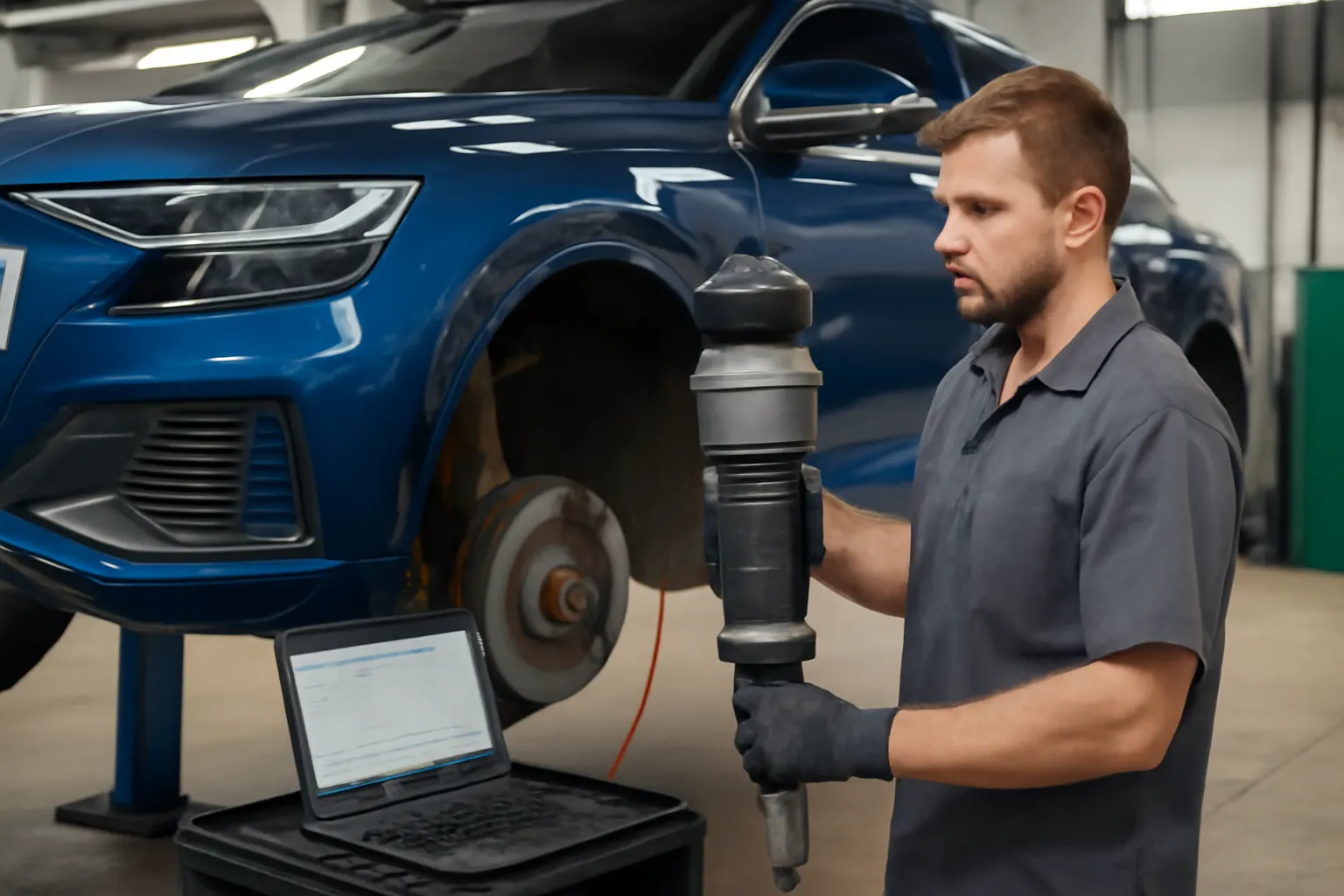
Audi Q8 Common Issues
The Audi Q8 is a flagship luxury SUV, renowned for its sophisticated engineering, powerful performance, and innovative technology. However, like any high-end vehicle, the Q8 is not immune to common issues that can impact reliability, safety, and ownership experience. This comprehensive guide from AutoPartEx details the most frequently reported Audi Q8 problems—from air suspension leaks to infotainment system glitches—alongside actionable repair solutions, diagnostic tips, and maintenance strategies. If you’re looking for a quick reference on Audi Q8 repairs or considering parts replacement, our Audi Q8 Replacement Parts & Maintenance Guide is the essential starting point.
Rapid Overview: Top Audi Q8 Issues and Quick Solutions
Audi Q8 owners and technicians most often encounter the following issues:
- Air suspension leaks: Loss of ride height or “nose dive” stance.
- Infotainment system glitches: Frozen screens, laggy response, or system reboots.
- Electrical system faults: Battery drain, sensor errors, or warning lights.
- Turbocharger and engine concerns: Reduced performance, rough idling, or excessive oil consumption.
- Brake system warnings: Premature pad wear, ABS/ESC lights.
- Transmission hesitation: Delayed or jerky shifting, especially in cold weather.
- Body and trim rattles: Noises from doors, dash, or rear cargo area.
- Advanced driver-assistance system (ADAS) calibration errors: Lane keep assist and adaptive cruise issues.
- Fuel system faults: Poor fuel efficiency, check engine lights, or fuel pump failures.
Immediate solutions range from software updates and sensor resets to more involved repairs like air suspension component replacement. Many issues can be diagnosed with a scan tool or visual inspection, but some require manufacturer-specific diagnostic equipment.
The Hidden Problem: Why Audi Q8 Issues Demand Proactive Attention
While some Audi Q8 concerns are minor inconveniences, others—especially those involving suspension, brakes, or electrical systems—can escalate rapidly if ignored. Modern vehicles, particularly luxury SUVs like the Q8, rely on complex networks of sensors, actuators, and control modules. This means a seemingly minor warning light or intermittent glitch can mask a deeper issue that may compromise safety, performance, or long-term reliability.
Further complicating matters, the Q8’s advanced systems (such as adaptive air suspension and MMI infotainment) are highly integrated. A fault in one subsystem can trigger cascading errors in others, leading to diagnostic confusion or unnecessary part replacements. This is why it’s critical for owners and technicians to recognize early warning signs, understand root causes, and follow a systematic diagnostic process.
Expansion: Technical Background and Causes of Common Audi Q8 Issues
Air Suspension Leaks and Failures
Symptoms: Noticeable lowering of ride height (especially overnight), uneven stance, “nose dive” or “sagging,” air compressor running excessively, warning messages.
Root Causes:
The Q8’s adaptive air suspension uses pneumatic struts, air lines, and a compressor to maintain optimal ride height and comfort. Over time, rubber air springs can develop cracks, especially in harsh climates or after extended use. Leaks may also occur at fittings or valves. A failing compressor may struggle to maintain pressure, leading to repeated cycling and eventual burnout.
Technical Note:
According to NHTSA equipment guidelines, suspension integrity is critical for vehicle safety and handling. Leaks not only affect comfort but can also impact braking and stability control functions.
Infotainment System Glitches
Symptoms: Frozen or blank MMI screen, slow response to inputs, Bluetooth/CarPlay connectivity loss, random system reboots.
Root Causes:
The Q8’s MMI (Multi Media Interface) system is software-driven and tightly integrated with vehicle controls. Software bugs, outdated firmware, or corrupted data can cause the system to freeze or reboot. Hardware issues—such as failing display panels or loose connectors—may also contribute.
Technical Note:
Infotainment malfunctions can interfere with navigation, climate control, and ADAS displays, making prompt diagnosis important for both convenience and safety.
Electrical System Faults
Symptoms: Battery drain, intermittent warning lights, nonfunctional accessories, sensor errors (TPMS, parking assist, etc.).
Root Causes:
Modern Audi vehicles use advanced electrical architectures with dozens of control modules. Parasitic draws (e.g., from faulty relays, modules that fail to enter sleep mode) can drain the battery. Moisture ingress, connector corrosion, or module failures can produce erratic electrical behavior.
Technical Note:
Electrical system health is fundamental for safety-critical functions. The NHTSA emphasizes regular diagnostics and prompt repair of electrical faults.
Engine and Turbocharger Concerns
Symptoms: Reduced acceleration, rough idle, excessive oil consumption, check engine light (CEL), turbo whine.
Root Causes:
The Q8’s turbocharged engines (V6 and V8 variants) provide strong performance but are sensitive to oil quality, maintenance intervals, and thermal stress. Oil leaks, turbo seal failures, and clogged PCV systems are common. Extended oil change intervals or use of incorrect oil can accelerate wear.
Technical Note:
The United States Department of Energy highlights the importance of proper engine maintenance for fuel efficiency and emissions compliance.
Brake System Warnings
Symptoms: Squealing or grinding noises, pulsation, premature pad wear, illuminated ABS or ESC warning lights.
Root Causes:
Q8 brake systems are engineered for high performance but can wear quickly, especially under heavy use. Issues may stem from low-quality pads, warped rotors, or malfunctioning sensors. Some owners report premature pad wear due to aggressive brake assist calibration.
Technical Note:
Brake system integrity is monitored under NHTSA safety standards; any warning lights or loss of braking performance should be addressed immediately.
Transmission Hesitation and Jerky Shifting
Symptoms: Delayed engagement, harsh or jerky shifts, hesitation under acceleration, especially when cold.
Root Causes:
The Q8 uses advanced automatic transmissions, often with dual-clutch or tiptronic technology. Transmission control module (TCM) calibration, low fluid levels, or mechatronic unit faults can cause shifting issues. Cold weather can exacerbate symptoms due to fluid viscosity changes.
Technical Note:
Transmission performance is closely linked to fuel efficiency and drivability (see DOE Fuel Efficiency). Regular service and software updates are crucial.
Body and Trim Rattles
Symptoms: Rattling noises from doors, dashboard, or cargo area, especially on rough roads.
Root Causes:
Lightweight materials and complex trim assemblies (see DOE Materials Technologies) can lead to panel or fastener loosening over time. Poor fitment or broken clips are typical culprits.
Technical Note:
While not a safety concern, persistent rattles can diminish the premium feel of the Q8 and may indicate underlying fitment issues.
ADAS Calibration Errors
Symptoms: Lane keep assist or adaptive cruise control warnings, “unavailable” messages, inconsistent operation.
Root Causes:
Advanced driver-assistance systems (ADAS) rely on precise sensor calibration. Minor impacts, windshield replacements, or suspension repairs can misalign cameras or radar units, triggering errors.
Technical Note:
ADAS faults can compromise safety functions. Proper calibration using manufacturer-approved tools is required post-repair (see SAE Standards).
Fuel System Faults
Symptoms: Poor fuel economy, CEL, hesitation, or hard starting.
Root Causes:
Fuel pump failures, clogged injectors, or sensor faults (O2, MAF) are common in turbocharged engines. Ethanol-rich fuels or poor maintenance can accelerate component wear.
Technical Note:
Fuel system health directly affects efficiency and emissions (see DOE Fuel Efficiency).
Solution Path: Diagnosing and Resolving Audi Q8 Issues
Step-by-Step Diagnostic Checklist
Before replacing parts or visiting a dealership, use this structured checklist to pinpoint the root cause:
- Visual Inspection
- Check for obvious leaks (oil, coolant, air suspension).
- Inspect wiring harnesses and connectors for damage or corrosion.
- Examine brake pads, rotors, and suspension components for wear.
- Scan for Diagnostic Trouble Codes (DTCs)
- Use an OBD-II scanner to retrieve stored and pending codes.
- Note any module-specific or manufacturer-specific codes.
- Test Drive
- Reproduce symptoms (noise, hesitation, warning lights) under different conditions.
- Note when and how issues occur (cold start, highway speeds, etc.).
- System-Specific Tests
- Air Suspension: Listen for compressor operation, spray soapy water on air lines to check for bubbles (leaks).
- Infotainment: Perform a hard reset or software update if available.
- Electrical: Check battery voltage, parasitic draw, and ground connections.
- Engine/Transmission: Check fluid levels, look for leaks, and monitor live data (boost pressure, fuel trims).
- Consult Technical Service Bulletins (TSBs) and Recalls
- Review TSBs for known issues and manufacturer repair procedures.
- Check for open recalls via the NHTSA recall database.
Common Repair and Maintenance Solutions
- Air Suspension: Replace leaking air springs, repair or replace compressor, inspect and reseal fittings.
- Infotainment: Update MMI software, replace faulty screens or head units, check wiring/connectors.
- Electrical: Replace faulty modules, repair corroded connectors, address parasitic draw sources.
- Engine/Turbo: Use manufacturer-approved oil, replace PCV valves, repair oil leaks, service turbo seals.
- Brakes: Replace pads/rotors with OE or high-quality aftermarket parts, service sensors, flush brake fluid.
- Transmission: Update TCM software, replace fluid with OE spec, repair mechatronic units if needed.
- Body/Trim: Secure loose panels, replace broken clips, add anti-rattle foam or tape.
- ADAS: Calibrate sensors using specialized equipment after any repairs or windshield replacements.
- Fuel System: Replace fuel pump/filter, clean injectors, replace sensors as indicated by diagnostics.
Expert Guidance: Sourcing, Fitment, and Maintenance for the Audi Q8
Choosing the Right Parts: OE vs. Aftermarket
Audi Q8 systems are engineered to tight tolerances. When replacing critical components—such as air suspension parts, brake sensors, or ADAS modules—always ensure compatibility. Our Audi Q8 Oem Vs Aftermarket guide explains the pros and cons of each option, including warranty and performance considerations.
Fitment Best Practices
- Always verify part numbers and compatibility using your Q8’s VIN. See our Audi Q8 Vin Fitment resource for detailed instructions.
- When replacing sensors or control modules, follow manufacturer-specific programming and adaptation procedures to avoid system errors.
- For body and trim parts, use OE fasteners and clips to maintain fit and avoid future rattles.
Maintenance Intervals and Preventive Care
The best way to avoid common Q8 issues is to adhere to regular maintenance intervals. For a detailed schedule, consult our Audi Q8 Service Intervals editorial. Key preventive steps include:
- Oil and filter changes: Every 5,000–7,500 miles with approved synthetic oil.
- Air suspension inspection: Annually, or at the first sign of ride height changes.
- Brake service: Inspect pads/rotors every 10,000 miles; replace as needed.
- Battery and electrical check: Test battery health and inspect for parasitic draw at each service.
- Software updates: Request infotainment and control module updates during dealer visits.
Troubleshooting Checklist: When to Seek Professional Help
While many issues can be addressed by experienced DIYers, certain repairs—especially those involving ADAS calibration, air suspension, or transmission internals—require specialized tools and expertise. Use the following checklist to determine when to consult a professional:
- Persistent warning lights after basic diagnostics
- Loss of critical functions (braking, steering, ADAS)
- Major leaks (oil, coolant, air suspension)
- Transmission slipping or harsh shifting
- Electrical system failures affecting multiple modules
- Infotainment system remains unresponsive after reset
- Structural or body repairs involving safety-critical areas
AutoPartEx: Your Partner in Audi Q8 Reliability
At AutoPartEx, we specialize in providing high-quality, VIN-verified Audi Q8 replacement parts, technical guidance, and maintenance solutions. Our curated catalog ensures you receive the right fit the first time, reducing downtime and preventing costly misdiagnoses. For a full selection of OE and aftermarket options, visit our Audi Q8 Replacement Parts & Maintenance Guide.
Our technical team constantly monitors manufacturer bulletins, NHTSA recalls, and industry standards to keep you ahead of emerging issues. Whether you’re a DIY enthusiast or a professional technician, AutoPartEx delivers the resources and parts you need to keep your Audi Q8 performing at its best.
Conclusion: Proactive Ownership for Long-Term Q8 Satisfaction
The Audi Q8 represents the pinnacle of German engineering—blending luxury, performance, and technology. Yet, its complexity demands a proactive approach to maintenance and repairs. By understanding the most common issues, recognizing early warning signs, and following proven diagnostic and repair strategies, you can ensure your Q8 remains a reliable, enjoyable vehicle for years to come.
Remember to leverage AutoPartEx’s expertise and resources for the latest parts, fitment guidance, and technical advice. Staying informed and prepared is the key to maximizing your Audi Q8 ownership experience.