
Advertisement
Persistent electrical issues are a well-known challenge for owners and restorers of classic AMC vehicles. This field report details how a professional restoration shop systematically addresses recurring electrical failures in AMC models—by diagnosing, rebuilding, and upgrading cabin fuse boxes. If you’re struggling with flickering lights, non-functional gauges, or mysterious power losses, this comprehensive guide offers immediate answers, technical context, and a proven restoration path. For broader fitment, troubleshooting, and replacement details, see our AMC Cabin Fuse Box – OEM Fitment, Issues, and Replacement Guidance page.
Immediate Answer: How Restoration Shops Solve AMC Electrical Gremlins
The single most effective solution for persistent electrical problems in AMC vehicles is a thorough rebuild or upgrade of the cabin fuse box. Restoration shops begin by removing the original fuse box, inspecting every terminal and connection, and replacing corroded or fatigued components. Where possible, they upgrade to modern blade-style fuses and higher-quality wiring to exceed original AMC specifications.
This approach eliminates the root causes of most electrical failures: corroded contacts, undersized wiring, and outdated fuse technology. The result is reliable, consistent electrical performance—often better than factory-new. For detailed step-by-step diagnostics, see our Fuse Box Troubleshooting Article.
The Hidden Problem: AMC Fuse Box Age and Design Flaws
The underlying issue with AMC electrical systems is not merely age, but a combination of dated design, environmental exposure, and limited OEM parts support. Most AMC cabin fuse boxes were built with open-bus bar designs, low-amperage glass fuses, and unsealed connectors. Decades of heat, humidity, and vibration accelerate oxidation and metal fatigue.
Symptoms escalate gradually: intermittent faults, blown fuses, erratic accessory behavior, or total power loss to critical circuits. Owners often replace individual fuses or relays, only to have problems recur. Without addressing the fuse box itself, these repairs are only temporary.
Problem Expansion: Why AMC Models Are Especially Vulnerable
AMC vehicles, especially those produced from the late 1960s through the early 1980s, are notorious among restoration professionals for electrical quirks. Several factors compound the problem:
- Environmental Exposure: AMC fuse boxes were often mounted low under the dash, where water leaks and condensation accumulate.
- Material Degradation: Early plastics and insulators become brittle, allowing moisture ingress and short circuits.
- Limited Circuit Capacity: As owners add modern accessories or higher-draw components, the original wiring and fuse ratings are quickly exceeded.
- Sparse Documentation: Wiring diagrams for AMC models are less detailed and more variable than for Big Three contemporaries, complicating diagnosis.
These vulnerabilities mean that even low-mileage, well-preserved AMCs can develop serious electrical issues.
Step-by-Step: Shop Diagnostic Process for AMC Fuse Box Failures
Restoration technicians follow a structured approach to identify and isolate fuse box-related faults. Here’s a typical diagnostic workflow:
- Initial Symptom Review: Document all electrical symptoms—lights, gauges, HVAC, ignition, etc.
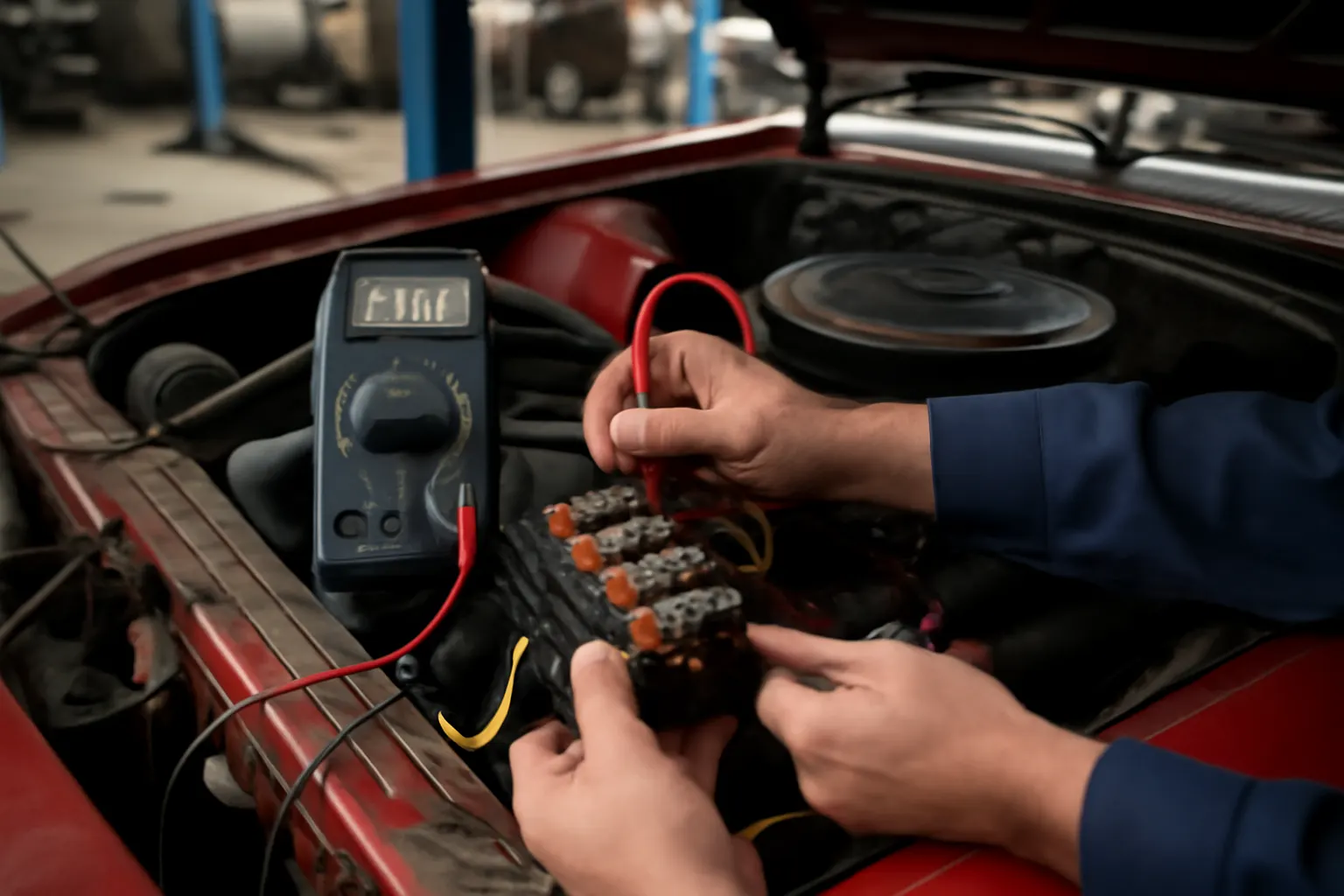
- Voltage Drop Testing: Measure voltage at each fuse terminal under load to identify high-resistance connections.
- Visual Inspection: Remove the fuse box and inspect for discoloration, melted plastic, green/white corrosion, and loose terminals.
- Wiring Harness Testing: Verify continuity and insulation resistance on all incoming and outgoing wires.
- Fuse Type Assessment: Check for incorrect fuse ratings or mismatched replacements.
- Connector Integrity: Inspect mating connectors for bent pins, spread sockets, or evidence of arcing.
- Ground Circuit Validation: Confirm that all grounds are clean, tight, and properly bonded to chassis metal.
If multiple circuits show voltage drops or intermittent faults, the fuse box is the likely culprit.
Technical Deep Dive: AMC Fuse Box Construction and Weak Points
Understanding the technical construction of AMC fuse boxes is essential for effective restoration:
Advertisement
- Bus Bars: Most AMC fuse boxes use stamped copper or brass bus bars, which are prone to oxidation and pitting.
- Glass Tube Fuses: Original fuses are cylindrical glass, which are less reliable than modern blade fuses due to poor contact pressure and higher susceptibility to vibration.
- Unsealed Housings: The plastic housings are not weather-sealed, allowing dust and moisture to accumulate internally.
- Crimped Terminals: Many connections were made with uninsulated crimp-on terminals, which loosen over time.
These design elements were cost-effective in the 1970s but are substandard by modern safety and reliability standards (NHTSA Equipment Guidelines).
Rebuild or Replace? Assessing AMC Fuse Box Options
Once a faulty fuse box is identified, restoration shops must choose between rebuilding the original or upgrading to a modern replacement. Key considerations include:
- Originality: Concours restorations may require rebuilding the original housing and retaining period-correct fuses.
- Reliability: Daily drivers or restomods benefit from upgrading to blade-style fuses and modern relays.
- Parts Availability: OEM AMC fuse boxes are rare; reproduction units and universal panels are often adapted.
- Cost and Labor: Rebuilding is labor-intensive but preserves factory appearance; replacement is quicker but may require wiring modifications.
A careful assessment of the vehicle’s intended use and owner preferences guides the decision.
The Restoration Process: Rebuilding the AMC Fuse Box
A typical professional restoration involves several detailed steps:
- Disassembly: The fuse box is removed, and all fuses, terminals, and mounting hardware are cataloged.
- Cleaning: Contacts and bus bars are cleaned with electrical contact cleaner and micro-abrasive tools to remove corrosion.
- Terminal Repair: Damaged or loose terminals are replaced with new, high-quality equivalents.
- Housing Repair: Cracked or brittle plastic is stabilized with epoxy or replaced with donor parts.
- Reassembly: The unit is reassembled with dielectric grease applied to all connections for future corrosion resistance.
- Fuse Upgrade: Where possible, glass fuses are replaced with modern blade-style adapters.
Shops document every step for quality control and future reference.
Upgrading to Modern Standards: Fuse Box Retrofit Strategies
For improved reliability and safety, many restoration shops recommend retrofitting AMC fuse boxes with modern equivalents. This process typically includes:
- Universal Blade-Style Fuse Panels: Installing a new panel with ATC/ATO blade fuses, which provide better contact pressure and are widely available.
- Relay Integration: Adding relays for high-draw circuits (headlights, heater blowers) to reduce load on original switches and wiring.
- Wiring Harness Refresh: Replacing or supplementing original harnesses with high-temperature, high-strand-count automotive wire.
- Weather-Sealing: Using sealed connectors and housings to prevent future moisture ingress.
These upgrades meet or exceed current safety and equipment standards (NHTSA Equipment Standards), while preserving the vehicle’s value and usability.
Common Pitfalls: Mistakes to Avoid in AMC Electrical Restoration
Even experienced restorers can make errors that compromise results. Key pitfalls include:
- Overfusing: Installing fuses with higher ratings than specified, which can allow wiring to overheat and cause fires.
- Poor Grounds: Failing to clean or upgrade ground connections, leading to persistent voltage drops and erratic function.
- Incomplete Harness Inspection: Overlooking hidden corrosion or broken wires in the harnesses feeding the fuse box.
- Mixing Old and New Components: Combining original glass fuses with blade adapters without verifying compatibility can cause intermittent faults.
Meticulous attention to detail and verification at every step are essential.
Diagnostic Checklist: Evaluating AMC Cabin Fuse Box Health
Before committing to a full rebuild or replacement, use this checklist to assess your AMC fuse box:
- All fuses are of correct type and rating per factory specification.
- No evidence of melted plastic, discoloration, or burnt smell on or near the fuse box.
- All terminals are tight, with no visible corrosion or green/white deposits.
- Voltage at each fuse matches battery voltage under load conditions.
- No circuits show intermittent operation or unexplained fuse failures.
- All ground wires and connections are clean, tight, and properly bonded.
- Harness insulation is flexible, with no cracks or exposed copper.
- No water stains or evidence of past leaks near fuse box mounting area.
Advertisement
If any box is unchecked, a rebuild or upgrade is strongly recommended.
Sourcing AMC Fuse Box Parts: OEM, Aftermarket, and Universal Options
Finding suitable parts for AMC electrical restoration can be challenging. Here are the main sourcing avenues:
- OEM and NOS (New Old Stock): Rare but sometimes available through specialty AMC parts vendors or online auctions. Best for concours restorations.
- Reproduction Units: Several companies produce reproduction AMC fuse boxes, though quality varies. Always verify fitment and materials.
- Universal Panels: Universal aftermarket fuse panels (such as Painless or American Autowire) can be adapted for AMC vehicles, especially for restomod projects.
- Terminal and Connector Kits: Modern kits offer high-quality, weather-sealed terminals compatible with AMC wiring.
For a side-by-side comparison of OEM and aftermarket options, see Oem Vs Aftermarket Amc Fuse Boxes.
Installation Guidance: Best Practices for AMC Fuse Box Replacement
Proper installation is critical for safety and long-term reliability. Restoration shops follow these best practices:
- Label All Wires: Before removing the old fuse box, label each wire and document connections with photos.
- Test Fitment: Mock up the new or rebuilt fuse box to ensure clearance and proper mounting.
- Crimp and Solder: Use high-quality crimp connectors, and solder critical joins for maximum conductivity.
- Use Heat Shrink: Protect all splices and terminals with heat shrink tubing to prevent shorts.
- Torque Specifications: Tighten all mounting and terminal screws to manufacturer-recommended torque values.
- Final Testing: After installation, test all circuits under load and verify fuse ratings.
A methodical approach reduces the risk of new faults and ensures a professional result.
Maintenance for Longevity: Keeping AMC Electrical Systems Reliable
Even after restoration, regular maintenance is essential for continued reliability:
- Annual Inspection: Remove the fuse box cover and inspect for corrosion, loose connections, or signs of overheating.
- Fuse Audit: Check that all fuses are of the correct type and rating.
- Moisture Control: Ensure the cabin is dry and fix any leaks that could drip onto the fuse box.
- Periodic Voltage Checks: Measure voltage at critical circuits to catch developing resistance issues early.
Preventive maintenance can extend the life of your restoration and avoid roadside surprises.
Safety, Standards, and Regulatory Context
Electrical system repairs and upgrades must comply with modern safety standards. The National Highway Traffic Safety Administration (NHTSA) provides clear guidelines on equipment safety and recalls (NHTSA Recalls Database). Upgrading to modern fuse boxes and relays not only improves reliability but also aligns with these safety recommendations.
Restoration shops should reference SAE International standards for wiring, fuse selection, and testing procedures (SAE Standards). Using certified components and following best practices ensures that the restored AMC meets or exceeds regulatory expectations.
AutoPartEx Positioning: Your Partner in AMC Electrical Restoration
AutoPartEx is committed to supporting AMC owners, enthusiasts, and restoration professionals with the most accurate, actionable guidance in the industry. Our technical editorial team collaborates with restoration shops and sources the latest standards to ensure your AMC project is a success.
For comprehensive fitment charts, troubleshooting tips, and product recommendations, start with our AMC Cabin Fuse Box – OEM Fitment, Issues, and Replacement Guidance resource. For a step-by-step walkthrough of fuse box service, see our Amc Cabin Fuse Box Guide.
Expert Action: Next Steps for AMC Owners and Restorers
If you’re facing electrical issues in your AMC, don’t settle for patchwork fixes. Begin with a methodical diagnosis using the checklist above. If your fuse box shows signs of age or damage, plan for a professional rebuild or upgrade—either by sourcing a high-quality reproduction or retrofitting a modern panel.
Document every step for future reference, and always use components that meet or exceed modern safety standards. For further guidance, reference our related articles and consult with AutoPartEx-approved restoration professionals.
References
Advertisement