
Advertisement
Sourcing the right AMC camshaft is critical for engine performance, reliability, and safety—but the process is fraught with unique fitment and quality pitfalls. Whether you’re restoring a classic AMC muscle car, maintaining a daily driver, or building a custom engine, the camshaft you choose will directly affect valve timing, fuel efficiency, and long-term durability. This article delivers real-world AMC camshaft sourcing tips, hands-on diagnostic guidance, and a thorough checklist to help you avoid the most common mistakes. For a deep dive into compatible AMC camshaft parts and OEM replacements, see our AMC Camshaft Parts & OEM Replacement Guide.
The Immediate Answer: What You Must Know Before Sourcing an AMC Camshaft
The single most important rule in AMC camshaft sourcing is to verify exact fitment for your specific engine code, year, and intended use. AMC engines—especially the popular straight-six and V8 families—have subtle but crucial differences across model years and displacements. Even among seemingly similar AMC camshafts, variations in lobe profile, journal diameter, and timing gear compatibility can create major fitment and performance issues. Always match your camshaft selection to your engine’s casting numbers and build objectives, and never assume that “close enough” will work.
The Hidden Problem: Why AMC Camshaft Sourcing Is Uniquely Challenging
Unlike some big-three automakers, AMC’s legacy parts network is fragmented, with many original suppliers long gone. This means that new-old-stock (NOS), remanufactured, and aftermarket camshafts can differ wildly in quality and accuracy. Compounding this, AMC engines were produced with running changes—even within the same model year—that affect cam core material, oiling groove placement, and timing drive design. Inaccurate catalog listings, mislabeled parts, and poorly made overseas reproductions can all lead to costly mistakes.
Many AMC enthusiasts and professional builders have discovered too late that a camshaft that “should fit” according to a generic listing will not seat properly, fails to align with the oil gallery, or causes rapid lobe wear due to incompatible metallurgy. The result: wasted time, money, and—if installed—potentially catastrophic engine failure.
The Deeper Technical Explanation: AMC Camshaft Fitment and Quality Variables
Engine Family and Casting Number Nuances
AMC’s major engine families (199/232/258 I6, 290/304/343/360/390/401 V8) each have specific camshaft requirements. Key variables include:
- Journal diameter: Some AMC V8s use smaller cam journals (e.g., early 290/343) while later engines (360/390/401) feature larger journals.
- Oiling groove placement: The alignment of oiling grooves in the camshaft and block must match exactly, or critical lifter and bearing oiling will be compromised.
- Thrust plate and retainer design: AMC used both “dog-leg” and “flat tappet” camshaft thrust plates, and mixing these can cause axial movement or binding.
Material and Hardening Differences
Due to the stresses involved, AMC camshafts are typically made from either cast iron or forged steel. The original camshafts were often induction-hardened, while some aftermarket replacements may use different processes. Improperly matched materials can lead to premature lobe or journal wear, especially in flat-tappet applications.
Lobe Profile and Timing Drive
AMC camshafts are ground for specific lobe separation angles, lift, and duration to match factory or performance objectives. Swapping in a cam with the wrong lobe profile can compromise vacuum, idle quality, fuel efficiency, and even emissions. The camshaft gear interface must also match the correct timing set—gear pitch and tooth count vary between engines and years.
Aftermarket and NOS Variability
Aftermarket and NOS (new old stock) camshafts may not always be true to original AMC specifications. Tolerances, hardness, and even the correct oiling groove placement can be off, especially in low-volume or reproduction runs.
Advertisement
Real-World Sourcing Challenges: Pitfalls and Costly Mistakes
Catalog Confusion and Mislabeled Parts
Many AMC camshafts on the market are listed generically as fitting “all AMC V8” or “all 232-258 I6,” but this is rarely accurate. Some aftermarket sellers use catch-all part numbers or cross-reference charts that ignore critical year-to-year changes. This frequently leads to buyers receiving camshafts with incorrect journal sizes, thrust plate designs, or oiling groove alignments.
Substandard Reproductions
Given the relatively low volume of AMC engine builds, some aftermarket suppliers cut corners with materials or machining. Issues include:
- Incorrect lobe hardness: Leading to rapid wear, especially with aggressive valve springs.
- Poor oiling groove machining: Resulting in lifter or bearing starvation.
- Inaccurate timing gear fitment: Causing noisy operation or timing drift.
Incomplete or Inaccurate Documentation
AMC camshaft boxes and online listings often lack critical technical data, such as lobe separation angle, base circle diameter, or hardness specs. Without this information, even experienced builders can make the wrong choice.
The Solution Path: Step-by-Step AMC Camshaft Sourcing Checklist
To avoid fitment and quality pitfalls, follow this comprehensive checklist:
1. Confirm Engine Casting Numbers and Specs
- Locate and verify your engine block casting number and build date.
- Cross-reference with AMC technical guides to determine correct camshaft specs for your engine family and year.
2. Identify the Required Camshaft Type
- Flat-tappet or roller?
- Dog-leg or standard thrust plate?
- Journal diameter (measure if unsure).
3. Match Oiling Groove and Thrust Plate Design
- Inspect your original camshaft and block for oiling groove placement.
- Verify thrust plate type and retainer design.
4. Specify Lobe Profile and Timing Gear Requirements
- For stock engines, match factory lobe separation and lift.
- For performance builds, consult with a camshaft grinder or reputable supplier for appropriate specs.
- Confirm timing gear tooth pitch and count.
5. Source from Reputable Suppliers
- Favor established AMC specialists and well-reviewed vendors.
- Avoid “universal fit” listings or sellers with vague technical data.
6. Inspect Upon Arrival
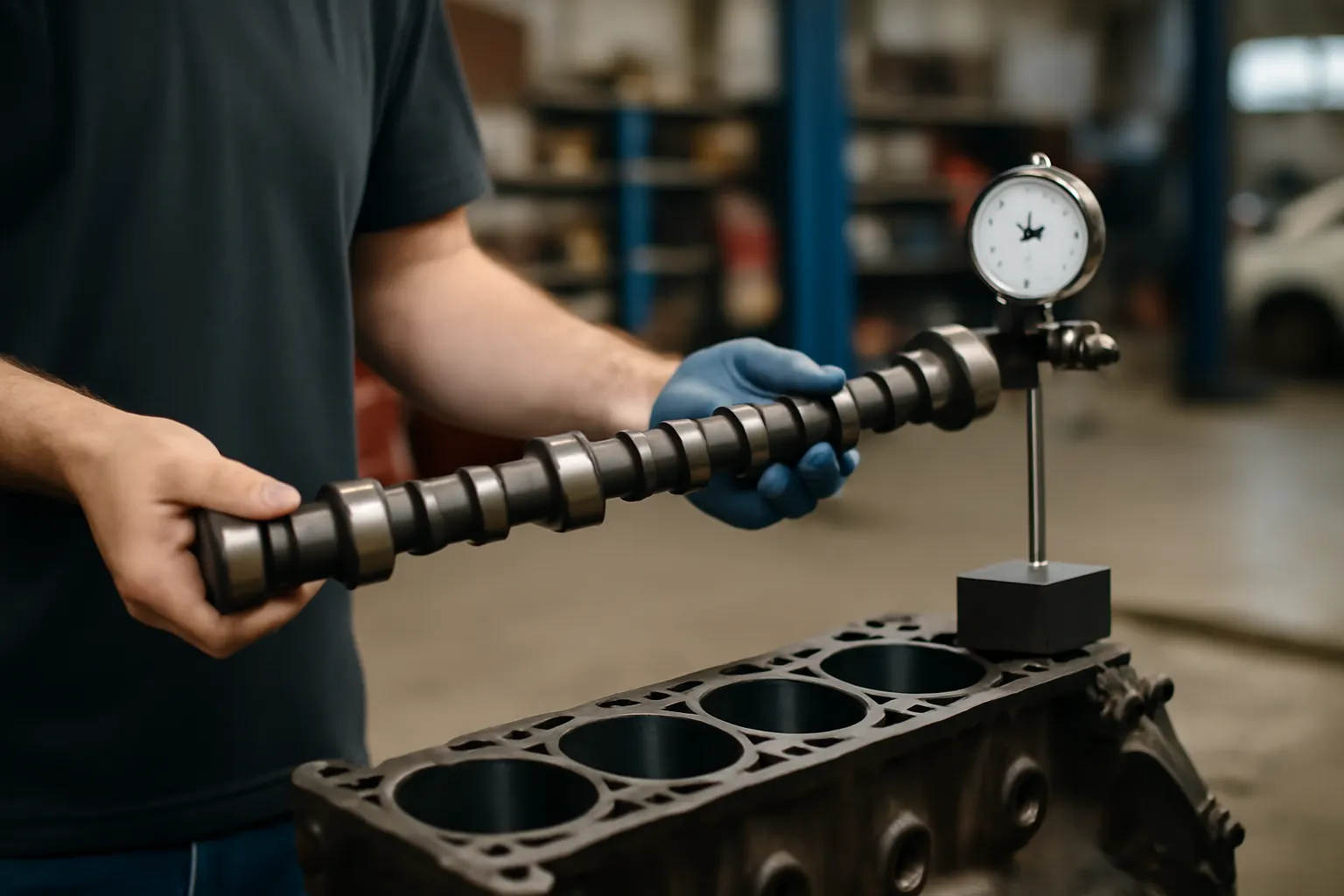
- Measure all critical dimensions: journal diameter, base circle, lobe lift.
- Check oiling groove alignment.
- Inspect for machining flaws or damage in shipping.
7. Verify Material and Hardness
- If possible, confirm camshaft core material and hardening process.
- For flat-tappet cams, ensure compatibility with break-in oils and lifter materials.
8. Document Everything
- Record all part numbers, measurements, and supplier contact information.
- Photograph original and replacement camshafts side-by-side for reference.
Pro Tip: Never discard your original camshaft until the new one is fully installed and tested. It is your best reference for fitment and oiling groove orientation.
Practical Inspection: What to Check Before Installation
A thorough pre-installation inspection is essential to avoid catastrophic failure. Use the following AMC camshaft inspection checklist:
| Inspection Point | What to Look For | Tools Needed |
|---|---|---|
| Journal diameter | Matches factory spec; no scoring or taper | Micrometer |
| Lobe lift and profile | Consistent with documentation; no visible pitting | Dial indicator, calipers |
| Oiling groove alignment | Matches original cam and block orientation | Visual/measurement |
| Thrust plate fitment | Correct design for block and cam | Visual |
| Timing gear interface | Proper tooth pitch, no burrs or deformation | Visual |
| Material/hardness markings | Confirmed with supplier or visible factory marks | Visual, supplier docs |
| Packaging/shipping damage | No nicks, dents, or bent lobes | Visual |
If any issues are detected, do not proceed with installation—contact your supplier immediately.
Diagnosing Camshaft Fitment Issues: Symptoms and Solutions
Even with careful sourcing, fitment issues can arise. Watch for these warning signs during test assembly:
- Camshaft binds in block: Indicates incorrect journal size or oiling groove misalignment.
- Excessive end play: Wrong thrust plate or retainer.
- Improper timing gear fit: Mismatched gear pitch.
- Oil starvation at lifters or bearings: Oiling groove or passage misalignment.
If any of these symptoms appear, re-check all measurements and compare the new camshaft to the original. Never force installation—doing so risks engine damage.
Advertisement
AMC Camshaft Sourcing: Material and Engineering Considerations
Material Selection and Performance
According to the U.S. Department of Energy’s materials technologies research, camshaft durability is highly dependent on the core material and hardening process. AMC engines were originally equipped with camshafts designed for specific metallurgy and oil chemistry. Installing a camshaft with substandard or incompatible material can lead to rapid wear, especially with modern low-zinc oils.
Engineering Standards and Safety
The National Highway Traffic Safety Administration and SAE International stress the importance of adhering to OEM engineering standards for replacement parts. Camshafts that deviate from factory tolerances or lack proper hardening can compromise both performance and safety. Always verify that your supplier follows recognized standards and can provide documentation if requested.
Performance Upgrades: When and How to Deviate from Stock
Performance camshafts can unlock additional power and torque, but only if matched to your engine’s capabilities and supporting modifications. If you’re planning a cam upgrade, consider:
- Valve spring compatibility: Higher-lift cams may require upgraded springs and retainers.
- Piston-to-valve clearance: Aggressive profiles may risk contact in high-compression engines.
- Fuel system and ignition: Ensure your carburetor or EFI system can support increased airflow.
- Exhaust tuning: A performance cam may require headers or a less restrictive exhaust.
Consult with an AMC camshaft specialist or experienced engine builder to select a profile that matches your goals and avoids drivability or reliability issues. For in-depth technical history, see Amc Camshaft Evolution.
Maintenance and Break-In: Protecting Your New AMC Camshaft
Proper break-in and maintenance are essential for camshaft longevity, especially with flat-tappet designs. Follow these best practices:
- Use high-zinc break-in oil for the initial startup and first 500 miles.
- Prime the oiling system before cranking the engine.
- Vary engine RPM during break-in to ensure proper lifter rotation.
- Regularly inspect oil and filter for metal particles after installation.
Routine maintenance—using quality oil and filters, and monitoring valve lash—will maximize camshaft life. For installation guidance, reference our Amc Camshaft Installation guide.
Red Flags: When to Walk Away from an AMC Camshaft Deal
- No technical documentation: If the seller cannot provide specs or material details, reconsider the purchase.
- Universal fit claims: Avoid camshafts advertised as fitting “all AMC engines” without listing exact applications.
- Suspiciously low price: Quality camshafts require precision and material investment; cut-rate parts often mean cut-rate quality.
- Unknown brand or seller: Favor established AMC aftermarket brands and suppliers with proven track records.
Connecting with the AMC Community and Trusted Suppliers
AMC enthusiasts and professional engine builders are invaluable resources when sourcing camshafts. Online forums, clubs, and restoration groups can provide real-world feedback on specific suppliers and part numbers. Many reputable AMC parts specialists maintain detailed cross-reference charts and can custom-grind camshafts to your exact needs.
AutoPartEx recommends starting with the AMC Camshaft Parts & OEM Replacement Guide for trusted supplier listings and technical resources. Our editorial team continuously updates these resources based on industry standards and user feedback.
AutoPartEx Positioning: Your Partner in AMC Camshaft Sourcing
At AutoPartEx, our mission is to empower AMC owners, restorers, and builders with accurate, actionable information and access to quality parts. We maintain a curated database of AMC camshaft specifications, fitment notes, and supplier reviews to help you avoid costly mistakes. Whether you’re sourcing OEM replacements or performance upgrades, our guides and checklists are engineered to save you time, money, and frustration.
For more in-depth identification tips, visit our Amc Camshaft Identification page. For a full overview of AMC camshaft parts and compatible replacements, explore our AMC Camshaft Parts & OEM Replacement Guide.
Conclusion: Sourcing AMC Camshafts with Confidence
Sourcing the correct AMC camshaft is not just a matter of finding a part number—it’s a technical process that requires attention to detail, knowledge of AMC engine families, and a commitment to quality. By following the checklists and sourcing tips outlined above, you can avoid the most common pitfalls and ensure your AMC engine delivers the performance, reliability, and longevity you expect.
Always verify fitment, demand technical documentation, and consult with trusted AMC experts when in doubt. With the right approach, you’ll keep your classic or custom AMC running strong for years to come.
References
Advertisement