
Advertisement
AMC engines have a storied reputation among classic car enthusiasts and restoration professionals, but the camshaft housing remains one of the most misunderstood and failure-prone components in the AMC valvetrain. This diagnostic guide delivers immediate, actionable diagnostic patterns and real-world failure stories from leading restoration shops. If you’re experiencing excessive valvetrain noise, oil leaks, or erratic engine timing in your AMC, this article will help you pinpoint the root cause and chart a path to reliable repair.
Within the AMC Camshaft Housing: OEM Fitment, Failure Patterns, and Sourcing Guidance resource, you’ll find foundational knowledge. This article, however, dives deep into hands-on diagnostics—translating technical symptoms into practical fixes, and highlighting how even subtle housing issues can lead to catastrophic engine damage if misdiagnosed.
The Immediate Diagnostic Answer: What Are the Most Common AMC Camshaft Housing Faults?
When an AMC engine presents with valvetrain noise, inconsistent timing, or unexplained oil leaks, the camshaft housing is a prime suspect. The most common diagnostic patterns restoration shops encounter include:
- Audible ticking or knocking from the upper engine, especially after startup
- Oil seepage or pooling near the camshaft housing gasket or end seals
- Erratic ignition timing or rough idle, often traced to camshaft endplay or misalignment
- Premature camshaft or lifter wear, visible as scoring or pitting on inspection
- Excessive crankcase pressure or oil aeration, indicating internal leakage
A systematic approach—visual inspection, endplay measurement, and oil pressure testing—will reveal most camshaft housing issues. But beneath these surface-level symptoms often hides a more complex array of failure modes unique to AMC’s design.
The Hidden Problem: AMC Camshaft Housing Vulnerabilities
While AMC camshaft housings appear robust, their unique engineering exposes them to several hidden vulnerabilities:
- Material fatigue: Decades-old aluminum or cast iron housings suffer from micro-cracks, especially near mounting bosses and oil galleries.
- Gasket and seal erosion: OEM gaskets degrade, allowing oil to bypass critical journals or leak externally.
- Improper torque or warpage: Over-tightening or uneven torqueing during rebuilds can distort the housing, misaligning the camshaft and accelerating wear.
- Obsolete design tolerances: Original AMC spec tolerances are often outside modern standards, leading to excessive endplay or insufficient oiling.
These issues are rarely visible without teardown and precise measurement. Many AMC owners and even some shops miss early warning signs, resulting in catastrophic failures—spun bearings, seized camshafts, or even cracked engine blocks.
Digging Deeper: How Camshaft Housing Failures Impact Engine Performance
Understanding the technical interplay between the camshaft housing and overall engine performance is essential for accurate diagnostics:
- Oil Control: The camshaft housing routes pressurized oil to the camshaft journals and lifters. Even minor leakage or restriction at the housing can starve the valvetrain, causing rapid wear and eventual failure.
- Timing Precision: The housing maintains camshaft alignment. Any distortion, endplay, or wear translates to erratic valve timing, affecting combustion efficiency, emissions, and power output.
- Structural Integrity: AMC’s camshaft housings are load-bearing. Cracks or warpage can propagate stress into the block, risking further component failures.
- Thermal Management: The housing dissipates heat from the camshaft. Poor oil flow or material fatigue increases operating temperatures, compounding wear.
These dynamics mean that a compromised camshaft housing is not just a nuisance—it’s a critical safety and reliability concern, as recognized in NHTSA equipment safety guidelines.
Recognizing Real-World Diagnostic Patterns: Shop Stories
Leading AMC restoration shops report several recurring camshaft housing diagnostic patterns:
Pattern 1: The “Cold Start Knock”
- Symptom: Loud ticking or knocking at startup, quieting as oil pressure builds.
- Root Cause: Worn camshaft housing journals or excessive endplay, allowing the camshaft to “walk” during initial rotation.
- Diagnostic Tip: Measure camshaft endplay with a dial indicator; compare against AMC specification (typically 0.003–0.008 inches).
Pattern 2: “Phantom Oil Leak”
- Symptom: Persistent oil seepage near the front or rear of the engine, despite new gaskets.
- Root Cause: Warped camshaft housing or eroded gasket surfaces, often from repeated overheating or improper installation.
- Diagnostic Tip: Use a straightedge and feeler gauge to check housing flatness; inspect for micro-cracks with dye penetrant.
Advertisement
Pattern 3: “Timing Drift”
- Symptom: Engine timing that fluctuates despite distributor and timing chain being in spec.
- Root Cause: Camshaft housing misalignment or worn thrust plate, allowing camshaft movement under load.
- Diagnostic Tip: Verify camshaft alignment with a camshaft alignment tool and inspect thrust plate wear.
These patterns highlight why superficial fixes—like replacing gaskets without checking housing geometry—often fail to resolve the underlying issue.
Step-by-Step AMC Camshaft Housing Diagnostic Checklist
A methodical diagnostic process is essential for identifying AMC camshaft housing failures before they become catastrophic. Use this checklist in your service bay or home garage:
| Step | Action | Tools Needed | Key Observations |
|---|---|---|---|
| 1 | Visual Inspection | Flashlight, mirror | Look for oil leaks, gasket extrusion, or surface cracks |
| 2 | Oil Pressure Test | Oil pressure gauge | Low or fluctuating pressure may indicate internal leakage |
| 3 | Endplay Measurement | Dial indicator | Excessive camshaft movement suggests worn housing or thrust plate |
| 4 | Housing Flatness Check | Straightedge, feeler gauge | Warpage above 0.002" can cause leaks and misalignment |
| 5 | Dye Penetrant Test | Dye kit | Reveals micro-cracks invisible to the naked eye |
| 6 | Camshaft Journal Inspection | Micrometer | Scoring, pitting, or discoloration signals oil starvation |
| 7 | Gasket Surface Assessment | Visual, tactile | Roughness or erosion compromises sealing |
| 8 | Alignment Verification | Camshaft alignment tool | Confirms correct camshaft and housing orientation |
Document all findings. If you discover multiple concurrent issues (e.g., both endplay and oil leakage), prioritize housing repair or replacement before addressing secondary symptoms.
Advanced Diagnostic Techniques: Beyond the Basics
For shops and experienced DIYers, advanced diagnostic methods can reveal subtle failures:
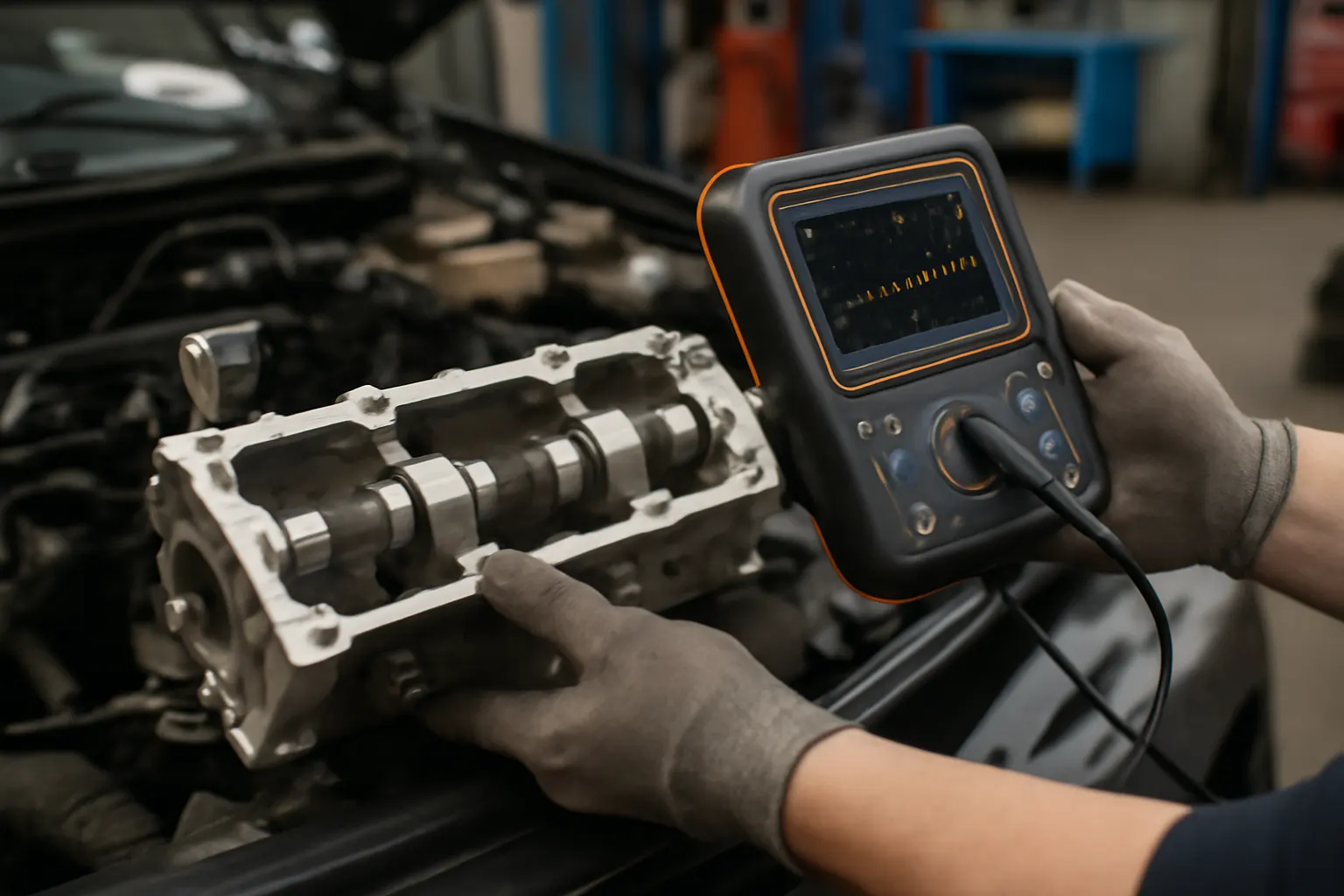
- Ultrasonic Thickness Testing: Identify thinning of housing walls or hidden corrosion, especially in aluminum castings.
- Borescope Inspection: Examine internal oil galleries and camshaft support surfaces without full disassembly.
- Oil Analysis: Lab analysis of used oil can detect elevated metals (iron, aluminum) indicating housing or camshaft wear.
- Thermal Imaging: Spot “hot spots” in the housing during engine operation, which may signal oil starvation or friction.
These methods complement the standard checklist and can save hours of teardown time—critical for rare or high-value AMC engines.
Common AMC Camshaft Housing Failure Modes: Technical Breakdown
To appreciate the importance of precise diagnostics, consider the most prevalent AMC camshaft housing failure modes:
1. Journal Wear and Scoring
- Cause: Insufficient lubrication, contaminated oil, or misaligned housing.
- Consequence: Accelerated camshaft and lifter wear, metal debris in the oil system.
2. Housing Warpage
- Cause: Over-torquing, uneven gasket compression, or repeated overheating.
- Consequence: Oil leaks, loss of camshaft alignment, compromised timing.
3. End Seal and Gasket Failure
- Cause: Aged or incompatible gasket materials, improper installation.
- Consequence: Chronic oil seepage, pressure loss, and potential fire hazard.
4. Structural Cracking
- Cause: Material fatigue, casting defects, or excessive mechanical load.
- Consequence: Catastrophic failure, engine block damage, total loss.
Recognizing these failure modes during diagnostics helps inform the repair strategy and parts sourcing approach.
The AMC Camshaft Housing in the Context of Engine Longevity and Efficiency
The camshaft housing’s role extends beyond mechanical support—it directly impacts engine longevity, fuel efficiency, and safety:
- Fuel Efficiency: A misaligned or leaking housing increases friction and oil consumption, reducing overall efficiency (DOE Fuel Efficiency).
- Materials Technology: AMC’s housing materials, while robust for their era, may not match the durability of modern alloys. Upgrading to improved materials during restoration can yield significant longevity gains (DOE Materials Technologies).
- Safety: Oil leaks and camshaft misalignment can create dangerous operating conditions, including fire risk and sudden power loss, as highlighted in NHTSA equipment safety guidelines.
Neglecting camshaft housing diagnostics isn’t just a maintenance oversight—it’s a threat to the safety, reliability, and value of your AMC restoration.
Service Bay Stories: Lessons from the Field
Real-world stories from AMC restoration specialists highlight the importance of methodical camshaft housing diagnostics:
- Case Study 1: A 1972 AMC Javelin presented with persistent oil leaks and rough idle despite repeated gasket replacements. Only after a full housing teardown and flatness check did the shop discover a 0.004" warp—solved with precision machining and a new gasket set.
- Case Study 2: An AMC 360 V8 owner reported sudden loss of oil pressure and metallic ticking. Borescope inspection found a hairline crack in the camshaft housing oil gallery. Early detection prevented catastrophic engine failure.
- Case Study 3: A shop’s “mystery misfire” on a rebuilt AMC 304 was traced to excessive camshaft endplay—caused by a worn thrust plate and misaligned housing. Correcting the housing alignment and replacing the thrust plate restored perfect timing and idle.
Advertisement
These cases reinforce that thorough diagnostics save time, money, and rare AMC engines.
When to Repair, Machine, or Replace Your AMC Camshaft Housing
After diagnostics, you’ll face a critical decision: repair, machine, or replace?
- Repair: Minor surface erosion or gasket issues can often be addressed with careful cleaning, new gaskets, and correct torque procedures.
- Machine: Moderate warpage or journal wear may be corrected by precision machining—resurfacing gasket faces or align-honing camshaft bores. Always confirm that post-machining dimensions remain within AMC spec.
- Replace: Severe cracks, excessive warpage, or irreparable wear demand full replacement. Sourcing OEM or high-quality reproduction housings is essential for reliability.
Use the AMC Camshaft Housing: OEM Fitment, Failure Patterns, and Sourcing Guidance for sourcing tips and fitment verification.
Installation Best Practices: Preventing Recurring Failures
Proper installation is as crucial as accurate diagnostics. Follow these expert guidelines:
- Thorough Cleaning: Remove all old gasket material, oil residue, and debris from mating surfaces.
- Surface Prep: Use a straightedge to confirm flatness; machine if necessary.
- Correct Gaskets: Select modern, high-quality gaskets compatible with your AMC engine model.
- Torque Sequence: Follow AMC’s recommended torque pattern and values—uneven torque is a leading cause of housing warpage.
- Lubrication: Pre-lube camshaft journals and housing bores to prevent dry start wear.
- Endplay Check: Measure and set camshaft endplay to spec before final assembly.
- Oil System Priming: Prime the oil system before initial startup to ensure immediate lubrication.
For detailed step-by-step procedures, consult the Amc Camshaft Housing Installation Guide.
Maintenance and Monitoring After Repair
Even after successful repair or replacement, ongoing monitoring is vital:
- Regular Oil Changes: Use high-zinc oil formulations for flat-tappet AMC engines.
- Periodic Oil Pressure Checks: Monitor for drops in pressure that could indicate new leaks or wear.
- Auditory Inspections: Listen for changes in valvetrain noise, especially after cold starts.
- Visual Leak Checks: Inspect for oil seepage at housing gaskets and end seals during every service.
Proactive maintenance extends the life of your AMC engine and protects your investment.
Sourcing AMC Camshaft Housings: Fitment and Quality Considerations
Finding the right camshaft housing for your AMC can be challenging, given the range of engine variants and the scarcity of NOS or OEM parts. Keep these sourcing principles in mind:
- Verify Fitment: Cross-reference casting numbers and dimensions with your specific AMC engine model. Use the Amc Compatibility Article for guidance.
- Inspect Used Housings: Even NOS parts can suffer from shelf wear or casting defects—always inspect and measure before installation.
- Consider Upgrades: Modern reproduction housings may offer improved materials and tighter tolerances, enhancing durability.
AutoPartEx maintains a curated database of AMC camshaft housings and fitment data to assist restoration professionals and enthusiasts.
The AutoPartEx Approach: Trusted Guidance for AMC Restoration
At AutoPartEx, we combine real-world shop experience with rigorous technical standards to deliver the most reliable AMC camshaft housing diagnostics and sourcing guidance. Our editorial team collaborates with leading restoration shops and leverages authoritative sources, including NHTSA and SAE International, to ensure our recommendations meet or exceed industry best practices.
Whether you’re a seasoned AMC restorer or tackling your first engine rebuild, trust AutoPartEx for data-driven diagnostics, proven repair strategies, and access to hard-to-find AMC components. Explore our AMC Camshaft Housing: OEM Fitment, Failure Patterns, and Sourcing Guidance page for further technical resources.
Next Steps: Take Action with Expert Diagnostics
If you suspect camshaft housing issues in your AMC engine, don’t delay. Begin with the diagnostic checklist above, document your findings, and consult with an experienced AMC specialist if you uncover signs of warpage, excessive endplay, or cracking. For comprehensive rebuilds, review the Amc Engine Rebuild Valvetrain guide to ensure your entire valvetrain is restored to peak performance.
Your AMC’s reliability, efficiency, and safety depend on the integrity of its camshaft housing. With methodical diagnostics and the right parts, you can keep your classic running strong for decades to come.
References
Advertisement