
Advertisement
AMC rear brake rotor failures are a significant concern for safety-conscious drivers and restoration enthusiasts alike. Whether you own a classic AMC Javelin, an Eagle, or a modernized AMC platform, understanding the causes, symptoms, and solutions for brake rotor failures is essential for maintaining optimal braking performance and road safety. This comprehensive guide delivers immediate answers to common AMC rear brake rotor failures, exposes hidden issues often missed during routine inspections, and walks you through proven diagnostic and preventive maintenance routines. For full replacement procedures and fitment details, refer to our AMC Rear Brake Rotor Replacement & Fitment Guide.
The Immediate Answer: What Causes AMC Rear Brake Rotor Failures?
AMC rear brake rotors can fail due to several primary factors:
- Material fatigue: Over time, repeated heat cycling and mechanical stress lead to microcracks and surface degradation.
- Corrosion: Exposure to moisture, road salts, and environmental contaminants accelerates rust formation, particularly on older AMC rotors with less advanced coatings.
- Improper installation or torque: Incorrectly torqued lug nuts or improper rotor seating can cause warping and uneven wear.
- Inferior materials: Low-quality aftermarket rotors lacking proper metallurgy or heat treatment are much more prone to premature failure.
- Overheating and glazing: Aggressive driving, towing, or chronic brake dragging can cause the rotor surface to overheat, reducing friction and creating hard spots or cracks.
Recognizing these failure modes early is critical for AMC owners. If you notice pulsation, squealing, reduced stopping power, or visible scoring/rust on the rotor face, immediate inspection is warranted.
The Hidden Problem: Why AMC Rotors Fail Unnoticed
Many AMC rear brake rotor failures develop insidiously, with symptoms that are easy to misdiagnose or overlook:
- Gradual thickness variation: Brake pedal pulsation might be subtle at first and mistaken for pad issues.
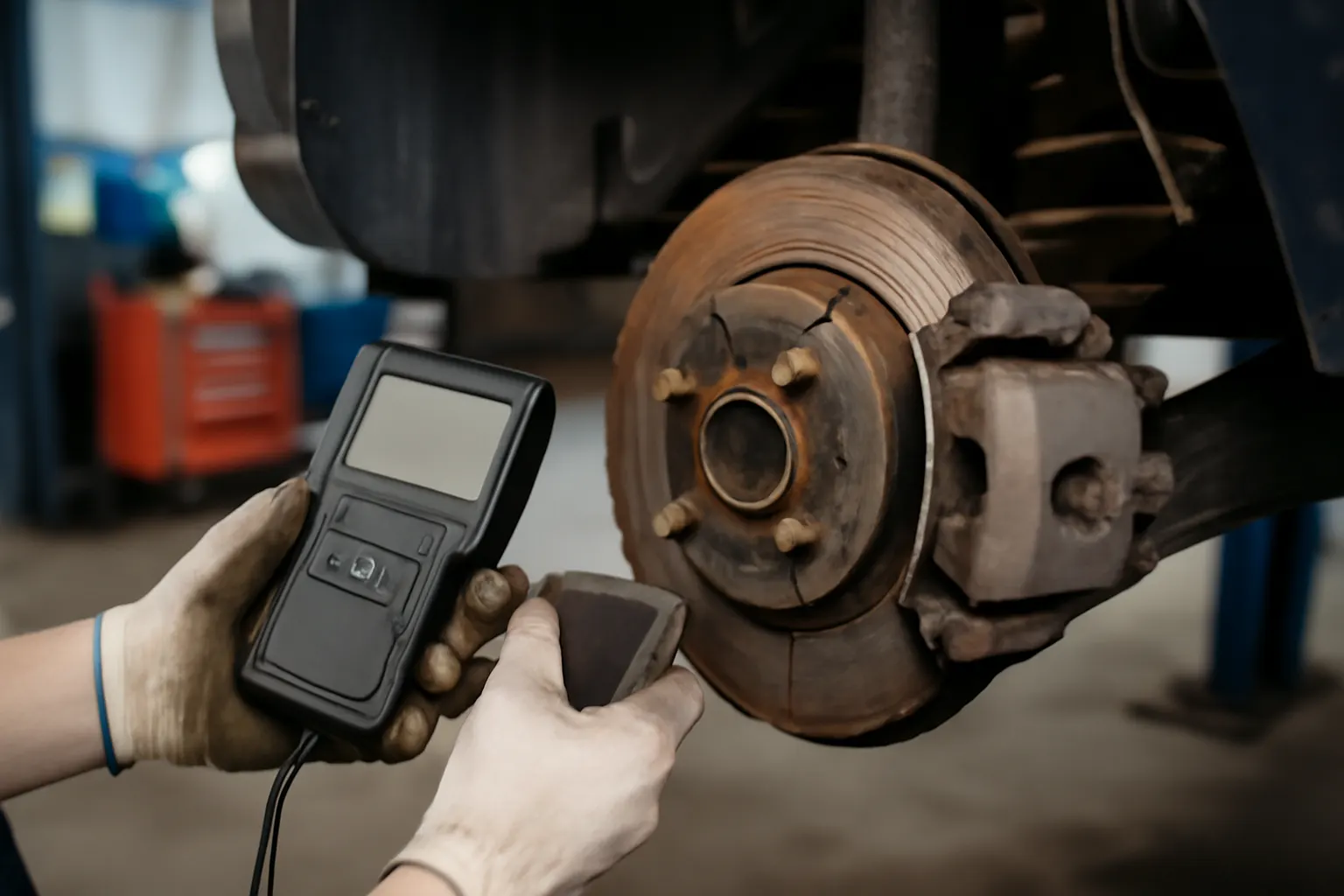
- Hidden cracks: Hairline cracks and heat checks can form on the rotor surface or edges, invisible without a wheel-off inspection.
- Surface corrosion under pads: Rust can form beneath the brake pad contact area, causing pitting that only appears once pads are removed.
- Noise misattribution: Squeaks or grinding may be attributed to worn pads, but often signal deeper rotor damage.
These hidden issues can escalate, leading to total rotor failure, compromised braking, or even catastrophic separation in extreme cases. To address these risks, AMC owners should adopt a disciplined approach to periodic inspection and maintenance.
Understanding the Technical Background: AMC Rotor Design and Material Choices
AMC’s rear brake rotors, especially in classic and legacy vehicles, were typically manufactured from cast iron. While robust, this material is susceptible to:
- Thermal cycling stress: Repeated heating and cooling during braking causes expansion and contraction, eventually leading to microcracks.
- Corrosion susceptibility: Older AMC rotors lack modern anti-corrosion coatings, making them more vulnerable to rust.
- Material inconsistency: Early manufacturing processes sometimes resulted in uneven metallurgy, increasing the risk of warping or premature wear.
Recent advances in rotor technology, including improved casting methods and alloying, can mitigate some of these risks. However, many AMC vehicles still operate with legacy components or budget aftermarket replacements that do not meet modern standards. For a deeper dive into materials and performance, see the Materials Technologies resource from the U.S. Department of Energy.
Field Reports: Common AMC Rear Brake Rotor Failure Patterns
Field reports and user forums consistently highlight several recurring AMC rear brake rotor failure patterns:
- Warping after heavy braking: Drivers report brake pedal pulsation after sustained downhill driving or emergency stops, often traced to overheated, warped rotors.
- Rust-through on seldom-driven vehicles: AMC classics stored in humid environments develop deep rotor rust, sometimes leading to pitting severe enough to require replacement.
- Cracking in high-performance applications: Owners who track or autocross their AMC vehicles frequently observe hairline cracks on the rotor surface, especially when using aggressive brake pads.
- Uneven wear due to caliper issues: Seized or sticking calipers can cause one side of the rotor to wear faster than the other, leading to thickness variation and noise.
Understanding these patterns enables AMC owners to target their inspections and maintenance more effectively.
Advertisement
Diagnostic Routine: How to Identify AMC Rear Brake Rotor Failures
A systematic diagnostic routine is essential for accurately identifying rotor failures. Use the following checklist during every brake service or when symptoms arise:
AMC Brake Rotor Failure Diagnostic Checklist
-
Visual Inspection
- Remove the rear wheel.
- Inspect rotor faces for scoring, grooves, and discoloration.
- Look for hairline cracks, especially near drilled holes or vented areas.
- Check for rust, pitting, or flaking—pay close attention to the rotor hat and edges.
-
Thickness Measurement
- Use a micrometer to measure rotor thickness at multiple points (minimum three, 120° apart).
- Compare readings to AMC’s minimum thickness specification (see your service manual or AMC Rear Brake Rotor Replacement & Fitment Guide).
-
Runout Measurement
- Mount a dial indicator to measure lateral runout (wobble) as you slowly rotate the rotor.
- Excessive runout (>0.002” or as specified by AMC) indicates warping or improper installation.
-
Pad Inspection
- Remove pads and inspect for uneven wear, glazing, or embedded debris.
- Check for material transfer from pad to rotor surface (often appears as dark, glazed spots).
-
Spin Test
- With the wheel off and vehicle safely supported, spin the rotor by hand.
- Listen and feel for roughness or scraping, which may indicate deep scoring or bearing issues.
-
Brake Performance Test
- Road-test the vehicle, noting any pulsation, vibration, noise, or reduced stopping power.
The Role of Installation Practices in Rotor Longevity
Improper installation is a frequent—but often overlooked—cause of premature AMC rear brake rotor failure. Common mistakes include:
- Incorrect torquing of lug nuts: Over-tightening or uneven torque can distort the rotor, leading to runout and pedal pulsation.
- Failure to clean hub surfaces: Rust or debris on the hub can prevent the rotor from seating flush, causing lateral runout.
- Reusing old hardware: Worn or stretched bolts may not hold the rotor securely, contributing to movement and noise.
To ensure proper installation, always follow AMC’s recommended torque specs and cleaning procedures. For a step-by-step guide, see our Brake Rotor Installation article.
Preventive Maintenance: Extending AMC Rear Brake Rotor Life
Preventive maintenance is the key to maximizing rotor lifespan and minimizing costly failures. AMC owners should:
- Schedule regular brake inspections: At least every 12,000 miles or annually, whichever comes first.
- Address pad wear promptly: Worn pads can expose the rotor to metal-on-metal contact, accelerating damage.
- Flush brake fluid: Old fluid retains moisture, which can corrode internal brake components and lead to caliper sticking.
- Store vehicles in dry environments: Reduces rust formation, especially in classic AMC models.
- Avoid aggressive driving or heavy towing: Unless rotors and pads are upgraded for high-performance use.
A disciplined maintenance routine not only prevents rotor failures but also improves overall vehicle safety and performance.
Understanding the Impact of Rotor Failures on Safety and Performance
Brake rotor failures have direct, measurable consequences on both safety and vehicle performance:
- Increased stopping distances: Warped or cracked rotors reduce friction and braking efficiency, increasing the distance required to stop.
- Compromised brake pedal feel: Thickness variation or runout creates inconsistent pedal feedback, making precise braking difficult.
- Risk of catastrophic failure: In extreme cases, a severely cracked or broken rotor can fracture, leading to complete loss of braking on one wheel.
- Noise and vibration: Not only are these symptoms distracting, but they also indicate underlying safety risks.
The National Highway Traffic Safety Administration (NHTSA) classifies brake component failures as critical safety defects. For more information on safety equipment standards, see Vehicle Safety and Equipment.
Choosing the Right Replacement Rotor: OEM vs. Aftermarket
Selecting the correct replacement rotor is essential for restoring and maintaining AMC brake performance. Key considerations include:
- Material quality: Opt for rotors manufactured to SAE or OEM standards, with proper metallurgy and heat treatment.
- Coating and corrosion resistance: Modern rotors often feature zinc or phosphate coatings to resist rust—an important upgrade for AMC vehicles.
- Fitment accuracy: Ensure the rotor matches your AMC model’s diameter, thickness, and bolt pattern. Use the AMC Rear Brake Rotor Replacement & Fitment Guide for reference.
- OEM vs. aftermarket: While OEM rotors guarantee original fit and performance, select aftermarket options can offer improved materials or performance at a lower cost. Compare options in our Oem Vs Aftermarket Rotors guide.
Advertisement
Avoid budget rotors with vague or missing specifications, as these are more likely to fail prematurely.
Addressing Recurring Failures: When to Investigate Beyond the Rotor
If you experience repeated AMC rear brake rotor failures, the root cause may lie elsewhere in the braking system:
- Caliper malfunction: Sticking or seized calipers can cause uneven rotor wear and overheating.
- Suspension or hub issues: Worn wheel bearings or bent hubs create rotor misalignment and runout.
- Improper axle code fitment: Using the wrong rotor for your AMC axle code can result in poor fitment and early failure. Reference your axle code and confirm compatibility using our Amc Axle Code Fitment resource.
A holistic diagnostic approach is vital—don’t assume the rotor is always the sole culprit.
AMC Brake Rotor Failure Prevention: Expert Checklist
To help AMC owners, restorers, and technicians prevent costly rotor failures, AutoPartEx recommends the following expert checklist:
AMC Brake Rotor Failure Prevention Checklist
- Inspect rotors and pads every 12,000 miles or annually
- Measure rotor thickness and runout at each brake service
- Replace rotors at or below minimum thickness
- Use only high-quality, coated rotors that meet or exceed OEM/SAE standards
- Torque all fasteners to factory specifications using a calibrated torque wrench
- Clean hub and rotor mating surfaces thoroughly before installation
- Flush brake fluid every two years to prevent internal corrosion
- Store AMC vehicles in a dry, climate-controlled environment when possible
- Address any brake noise, vibration, or performance changes immediately
- Document all maintenance for future reference and resale value
AMC Rotor Failures: Real-World Case Studies
To illustrate the importance of proper diagnosis and maintenance, consider these real-world AMC rear brake rotor failure scenarios:
Case Study 1: Classic AMC Javelin with Pulsation A 1974 AMC Javelin owner reported gradual brake pedal pulsation. Inspection revealed significant rotor thickness variation (0.008” difference) and heat checking. The culprit: a seized rear caliper that caused uneven pad pressure. Solution: Replaced both rotors and calipers, restored smooth braking.
Case Study 2: AMC Eagle Stored in Humid Garage After a season in storage, an AMC Eagle developed severe rear brake noise. Rotor inspection found deep rust pitting beneath the pads. Lesson: Even low-mileage vehicles can suffer rotor failure if storage conditions are poor. Solution: Replaced rotors and improved garage ventilation.
Case Study 3: Aftermarket Rotor Failure on AMC Gremlin A budget aftermarket rotor installed on a Gremlin failed within 8,000 miles—cracking and warping under moderate use. Post-mortem analysis revealed substandard metallurgy and lack of proper heat treatment. Solution: Upgraded to premium, coated rotors with verified specifications.
The AutoPartEx Position: Reliable AMC Brake Rotor Sourcing and Technical Support
At AutoPartEx, we recognize that AMC rear brake rotor failures are not just a nuisance—they’re a critical safety concern. That’s why we provide:
- Verified fitment data: Our AMC Rear Brake Rotor Replacement & Fitment Guide ensures you find the right rotor for your exact AMC model and axle code.
- Technical editorial support: Our guides, like Brake Rotor Installation, help you avoid common installation pitfalls.
- Quality-focused sourcing: We recommend only rotors that meet or exceed OEM and SAE standards, with full documentation of metallurgy and performance.
- Community-driven diagnostics: Field reports and case studies from real AMC owners inform our best practices and troubleshooting routines.
For all your AMC rear brake rotor needs, trust AutoPartEx to deliver accurate information and premium parts—backed by industry standards and field-proven expertise.
Conclusion: AMC Rear Brake Rotor Failures—Prevention, Diagnosis, and Reliable Repair
AMC rear brake rotor failures are preventable with the right knowledge, inspection routines, and quality parts. By understanding the underlying causes—material fatigue, corrosion, installation errors, and component incompatibility—AMC owners can safeguard their vehicles against costly and dangerous brake failures.
The key takeaways:
- Routine inspection and measurement are essential for early detection.
- Proper installation practices dramatically extend rotor life.
- Quality rotors and compatible components prevent recurring failures.
- Expert resources like AutoPartEx support informed maintenance and safe driving.
Don’t wait for a minor symptom to become a major safety issue. Integrate these diagnostic and preventive practices into your AMC’s maintenance routine, and reference our AMC Rear Brake Rotor Replacement & Fitment Guide for model-specific support.
References
Advertisement