
Advertisement
The AMC front axle assembly (4WD with housing) is a critical drivetrain component in many classic American Motors Corporation vehicles, prized for its durability and off-road capability. This field report delivers immediate, actionable insight into the service history, real-world shop experiences, and proven strategies for successful installation and maintenance. Whether you’re a professional technician, restoration specialist, or dedicated DIYer, mastering the nuances of AMC axle service can mean the difference between a reliable ride and recurring headaches. For comprehensive technical fitment, failure patterns, and sourcing solutions, visit the AMC Front Axle Assembly (4WD with Housing): Technical Fitment, Failure Patterns, and Sourcing Solutions category page.
AMC Axle Assembly: Immediate Service Realities
Front axle assemblies, especially those produced by AMC for 4WD vehicles, are subjected to significant mechanical stress. Field service data and shop records reveal that while AMC axles are robust, they are also prone to specific failure modes if not serviced with precision. The most common issues include bearing wear, housing cracks, and improper installation leading to premature component failure.
Technicians often encounter AMC axles in vehicles ranging from classic Jeep CJs to full-size Wagoneers. The service history is peppered with both success stories and cautionary tales, underscoring the importance of correct diagnostic and installation procedures. In this report, we distill the lessons learned from decades of field experience, offering practical guidance and expert-backed solutions.
The Hidden Pitfalls: Why AMC Axle Service Fails in the Field
Despite their legendary reputation, AMC front axle assemblies are not immune to service errors. The most damaging mistakes are often hidden: improper torqueing of fasteners, misidentification of axle variants, and neglect of pre-load adjustments on bearings. These oversights can lead to catastrophic failure, increased driveline noise, and even compromised vehicle safety.
Field reports repeatedly highlight that even experienced shops sometimes overlook subtle differences between AMC axle models. Misidentification can result in ordering the wrong parts or using incorrect service procedures. For a detailed breakdown of AMC axle identification, consult the Amc Axle Identification Guide.
Understanding the AMC Axle: Technical Foundations
To effectively service AMC front axle assemblies, one must first understand their construction. AMC axles typically feature a solid beam housing, integrated differential carrier, and either Dana 30 or AMC 20 internals depending on the application. The front axle assembly includes not only the axle shafts and differential gears, but also the wheel bearings, knuckles, and associated seals.
Material selection plays a critical role in the performance and longevity of these assemblies. According to the U.S. Department of Energy’s Materials Technologies research, high-strength steel alloys are favored for their balance of weight, cost, and durability. AMC’s use of robust materials contributes to the axle’s reputation for strength, but improper service can negate these advantages.
Common AMC Axle Failure Patterns: Field Data
Shop records and field service reports consistently identify several recurring failure patterns:
- Bearing Failure: Often due to contaminated lubricant or improper bearing pre-load during installation.
- Axle Shaft Wear: Accelerated by lack of lubrication or excessive off-road abuse.
- Housing Cracks: Typically originating at weld seams or high-stress mounting points, especially in vehicles subjected to heavy loads or impacts.
- Seal Leaks: Resulting from improper seal installation or use of incompatible replacement seals.
These patterns are not unique to AMC, but the design of their axle assemblies makes certain issues more prevalent. For example, the integral housing design improves strength but can make crack detection more challenging.
Advertisement
Real-World Shop Examples: Lessons from the Field
Case Study 1: Bearing Pre-load Gone Wrong
A restoration shop in Colorado reported repeated bearing failures on a 1979 Jeep CJ7. Investigation revealed that the technician had torqued the pinion nut to the factory spec, but failed to set the bearing pre-load using a dial-type torque wrench. The result was excessive bearing play, leading to rapid wear and eventual failure.
Case Study 2: Misidentified Axle Leads to Parts Chaos
A service center in Michigan mistakenly identified an AMC 20 axle as a Dana 44 due to similar housing profiles. The wrong differential rebuild kit was ordered, resulting in installation delays and additional costs. Only after consulting the Amc Axle Identification Guide was the correct part sourced.
Case Study 3: Housing Crack Missed During Inspection
A classic Wagoneer owner experienced persistent axle noise after a trail run. Shop inspection initially found no issues, but a more thorough examination revealed a hairline crack at the spring perch weld. The crack was only visible after cleaning the housing and using dye penetrant inspection—highlighting the need for detailed checks.
Diagnostic Checklist: AMC Front Axle Service
Before beginning any AMC front axle service, use this step-by-step checklist to avoid common pitfalls:
- Identify the Axle Model
- Confirm stamping numbers and housing features.
- Consult the Amc Axle Identification Guide.
- Inspect for Visible Damage
- Look for cracks, rust, and deformation along the housing and brackets.
- Check for Bearing Play
- Rotate the axle and feel for roughness or excessive movement.
- Assess Lubricant Condition
- Drain and inspect for metal shavings or water contamination.
- Examine Seals and Gaskets
- Check for leaks or dry rot.
- Evaluate Axle Shafts
- Inspect splines and shaft ends for wear.
- Test Differential Operation
- Rotate wheels to ensure smooth engagement and disengagement.
- Review Fastener Torque
- Use a calibrated torque wrench to confirm all critical fasteners are within spec.
- Check for OEM Recalls or TSBs
- Visit NHTSA Equipment for any applicable safety recalls.
- Document Findings
- Record all measurements, observations, and part numbers for reference.
Installation Pitfalls: What Shops Get Wrong
Even experienced technicians can fall into common traps when installing AMC front axle assemblies. The most frequent errors include:
- Over-tightening or under-tightening fasteners: AMC axles require precise torque values, especially on bearing caps and axle nuts.
- Skipping pre-load adjustments: Failure to properly set bearing pre-load can lead to rapid bearing degradation.
- Inadequate cleaning of mating surfaces: Old gasket material or debris can cause sealing failures.
- Incorrect seal installation: Using the wrong tools or failing to lubricate seals during installation often leads to leaks.
For a deeper dive into best practices, refer to the Axle Installation Best Practices Article.
Maintenance Strategies: Extending AMC Axle Life
A proactive maintenance schedule is vital for maximizing the lifespan of AMC front axle assemblies. Key recommendations include:
- Regular Lubricant Changes: Replace differential fluid every 30,000 miles or after deep water crossings.
- Periodic Bearing Inspections: Check for play, noise, or heat during routine service.
- Seal Replacement: Replace seals at the first sign of leakage to prevent contamination.
- Torque Checks: Re-torque axle nuts and housing bolts at every major service interval.
Preventive maintenance, combined with detailed inspection, can forestall the most common failure modes and ensure reliable operation.
Sourcing AMC Axle Parts: Challenges and Solutions
Due to the age of many AMC vehicles, sourcing authentic or high-quality replacement parts can be a challenge. The following strategies have proven effective:
- OEM vs Aftermarket: While OEM parts offer guaranteed fitment, high-quality aftermarket suppliers now provide excellent alternatives for many AMC axle components.
- Cross-Referencing Part Numbers: Use manufacturer catalogs and online databases to confirm compatibility.
- Inspecting Used Assemblies: When sourcing used axles, always inspect for cracks, excessive wear, and non-original modifications.
- Verifying Supplier Reputation: Work only with suppliers who provide clear documentation and return policies.
Advertisement
The AMC Front Axle Assembly (4WD with Housing): Technical Fitment, Failure Patterns, and Sourcing Solutions resource page provides updated guidance on reputable sources.
Safety and Compliance: Meeting Modern Standards
Vehicle safety is paramount. The National Highway Traffic Safety Administration (NHTSA) underscores the importance of using certified parts and following established service procedures. All replacement parts should meet or exceed SAE standards for material strength and performance. Shops should also check for any outstanding recalls or technical service bulletins that may affect the axle assembly.
Technical Deep Dive: Materials and Engineering
AMC’s front axle assemblies benefit from advanced materials engineering for their era. The use of heat-treated alloy steels in axle shafts and differential gears provides a strong balance between weight and durability. According to the U.S. Department of Energy’s Materials Technologies, material selection directly impacts both performance and efficiency—lighter, stronger axles can improve vehicle handling and fuel economy.
Modern replacement parts sometimes use updated materials or manufacturing techniques. When selecting parts, verify the metallurgy and heat treatment processes to ensure compatibility and longevity.
Advanced Diagnostics: Tools and Techniques
Experienced shops rely on advanced diagnostic tools to evaluate AMC front axle assemblies:
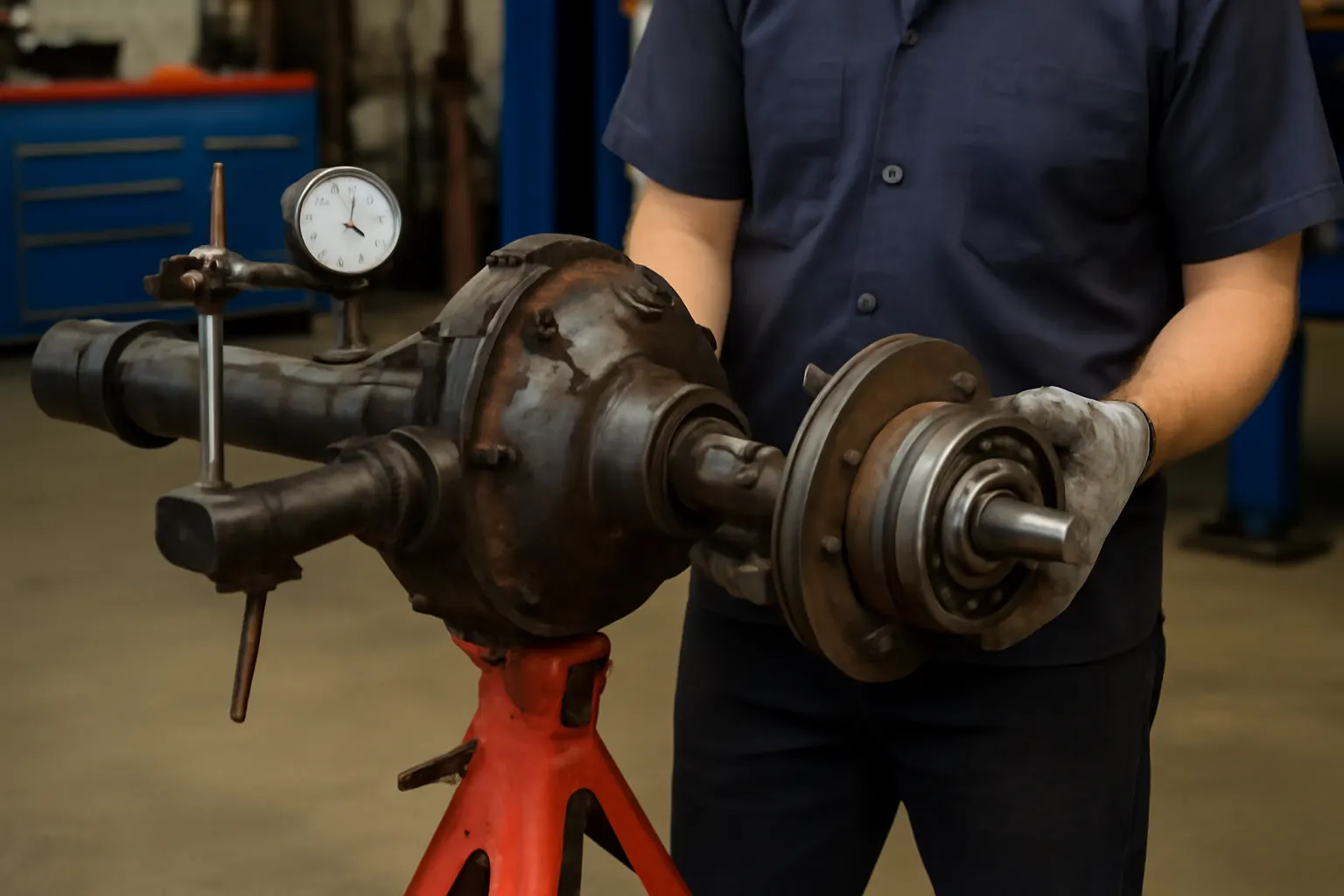
- Dial Indicator: Measures bearing pre-load and gear backlash with precision.
- Dye Penetrant Inspection: Reveals hairline cracks in the housing or welds.
- Borescope: Allows internal inspection of differential carriers without full disassembly.
- Thermal Imaging: Detects hotspots indicating bearing or gear distress.
Combining these tools with a systematic approach greatly increases the likelihood of catching early-stage failures before they become catastrophic.
Troubleshooting: Field-Tested Solutions for Persistent Problems
Some AMC axle issues persist even after standard service. Field reports recommend the following solutions:
- Chronic Bearing Noise: Re-check pre-load settings, inspect for out-of-round housings, and use high-quality synthetic lubricants.
- Recurring Seal Leaks: Confirm correct seal part number and installation depth, and inspect for shaft wear at seal contact points.
- Vibration Under Load: Check for bent axle shafts, worn u-joints, and improper driveshaft angles.
If problems persist, refer to the Amc Front Axle Failure Diagnostics article for a systematic troubleshooting approach.
Fitment and Interchange: Avoiding Compatibility Surprises
AMC axles were produced in several configurations, with subtle differences in housing width, axle spline count, and brake mounting. Always verify:
- Axle Spline Count: AMC 20 axles, for example, were produced with both 29 and 35 spline variants.
- Housing Width: Some models (e.g., CJ7 vs. Wagoneer) have different track widths.
- Brake Backing Plate Bolt Pattern: Ensure compatibility with your vehicle’s brake system.
Cross-referencing these features before ordering parts can prevent costly mistakes and installation delays.
AutoPartEx: Your Partner in AMC Axle Service
At AutoPartEx, we provide technicians and enthusiasts with the most up-to-date technical information, field-tested service tips, and access to quality AMC axle parts. Our resources, including the AMC Front Axle Assembly (4WD with Housing): Technical Fitment, Failure Patterns, and Sourcing Solutions, are designed to streamline the service process and reduce the risk of costly errors. Whether you need a detailed fitment guide or advanced diagnostic support, our editorial team and sourcing experts are here to help.
Expert Action Steps: Ensuring AMC Axle Service Success
- Always positively identify your AMC axle model before sourcing parts or beginning service.
- Follow a detailed diagnostic checklist to catch hidden issues before they cause failure.
- Use precision tools to set bearing pre-load and torque fasteners to specification.
- Source parts from reputable suppliers and verify compatibility before installation.
- Stay current with safety standards and technical bulletins to ensure compliance.
For further technical guidance and sourcing solutions, trust AutoPartEx as your go-to resource for AMC axle assemblies and related drivetrain components.
References
Advertisement