
Advertisement
If your AMC Ambassador is slow to start, experiences sudden voltage drops, or shows dimming lights, you’re likely facing a battery or cable issue. This in-depth guide walks you through professional battery diagnostics tailored for the AMC Ambassador—helping you pinpoint, verify, and solve the most common electrical faults. Whether you’re troubleshooting hard starts or planning a full replacement, you’ll find actionable steps to restore your classic’s reliability. For broader battery fitment and replacement guidelines, consult the AMC Ambassador Battery Replacement & Fitment Guide.
Immediate Answer: Diagnosing AMC Ambassador Battery Problems
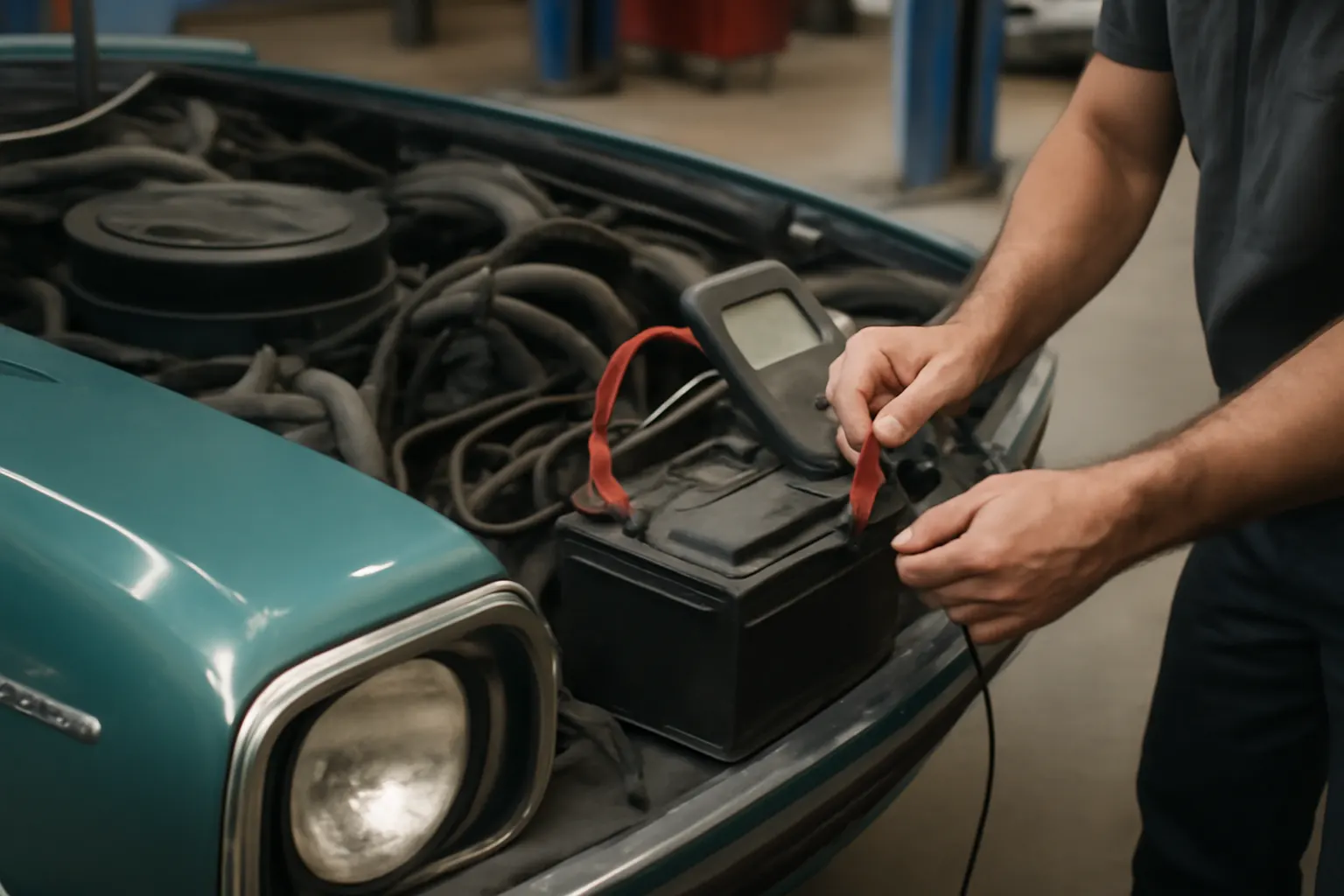
When your AMC Ambassador refuses to start or displays erratic electrical behavior, the most common culprits are a weak battery, corroded connections, or faulty cables. Begin by checking battery voltage with a multimeter—12.6 volts or higher indicates a healthy charge. Inspect terminals for corrosion, and test for voltage drop across cables during cranking. If voltage at the battery is good but drops significantly at the starter or fuse block under load, suspect cable resistance or internal breaks.
The Hidden Problem: Overlooked Cable and Terminal Issues
Many AMC Ambassador owners focus exclusively on the battery itself, overlooking that degraded cables, corroded terminals, and even loose grounds can mimic the symptoms of a failing battery. In some cases, the battery may be perfectly serviceable, but high resistance in the starter cable or engine ground leads to hard starting, flickering lights, and unreliable operation. These hidden issues often go undetected until a thorough diagnostic is performed.
Why Accurate Battery Diagnostics Matter for AMC Ambassador Owners
Classic vehicles like the AMC Ambassador are especially sensitive to electrical faults due to their age, original wiring, and sometimes non-standard modifications. Misdiagnosing a cable problem as a bad battery can lead to unnecessary replacements and persistent issues. Conversely, ignoring a failing battery can leave you stranded or even damage sensitive electrical components. Proper diagnostics ensure cost-effective repairs, reliable operation, and preservation of your vehicle’s originality.
Understanding Battery and Cable Faults: Technical Background
The AMC Ambassador's starting and charging systems rely on a conventional lead-acid battery, heavy-gauge cables, and a relatively simple wiring harness. Over decades, chemical and mechanical degradation occurs:
- Battery sulfation reduces storage capacity and cranking amps.
- Corrosion at terminals increases resistance, limiting current flow.
- Cable insulation breakdown allows moisture ingress and internal corrosion.
- Loose or oxidized grounds create intermittent faults.
These issues are compounded by the Ambassador’s original materials and design, which may not meet modern standards for corrosion resistance or electrical conductivity. According to the National Highway Traffic Safety Administration, maintaining and diagnosing vehicle electrical equipment is critical for both safety and operational reliability NHTSA Equipment.
Step-by-Step Battery Diagnostic Checklist for AMC Ambassador
Use this checklist to systematically diagnose battery and cable faults in your AMC Ambassador:
-
Visual Inspection
- Check battery case for swelling, cracks, or leaks.
- Inspect terminals for white/green corrosion.
- Examine cables for fraying, cracks, or exposed wire.
- Ensure all cable connections are tight and secure.
-
Battery Voltage Test (Engine Off)
- Set multimeter to DC volts.
- Place probes on battery terminals.
- Healthy battery: 12.6V or higher.
Advertisement
-
Load Test
- Use a battery load tester or have an assistant crank the engine while observing voltage.
- Voltage should not drop below 9.6V during cranking.
- If it does, suspect weak battery or high-resistance connections.
-
Voltage Drop Test (Cables)
- With engine cranking, measure voltage between battery positive and starter terminal.
- More than 0.5V drop indicates high resistance in the cable.
- Repeat for negative cable between battery negative and engine block.
-
Starter Current Draw Test
- Use an ammeter to measure starter current.
- Excessive draw may indicate a failing starter or seized engine, but low draw with slow cranking points to poor connections.
-
Check Grounds
- Inspect engine-to-chassis and battery-to-chassis ground straps.
- Clean and retighten as needed.
-
Assess Age and Service History
- Batteries over 4 years old are candidates for replacement.
- Cables with visible corrosion or heat damage should be replaced.
Common AMC Ambassador Battery and Cable Symptoms
Understanding the typical symptoms associated with battery and cable faults will help you zero in on the root cause:
- Slow or No Crank: Most often caused by low battery voltage, but can also result from poor cable connections or a failing starter.
- Clicking Sound, No Start: Usually a sign of insufficient current reaching the starter, often due to corroded terminals or high-resistance cables.
- Dimming Headlights at Idle: Indicates charging system or battery weakness, but can also point to poor ground connections.
- Intermittent Electrical Accessory Failure: Often tied to loose or oxidized fuse block connections and grounds.
Tools and Equipment Needed for Accurate Diagnosis
Proper diagnostics require more than just a visual inspection. Equip yourself with the following tools:
- Digital Multimeter: For voltage, resistance, and continuity checks.
- Battery Load Tester: To simulate cranking loads.
- Ammeter or Clamp Meter: For measuring starter current draw.
- Wire Brush and Terminal Cleaner: For cleaning corrosion.
- Protective Gloves and Safety Glasses: For safe handling of batteries and chemicals.
These tools are essential for performing industry-standard tests as recommended by organizations such as SAE International and the NHTSA SAE Standards.
How to Interpret Diagnostic Results: Practical Scenarios
Scenario 1: Good Voltage, Slow Crank
- Battery Voltage (off): 12.7V
- Cranking Voltage: Drops to 10.5V
- Starter Draw: Normal
- Diagnosis: Likely high-resistance cable or corroded terminal.
Scenario 2: Low Voltage, No Crank
- Battery Voltage (off): 11.8V
- Cranking Voltage: Drops below 9V
- Starter Draw: Low
- Diagnosis: Weak or sulfated battery.
Scenario 3: Normal Voltage, Intermittent Start
- Battery Voltage (off): 12.6V
- Cranking Voltage: Fluctuates erratically
- Starter Draw: Varies
- Diagnosis: Loose or oxidized ground strap.
Battery and Cable Replacement: When and How
If diagnostics reveal a weak battery or faulty cables, replacement is the most effective solution. For AMC Ambassadors, always match battery group size, cold cranking amps (CCA), and terminal layout to original specifications for optimal fit and performance. Refer to the Amc Ambassador Battery Replacement guide for step-by-step instructions.
Cable Replacement Tips:
- Use heavy-gauge copper cables (minimum 4 AWG for battery, 2 AWG for ground).
- Crimp or solder new terminal ends for best conductivity.
- Route cables away from hot exhaust and moving parts.
- Apply dielectric grease to terminals to prevent future corrosion.
Advertisement
Preventative Maintenance: Extending Battery and Cable Life
Proactive care reduces the risk of electrical failures and maximizes battery lifespan:
- Clean Terminals Regularly: Remove corrosion with a wire brush and baking soda solution.
- Secure Cables: Ensure all connections are tight and free from movement.
- Check Electrolyte Levels: For serviceable batteries, maintain proper fluid levels.
- Test Annually: Perform voltage and load tests at the start of each driving season.
- Store Vehicle Properly: Disconnect battery or use a maintainer during long-term storage.
Routine maintenance is especially important for classic vehicles like the AMC Ambassador, where original materials may be more susceptible to corrosion and fatigue. For more on electrical system care, see Amc Ambassador Electrical Systems.
Battery Sourcing and Fitment for AMC Ambassador
Selecting the right replacement battery is crucial. Key considerations include:
- Group Size: Typically 24F or 27F for most Ambassadors, but always verify fitment.
- Cold Cranking Amps (CCA): Match or exceed factory specification (usually 500+ CCA).
- Terminal Orientation: Ensure positive and negative terminals align with cable reach.
- Mounting: Battery should fit securely in the tray with original hold-downs.
For a comprehensive overview of compatible batteries, review Amc Ambassador Battery Choices.
Addressing Voltage Drop and Hard Starting: Technical Solutions
Persistent voltage drop or hard starting after battery replacement usually points to secondary faults:
- Check for Parasitic Draw: With ignition off, measure current draw at the battery. Anything above 50mA may indicate a short or stuck relay.
- Inspect Fuse Block and Bulkhead Connectors: Clean and tighten all electrical junctions.
- Upgrade Grounds: Adding an extra ground strap from engine to chassis can reduce resistance and improve cranking performance.
- Alternator Output Test: With engine running, check for 13.8–14.5V at the battery. Lower readings indicate charging system issues.
Safety and Environmental Considerations
Handling batteries and electrical systems requires attention to safety:
- Wear Eye Protection and Gloves: Battery acid is corrosive and can cause injury.
- Disconnect Negative Terminal First: Prevents accidental short circuits.
- Recycle Old Batteries: Lead-acid batteries must be disposed of at recycling centers, as mandated by environmental regulations.
The U.S. Department of Energy and NHTSA emphasize the importance of environmentally responsible battery disposal and equipment safety DOE Materials Technologies.
The AutoPartEx Advantage: Reliable AMC Ambassador Battery Solutions
AutoPartEx specializes in curated, model-specific battery and cable solutions for classic vehicles like the AMC Ambassador. Our resources combine verified technical standards, fitment data, and hands-on expertise—ensuring you find the right part, every time. Use our AMC Ambassador Battery Replacement & Fitment Guide to compare options and avoid costly guesswork. Our technical support team can assist with diagnostics, installation, and maintenance strategies unique to vintage American classics.
Taking Action: Expert Steps to Restore Your AMC Ambassador
If you’ve completed diagnostics and identified a battery or cable fault:
- Source Quality Parts: Choose batteries and cables that meet or exceed factory specifications.
- Perform Replacement: Follow safety protocols and double-check all connections.
- Test Thoroughly: Re-run voltage, load, and voltage drop tests after installation.
- Document Repairs: Keep a log for future maintenance and troubleshooting.
For ongoing reliability, schedule annual diagnostics and proactive maintenance. Bookmark AutoPartEx for up-to-date guides, technical insights, and a trusted source for AMC Ambassador auto parts.
References
Advertisement