
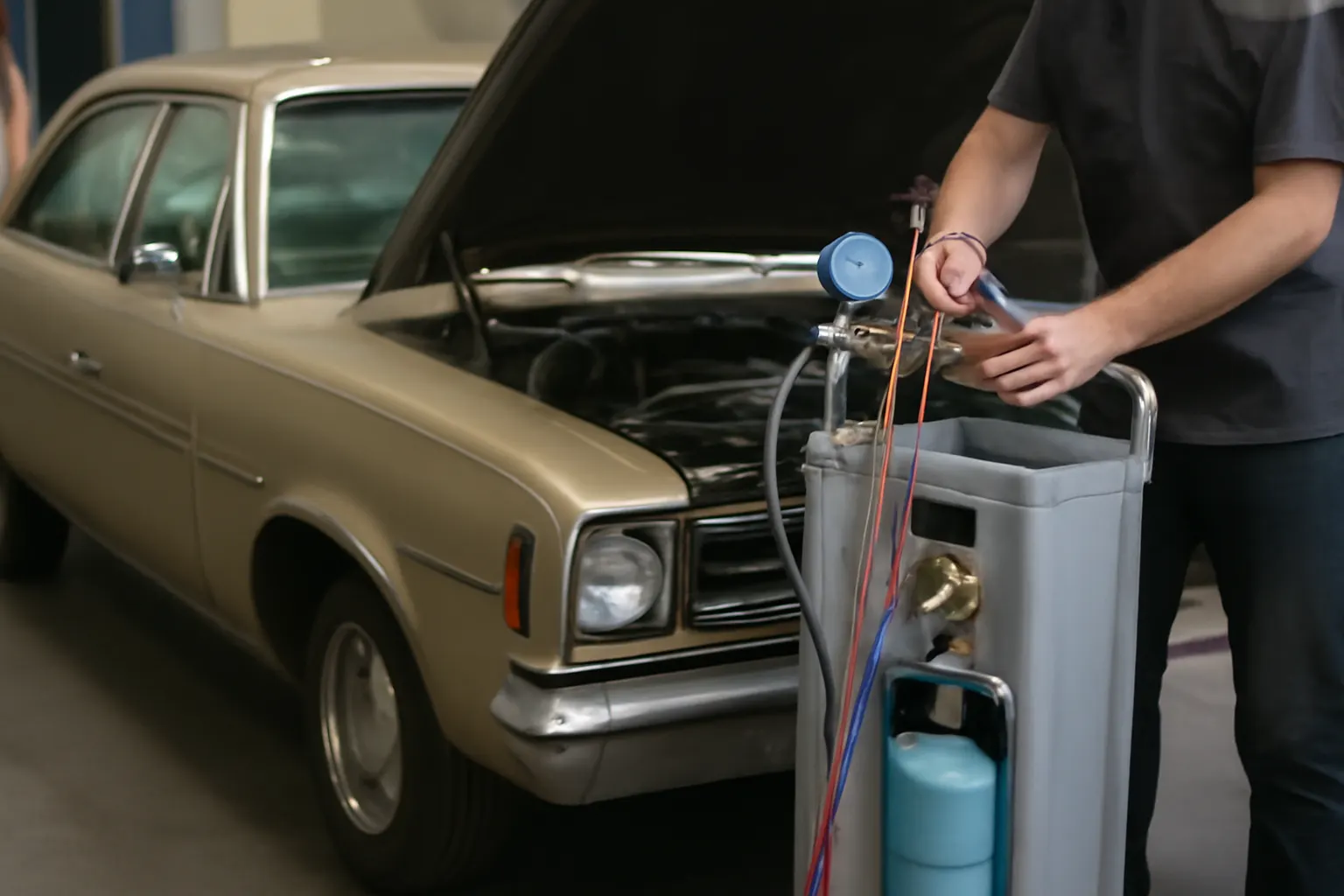
Amc Ac Retrofit Modern Refrigerants
Retrofitting your AMC Ambassador’s air conditioning system for modern refrigerants is the most effective way to maintain cool, reliable cabin comfort while improving efficiency and preserving the originality of your classic. This comprehensive guide walks you through the retrofit process, highlights critical technical considerations, and addresses challenges unique to AMC Ambassador models. Whether you’re seeking to replace an obsolete R12 system or simply want to optimize performance, you’ll find actionable steps and expert insights here. For further AMC-specific AC compressor fitment and replacement details, visit the AMC Ambassador AC Compressor Replacement & Fitment Guide.
Why Retrofit Your AMC Ambassador’s AC System?
Classic AMC Ambassadors (produced from the late 1950s through the 1970s) were factory-equipped with air conditioning systems designed for R12 (dichlorodifluoromethane) refrigerant. Since the 1990s, R12 has been phased out due to environmental concerns, and its availability is now strictly limited. Modern refrigerants, such as R134a and newer low-GWP (Global Warming Potential) blends, offer improved efficiency, safety, and environmental compliance. Retrofitting ensures your AC system remains serviceable, efficient, and legal—without significant modification to your vehicle’s originality.
Immediate Benefits of a Modern Retrofit
- Improved parts availability: R134a and other modern refrigerants are widely available, unlike R12.
- Better efficiency: Modern refrigerants and compatible lubricants reduce compressor load and fuel consumption.
- Environmental responsibility: Modern refrigerants have a lower ozone depletion potential and reduced global warming impact.
- Serviceability: Technicians are trained and equipped to handle modern AC systems, ensuring easier maintenance.
The Hidden Problem: R12 System Limitations in AMC Ambassadors
While many owners strive for authenticity, the original R12-based AC systems in AMC Ambassadors present significant challenges. R12 is not only expensive and difficult to source, but the mineral oil lubricants and rubber components in these systems are incompatible with newer refrigerants. Attempting to recharge an original system with R134a or other modern blends without proper conversion can cause leaks, poor cooling, or even catastrophic compressor failure.
Common Issues with Unmodified R12 Systems
- Hose and seal degradation: R12 hoses are often not barrier-type, allowing modern refrigerants to permeate and leak.
- Compressor wear: Original compressors may not tolerate the different lubricity and pressures of modern refrigerants.
- Lubricant incompatibility: Mineral oil (used with R12) does not mix with R134a or other modern oils, leading to poor lubrication.
- Inefficient cooling: Mismatched components can reduce cooling capacity and increase system strain.
Technical Fundamentals: Understanding the Retrofit Process
Retrofitting an AMC Ambassador AC system for modern refrigerants is more involved than a simple refrigerant swap. It requires a methodical approach to ensure reliability, performance, and safety. Here’s what’s involved:
Core Retrofit Tasks
- Component Inspection: Assess the condition of the compressor, hoses, seals, condenser, evaporator, and drier/accumulator.
- System Cleaning: Perform a thorough flush to remove old oil and contaminants.
- Lubricant Conversion: Replace mineral oil with a compatible synthetic lubricant (like PAG or POE oil).
- Seal and Hose Upgrade: Install barrier-type hoses and O-rings compatible with R134a or chosen refrigerant.
- Compressor Adaptation: Verify compressor compatibility or replace with a modern, drop-in unit if necessary.
- Orifice/Expansion Valve Adjustment: Some systems may require a different expansion valve or orifice tube to optimize performance.
- Charging and Leak Testing: Evacuate, charge with the correct refrigerant amount, and leak-test the system.
Choosing the Right Modern Refrigerant
The most common retrofit choice for classic AMC Ambassador AC systems is R134a, but newer blends such as R1234yf or R152a may also be considered. Each refrigerant has unique characteristics, compatibility requirements, and environmental profiles.
R134a: The Standard Retrofit Option
- Pros: Widely available, proven retrofit track record, moderate environmental impact.
- Cons: Slightly lower cooling capacity than R12, requires barrier hoses and PAG/POE oil.
R1234yf: Next-Generation Option
- Pros: Ultra-low GWP, increasingly used in new vehicles.
- Cons: More expensive, requires specialized service equipment, flammability considerations.
R152a and Other Blends
- Pros: Good efficiency, lower GWP.
- Cons: Not universally accepted, flammability issues, limited retrofit data.
Expert tip: For most AMC Ambassador owners, R134a strikes the best balance of performance, availability, and ease of retrofit. Always verify local regulations and consult with a qualified technician before selecting a refrigerant.
Step-by-Step AMC AC Retrofit Checklist
Retrofitting your AMC Ambassador’s AC system is a project that can be completed by experienced DIYers or trusted shops. Use this checklist to ensure every critical step is addressed:
AMC AC Retrofit Modern Refrigerant Checklist
| Step | Task | Notes |
|---|---|---|
| 1 | Recover old R12 refrigerant | Use certified equipment; follow EPA guidelines |
| 2 | Inspect all AC components | Check for wear, corrosion, and leaks |
| 3 | Flush system | Remove all old oil and contaminants |
| 4 | Replace O-rings and seals | Use HNBR or compatible materials |
| 5 | Upgrade hoses to barrier type | Prevent refrigerant permeation |
| 6 | Inspect/replace receiver-drier or accumulator | Always replace with retrofit |
| 7 | Replace or flush expansion valve/orifice tube | Match to new refrigerant specs |
| 8 | Install correct lubricant (PAG/POE) | Use manufacturer-recommended type and quantity |
| 9 | Reassemble and vacuum system | Check for leaks and moisture removal |
| 10 | Charge with modern refrigerant | Use correct weight and procedure |
| 11 | Test system performance | Ensure proper pressures, vent temps, and no leaks |
Diagnosing Your AMC AC System Pre-Retrofit
Before beginning a retrofit, a thorough diagnostic of your AMC Ambassador’s AC system is essential. This ensures that you’re not masking underlying problems and that your retrofit investment is protected.
Key Diagnostic Steps
- Visual inspection: Look for oil stains, cracked hoses, or corroded fittings.
- Compressor health: Check for noise, excessive drag, or clutch slippage. Refer to Amc Compressor Type Identification for model-specific details.
- Pressure testing: Use manifold gauges to assess static and running pressures.
- Leak detection: UV dye or electronic leak detectors can pinpoint slow leaks in hoses and fittings.
- Electrical check: Verify that the compressor clutch, relays, and switches operate correctly.
If significant wear or damage is found—especially in the compressor or evaporator—replacement is strongly recommended before proceeding with a retrofit.
Sourcing Retrofit-Ready Parts for AMC Ambassadors
Finding the correct retrofit-compatible components for your AMC Ambassador can be challenging, especially for rarer models or early production years. Here’s how to approach sourcing:
Compressor Selection
- OEM vs. Modern: While some original compressors (e.g., York or GM A6) can be adapted, modern rotary or scroll compressors offer better efficiency and reliability.
- Mounting and Pulley Fitment: Ensure the new compressor matches your engine bracketry and belt system.
- Oil Compatibility: Confirm the compressor is rated for the intended lubricant and refrigerant.
Hoses and Fittings
- Barrier Hoses: These are mandatory for R134a and other modern refrigerants.
- Fittings: Some AMC systems use unique thread sizes—adapters may be required.
Receiver-Drier/Accumulator and Expansion Valve
- Always replace these components when retrofitting, as old units may contain desiccant or valves incompatible with modern refrigerants.
AutoPartEx offers a curated selection of AMC Ambassador AC retrofit parts, including compressors, hoses, and conversion kits. For model-specific fitment, see the AMC Ambassador AC Compressor Replacement & Fitment Guide.
Retrofit Installation: Detailed Procedure
A successful retrofit requires careful attention to detail during installation. Here’s a breakdown of the process:
System Disassembly and Cleaning
- Recover R12 refrigerant using certified recovery equipment.
- Remove the compressor, hoses, drier, and expansion valve.
- Flush the evaporator, condenser, and remaining hard lines with AC system flush solvent. Compressed air should be used to blow out all residue.
- Dispose of all old oil and contaminants according to local regulations.
Component Replacement and Reassembly
- Install new barrier hoses and O-rings (lubricate with new oil).
- Install new receiver-drier/accumulator and expansion valve (orifice tube).
- Install the compressor, filling with the correct amount of new lubricant.
- Reconnect all fittings and double-check tightness.
System Evacuation and Charging
- Vacuum the system for at least 30 minutes to remove air and moisture.
- Leak check using vacuum hold and, if available, nitrogen pressure testing.
- Charge with the specified amount of modern refrigerant (typically 80-90% of the original R12 charge by weight for R134a).
- Monitor high and low-side pressures during charging and initial operation.
Performance Testing
- Check vent temperatures: Should be within 5-10°F of R12 performance.
- Monitor system pressures: Ensure they are within safe limits for the new refrigerant.
- Inspect for leaks: Use UV dye or an electronic detector.
Post-Retrofit Maintenance and Best Practices
Once your AMC Ambassador’s AC system has been retrofitted, regular maintenance is key to long-term reliability and performance.
Maintenance Tips
- Annual leak check: Modern refrigerants can escape through even small leaks—inspect annually.
- Monitor oil level: Compressor oil can be lost over time; check and top off as needed.
- Replace drier/accumulator every 2-3 years: Desiccant becomes saturated and loses effectiveness.
- Keep condenser fins clean: Maximizes cooling efficiency and reduces compressor load.
Troubleshooting Common Post-Retrofit Issues
- Insufficient cooling: Check for undercharging, expansion valve mismatch, or airflow restrictions.
- High system pressures: May indicate overcharging, condenser inefficiency, or airflow blockage.
- Noisy compressor: Could signal oil starvation, incorrect lubricant, or internal wear.
For step-by-step AC system flushing and recharge procedures, see Ac System Flush Recharge Amc.
Preserving Originality During Retrofit
A primary concern for AMC Ambassador enthusiasts is maintaining the vehicle’s originality. Fortunately, a well-executed retrofit can be nearly invisible:
- Re-use original brackets and hardware wherever possible.
- Choose compressors with similar appearance (paint or decal as needed).
- Route new hoses along factory paths and use original-style clamps.
- Document all changes for future reference and restoration value.
If originality is paramount, consult with restoration specialists familiar with AMC models to source visually correct components.
Safety, Environmental, and Regulatory Considerations
Retrofitting a classic AC system is not just about performance—safety and compliance are crucial.
Key Safety Considerations
- Use certified recovery and charging equipment to prevent environmental release of refrigerants.
- Comply with local and federal regulations: The EPA mandates proper handling and labeling of retrofitted systems.
- Label the system: Clearly indicate the new refrigerant type and oil used.
For more on safety standards and equipment requirements, refer to the National Highway Traffic Safety Administration’s vehicle equipment guidelines.
Fuel Efficiency and Performance Gains
Modern refrigerants and lubricants can reduce compressor drag and improve overall AC system efficiency, contributing to better fuel economy—especially important for classic vehicles with less efficient engines.
Efficiency Improvements
- Reduced compressor load: Modern rotary compressors are more efficient than vintage reciprocating designs.
- Lower system pressures: Properly matched components reduce engine strain.
- Improved heat exchange: Newer condensers and fans can further enhance performance.
For more information on how AC system upgrades affect fuel economy, see the U.S. Department of Energy’s Fuel Efficiency resource.
Materials Compatibility and Longevity
Choosing the right materials during your retrofit is vital for system longevity. Modern barrier hoses, HNBR O-rings, and compatible lubricants are engineered to withstand the pressures and chemical characteristics of new refrigerants.
- Barrier hoses: Prevent refrigerant loss and moisture ingress.
- HNBR and PTFE seals: Resist swelling and degradation from modern oils and refrigerants.
- PAG/POE lubricants: Ensure proper compressor lubrication and heat dissipation.
For advanced materials guidance, consult the DOE’s Materials Technologies overview.
AutoPartEx: Your AMC AC Retrofit Partner
Retrofitting an AMC Ambassador AC system is a rewarding project that ensures comfort, reliability, and regulatory compliance. AutoPartEx offers a tailored selection of retrofit kits, compressors, hoses, and technical resources for AMC enthusiasts. Our team specializes in model-specific solutions, ensuring you get the right fit and long-term support. For more expert guidance, browse the AMC Ambassador AC Compressor Replacement & Fitment Guide or get in touch with our technical support for personalized advice.
Take Action: Plan Your AMC AC Retrofit
Ready to modernize your AMC Ambassador’s air conditioning system? Start with a detailed inspection, source quality retrofit components, and follow best practices for installation and maintenance. Reference our related guides, such as Amc Ac Compressor Diagnosis Removal, for step-by-step removal and diagnostic procedures. With careful planning and the right parts, your classic AMC will deliver cool comfort and efficient performance for years to come.