
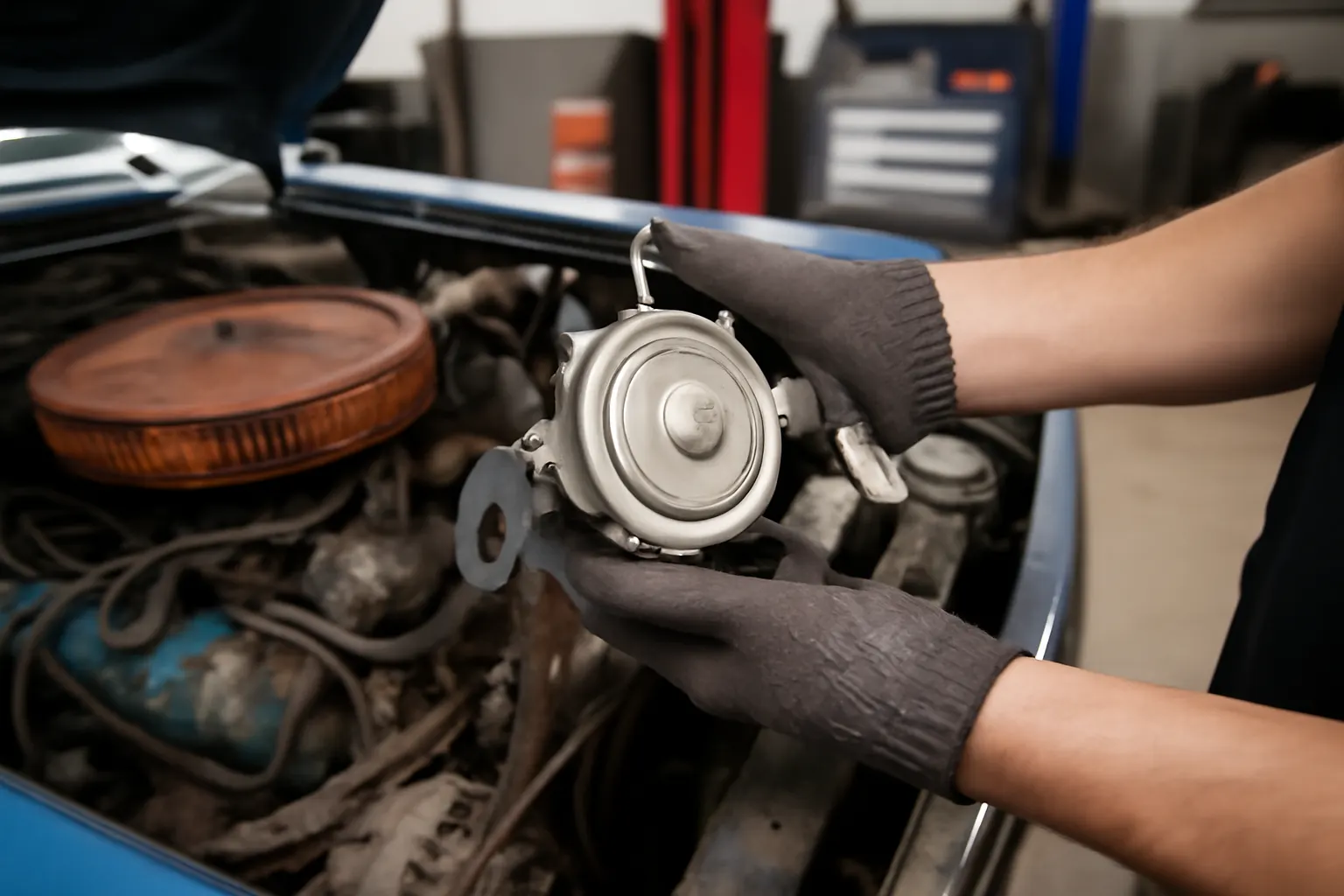
Ambassador Air Injection Pump Sourcing
Sourcing a correct, reliable air injection pump for your AMC Ambassador is a critical but often overlooked step in a successful restoration or maintenance project. For owners and restorers, finding these increasingly rare emissions components can be the difference between a show-quality, compliant vehicle and an incomplete project. This guide delivers practical, actionable advice for sourcing AMC Ambassador air injection pumps, ensuring correct fitment, and verifying authenticity—all while avoiding common pitfalls associated with rare emissions hardware.
Whether you are tackling your first restoration or are a seasoned AMC enthusiast, understanding the unique challenges of Ambassador air injection pump sourcing saves time and money, and it preserves the originality and performance of your classic. For a broader perspective on model-specific fitment and service strategies, see our AMC Ambassador Air Injection Pump: Model-Specific Fitment, Service Strategies & Replacement Insights page.
The Immediate Answer: Where and How to Source AMC Ambassador Air Injection Pumps
If you’re searching for a replacement air injection pump for your AMC Ambassador, your best options are:
- Specialty vintage parts suppliers: These dedicated suppliers often stock or can source rare emissions equipment, including original and remanufactured air injection pumps.
- Reputable online marketplaces: Platforms like eBay Motors, Hemmings, and AMC-specific forums frequently list NOS (New Old Stock) or restored pumps.
- Automotive swap meets and classic car shows: These events are prime hunting grounds for rare hardware, sometimes yielding parts unavailable elsewhere.
- Professional rebuilders: Companies specializing in classic emissions hardware can rebuild your original pump to factory specifications.
- AutoPartEx partner network: Our curated database connects you with suppliers who understand AMC fitment and emissions system requirements.
Before purchasing, always verify part numbers and compatibility with your AMC Ambassador’s engine and model year. Many pumps look similar but differ in pulley size, mounting brackets, and internal flow characteristics.
The Hidden Problem: Why Sourcing AMC Ambassador Air Injection Pumps Is So Challenging
At first glance, replacing an air injection pump may seem as straightforward as any other maintenance task. However, the scarcity of correct AMC components, especially for emissions systems, makes this process uniquely challenging. AMC ceased production decades ago, and aftermarket support for emissions hardware—already a niche market—is dwindling as regulations and collector demand evolve.
Key hidden challenges include:
- Obsolete part numbers: Many original AMC air injection pump part numbers have been discontinued, making cross-referencing essential.
- Model-specific variations: AMC used several variations of air injection pumps across different engines and model years, with subtle differences in mounting, output, and connections.
- Emissions compliance: The pump’s function is critical for emissions control and proper engine operation. Using an incorrect or non-functional unit can cause drivability issues and may affect fuel efficiency (DOE Fuel Efficiency).
- Counterfeit or incorrect parts: The rarity and value of these components have led to a rise in misrepresented or poorly rebuilt pumps in the marketplace.
Understanding the AMC Ambassador Air Injection Pump: Technical and Historical Context
The air injection pump—often called a “smog pump”—injects fresh air into the exhaust manifold or ports, promoting oxidation of unburned hydrocarbons and carbon monoxide. This process was a key emissions strategy for AMC vehicles in the late 1960s through the early 1980s, as federal and state regulations tightened.
Technical Overview
- Function: Draws in and forces ambient air into the exhaust stream to support secondary combustion.
- Drive: Typically belt-driven from the engine’s crankshaft pulley.
- Construction: Internally, most AMC pumps use a vane or rotor mechanism, with specific output rates based on engine displacement and emissions requirements.
- Associated hardware: Includes check valves, diverter valves, and mounting brackets—all of which may differ by engine family (e.g., 232/258 I6 vs. 304/360/401 V8).
For a detailed breakdown of AMC emissions system evolution and hardware, see our Amc Emissions System History article.
Identifying the Correct Air Injection Pump: Model, Engine, and Year Fitment
One of the most common sourcing errors is purchasing a pump that “looks right” but doesn’t fit or function as required. Correct identification is critical.
Fitment Checklist
- Confirm engine family: AMC straight-six (232, 258) and V8 (304, 360, 401) engines use different pumps.
- Check model year: Emissions requirements and pump specifications changed frequently—especially between 1968 and 1974.
- Match part numbers: Use AMC parts catalogs or reputable online databases to cross-reference original and superseded part numbers.
- Inspect mounting configuration: Verify bracket style, bolt pattern, and pulley alignment.
- Assess emissions system configuration: Some years used additional diverter or check valves unique to California or high-altitude models.
- Review pulley diameter and groove count: Belt routing and speed are critical for pump function.
Tip: When in doubt, reference original service manuals, old parts catalogs, or consult with an AMC specialist.
Sourcing Strategies: Where to Find Authentic AMC Ambassador Air Injection Pumps
Given the rarity of these components, a multi-pronged sourcing strategy is essential. Here’s how to maximize your chances:
1. Specialty Vintage Parts Suppliers
- Pros: Usually have deep inventories, knowledge of AMC fitments, and access to NOS or quality rebuilds.
- Cons: Prices can be high; supply limited.
- Examples: Kennedy American, Galvin’s AMC Rambler Parts, Planet Houston AMX.
2. Online Marketplaces and Forums
- eBay Motors: Search using AMC part numbers, but beware of mislabeled or incorrect items.
- Hemmings: A trusted resource for classic car parts, though inventory fluctuates.
- AMC Forums: The AMC Forum, AMC World, and Facebook groups often have members selling rare hardware.
3. Automotive Swap Meets and Car Shows
- Strategy: Attend large regional meets or AMC-specific gatherings. Bring reference photos, part numbers, and a measuring tape to verify fitment on the spot.
4. Professional Rebuilders
- Service: Send your original pump for a rebuild. Professional shops can restore internals, replace bearings and seals, and even refinish housings.
- Quality: Ensure the rebuilder uses correct AMC specifications and provides a warranty.
5. AutoPartEx Partner Network
- Advantage: Access to a curated list of suppliers and rebuilders with AMC expertise.
- How to use: Submit a sourcing request through the AutoPartEx platform for tailored recommendations.
How to Evaluate Used and NOS Air Injection Pumps
Not all used or NOS (New Old Stock) pumps are created equal. Here’s a detailed checklist to help you avoid common pitfalls:
Air Injection Pump Evaluation Checklist
| Evaluation Point | What to Look For | Red Flags |
|---|---|---|
| Housing Condition | No cracks, corrosion, or heavy pitting | Deep rust, cracks, bent brackets |
| Pulley and Shaft | Smooth rotation, no wobble, correct pulley size | Bent, seized, or missing pulleys |
| Vanes/Rotors (if visible) | Free movement, no scoring or heavy wear | Stuck vanes, excessive wear |
| Mounting Points | Threads intact, correct bracket style | Stripped holes, altered brackets |
| Check Valves | Present, clean, and free of carbon buildup | Missing or blocked valves |
| Original Markings | AMC part numbers, date codes, manufacturer stamps | Ground-off or missing markings |
| Internal Cleanliness | No excessive oil, debris, or metallic shavings | Signs of internal damage |
Pro tip: Request detailed photos and, if possible, a video of the pump turning by hand before purchasing online.
The Role of Air Injection in AMC Ambassador Emissions and Engine Performance
The air injection pump is not just a “smog” device—it plays a critical role in engine efficiency and emissions compliance. Properly functioning pumps:
- Reduce hydrocarbon and carbon monoxide emissions: By introducing extra oxygen into the exhaust, the pump helps oxidize unburned fuel (NHTSA Vehicle Safety and Equipment).
- Prevent backfiring: By supporting complete combustion, the pump helps avoid afterfire events in the exhaust.
- Support fuel efficiency: A malfunctioning or missing pump can cause the engine to run rich, reducing fuel economy (DOE Fuel Efficiency).
A missing or non-functional pump can also trigger check engine lights or cause inspection failures in regions with emissions testing.
Diagnosing Common Air Injection Pump Failures
Before replacing your pump, verify that it is indeed the culprit. Common failure symptoms include:
- Squealing or grinding noises: Often due to worn bearings or seized internals.
- No airflow at exhaust manifold: Indicates a seized pump, broken vanes, or disconnected belt.
- Engine running rich or rough: May be caused by a non-functioning pump or blocked check valves.
- Visible belt damage or slippage: Excessive resistance from a failing pump can wear or throw the drive belt.
For a step-by-step diagnostic process, consult our Amc Air Injection Pump Diagnosis guide.
Installation Guidance: Ensuring Proper Fitment and Operation
Once you’ve sourced a correct pump, proper installation is crucial. AMC air injection pumps are sensitive to alignment and belt tension.
Installation Steps
- Compare new and old pumps: Verify mounting points, pulley size, and bracket compatibility.
- Clean all mounting surfaces: Remove old gasket material and debris.
- Install with correct brackets and spacers: Use factory hardware whenever possible.
- Align pulley with crankshaft and other accessories: Misalignment causes premature wear and belt failure.
- Install drive belt to correct tension: Too tight stresses bearings; too loose causes slippage.
- Reconnect all hoses and check valves: Ensure no air leaks or blockages.
- Test operation: With the engine running, verify airflow at the exhaust manifold and listen for abnormal noises.
For detailed installation on AMC V8 engines, see our Amc V8 Air Injection Pump Installation page.
Maintenance Tips: Prolonging the Life of Your Air Injection Pump
Even after sourcing and installing a correct pump, ongoing care is needed.
- Check belt tension regularly: Inspect for cracks, glazing, or fraying.
- Inspect for leaks: Air and exhaust leaks reduce pump effectiveness.
- Clean check and diverter valves: Carbon buildup can cause blockages.
- Listen for bearing noise: Early squeals indicate lubrication or wear issues.
- Run the engine regularly: Long-term storage can cause vanes to stick or seals to dry out.
A well-maintained pump can last for decades, especially if not subjected to excessive belt tension or dirt ingress.
Avoiding Pitfalls: Counterfeit, Incorrect, and Poorly Rebuilt Pumps
The rarity and value of AMC Ambassador air injection pumps have led to a market for substandard or misrepresented parts.
Common Pitfalls
- Counterfeit castings: Some aftermarket pumps use incorrect materials or internal designs.
- Incorrect rebuilds: Not all rebuilders follow AMC specifications, leading to improper vane clearances or mismatched pulleys.
- Mislabeled parts: Sellers may list pumps as “fits AMC” when they are actually for GM, Ford, or Chrysler applications.
How to avoid: Buy from reputable suppliers, insist on part numbers and detailed photos, and use verified cross-reference charts.
Regulatory and Safety Considerations
While many classic car owners focus on originality, the air injection pump is also a safety and regulatory component. The National Highway Traffic Safety Administration classifies emissions equipment as critical for vehicle safety and compliance. In some states, missing or non-functional emissions hardware can result in inspection failure or registration issues.
Recall Awareness: Always check the NHTSA Recalls Database for relevant AMC Ambassador recalls or technical service bulletins related to emissions systems.
The AutoPartEx Approach: Sourcing with Confidence
AutoPartEx is dedicated to supporting AMC Ambassador owners and restorers with accurate fitment data, supplier connections, and technical guidance. Our sourcing network:
- Connects you with trusted AMC parts specialists
- Verifies part numbers and compatibility before you buy
- Offers technical support for installation and diagnostics
- Provides up-to-date information on recalls and regulatory issues
For the most current sourcing options and technical support, visit our AMC Ambassador Air Injection Pump: Model-Specific Fitment, Service Strategies & Replacement Insights resource.
Conclusion: The Path to a Complete, Compliant AMC Ambassador Restoration
Sourcing a correct air injection pump for your AMC Ambassador requires patience, technical knowledge, and a strategic approach. By understanding the historical context, identifying correct part numbers, and leveraging trusted suppliers and rebuilders, you can secure the right component for your restoration. Regular maintenance and careful installation ensure your emissions system remains functional and compliant—preserving both the value and performance of your classic.
For additional guidance, explore our technical articles and sourcing guides, or submit a sourcing request through AutoPartEx for expert, model-specific recommendations.