
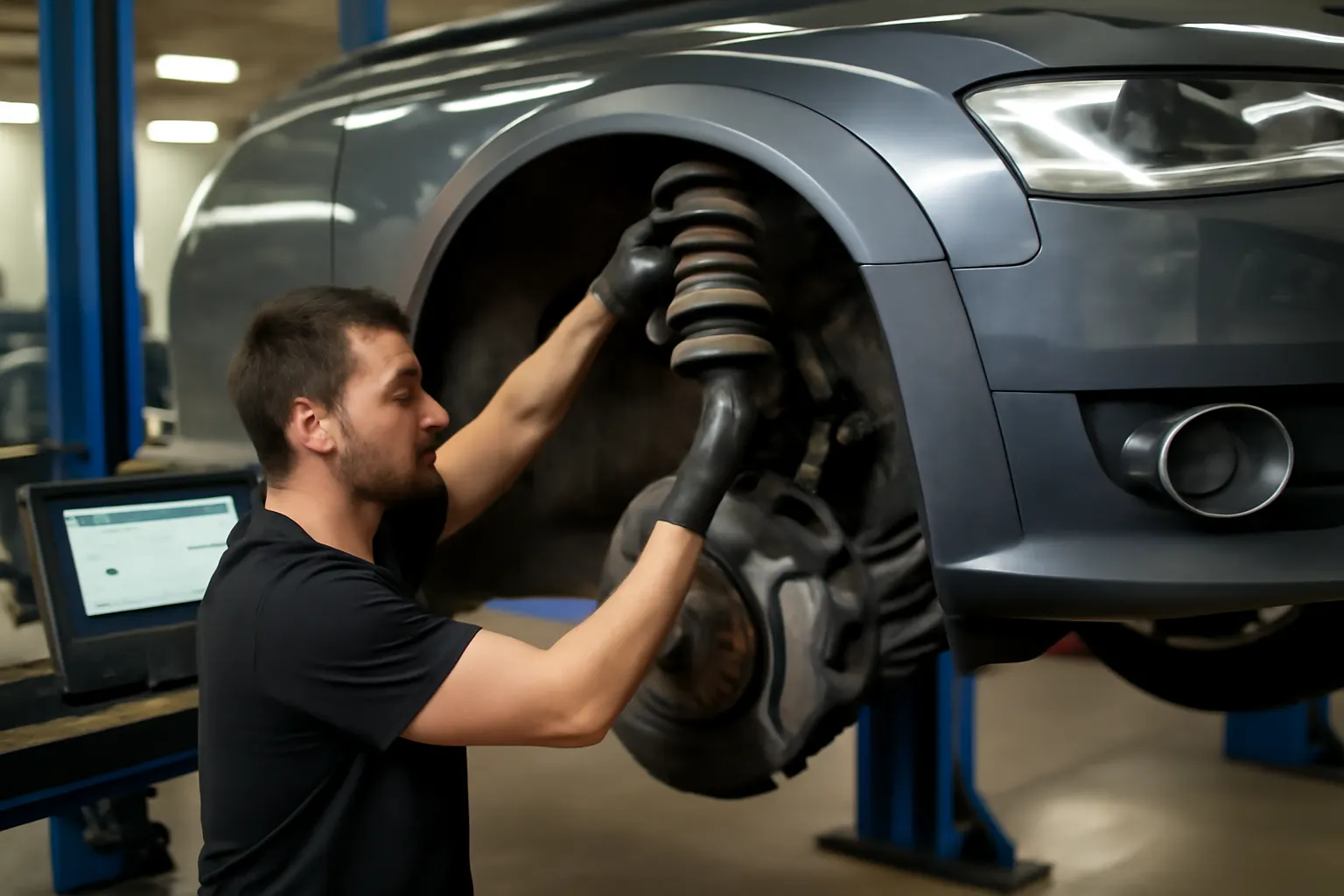
Allroad Maintenance Blog
Welcome to the Allroad Maintenance Blog—your comprehensive source for real-world Audi Allroad owner stories, field reports, and case studies focused on keeping your unique chassis and drivetrain running at peak performance. Whether you’re a new Allroad owner or a seasoned quattro enthusiast, this blog provides actionable maintenance insights, practical diagnostics, and expert guidance to help you extend the life, safety, and efficiency of your vehicle. For a complete overview of model-specific parts and service, be sure to visit our Audi AllRoad Parts & Model-Specific Maintenance – Complete Guide.
The Immediate Answer: What Every Allroad Owner Needs to Know
Audi Allroad models, with their advanced quattro all-wheel drive, air suspension, and rugged chassis, require a tailored approach to maintenance. Owners report that regular inspection of suspension components, drivetrain fluids, and electronic modules is crucial to avoiding costly repairs and preserving the vehicle’s hallmark ride quality and safety. The most common areas demanding attention include the air suspension system, control arms, CV joints, and the transfer case.
Key Takeaways for Allroad Maintenance:
- Inspect air suspension for leaks and compressor wear every 10,000 miles.
- Replace drivetrain fluids (differential, transfer case) according to manufacturer intervals.
- Monitor for early signs of control arm bushing and ball joint wear.
- Stay informed about recalls and technical service bulletins (TSBs).
- Use OE-quality or better replacement parts to ensure safety and performance.
The Hidden Problem: Why Standard Maintenance Schedules Aren’t Enough
While Audi’s official service intervals provide a solid baseline, real-world Allroad owners often encounter issues that lie outside standard checklists. The unique combination of adjustable ride height, complex electronics, and the quattro drivetrain introduces failure points not present in other Audi models. Field reports show that off-road use, salted winter roads, and city stop-and-go traffic can accelerate wear on underbody components, electronics, and bushings.
Overlooked Maintenance Risks
- Air suspension leaks may develop unnoticed, leading to compressor burnout or uneven ride height.
- Corrosion on electrical connectors and sensors, especially in harsh climates, can trigger warning lights or system failures.
- Premature tire and brake wear due to improper alignment or neglected suspension calibration.
Ignoring these Allroad-specific risks can transform minor issues into major mechanical failures, impacting safety and increasing long-term costs.
Expanding the Problem: Case Studies and Owner Field Reports
Case Study 1: Air Suspension Failure at 90,000 Miles
A 2013 Allroad owner reported a sudden drop in ride height and a “level control system faulty” warning. Diagnosis revealed a leaking front air spring and an overworked compressor. The root cause was traced to a slow leak that had gone undetected during routine visual checks.
Lesson: Proactive leak checks and compressor operation tests can prevent system-wide failures and $2,000+ repair bills.
Case Study 2: Drivetrain Vibration After Off-Road Use
An Allroad owner who frequently used the vehicle on gravel roads experienced drivetrain vibration at highway speeds. Inspection found a torn CV boot and contaminated grease, leading to premature CV joint wear.
Lesson: After heavy use or off-road driving, inspect CV boots and joints for damage, and replace as needed to avoid costly axle repairs.
Case Study 3: Electrical Gremlins in Winter
A 2016 Allroad exhibited intermittent ABS and traction control warnings during a particularly wet, salty winter. Corroded wheel speed sensor connectors were identified as the culprit.
Lesson: In harsh climates, regular cleaning and dielectric grease application to critical connectors can prevent electrical faults.
Air Suspension: The Allroad’s Signature System
The air suspension system is central to the Allroad’s versatility and comfort, but it’s also the most maintenance-intensive feature. Unlike traditional coil springs, air suspension components are more susceptible to leaks, compressor fatigue, and sensor failures.
Key Maintenance Points
- Visual inspections: Look for sagging corners or uneven ride height after parking overnight.
- Listen for compressor noise: Unusually frequent or prolonged compressor operation is a red flag.
- Check for error codes: Scan for stored suspension faults using VCDS or a compatible diagnostic tool.
Air Suspension Diagnostic Checklist
| Symptom | Possible Cause | Recommended Action |
|---|---|---|
| Uneven ride height | Air spring or valve leak | Inspect/replace air spring |
| Compressor runs constantly | Leak or faulty pressure sensor | Test for leaks, replace sensor or compressor as needed |
| Suspension warning light | Sensor or control module fault | Scan codes, inspect wiring |
| “Bouncy” ride | Failed air shock or strut | Replace faulty component |
For in-depth troubleshooting, refer to our Audi Air Suspension Troubleshooting guide.
Drivetrain and Quattro System: Unique Demands and Solutions
The Allroad’s quattro all-wheel drive system provides exceptional traction but requires careful fluid maintenance and regular inspection of mechanical components.
Drivetrain Maintenance Essentials
- Differential and transfer case fluids: Replace at manufacturer-recommended intervals, or more frequently if the vehicle is used off-road or for towing.
- CV joints and boots: Inspect for tears, leaks, or clicking noises during turns.
- Prop shaft carrier bearing: Listen for droning or vibration, especially at highway speeds.
Real-World Owner Tip
Many owners recommend using only Audi-approved fluids to maintain proper lubrication and protect expensive internal components. Skipping fluid changes or using non-approved products can lead to premature wear and system failures.
For more on the quattro platform, see our Audi Quattro Platform Guide.
Chassis and Suspension: Control Arms, Bushings, and Alignment
The Allroad’s multi-link suspension design enhances handling but places high demands on control arm bushings, ball joints, and alignment settings.
Common Issues
- Control arm bushing wear: Often manifests as clunks or vague steering.
- Ball joint play: Can cause uneven tire wear and imprecise handling.
- Misalignment: Accelerates tire wear and impacts fuel efficiency.
Maintenance Checklist
- Inspect bushings and joints every 20,000 miles or annually.
- Replace worn components in matched pairs to preserve alignment geometry.
- Perform a four-wheel alignment after any suspension work or if uneven tire wear appears.
Brakes, Wheels, and Tires: Safety and Efficiency
Allroad models are heavier and often fitted with larger wheels than standard A4s, increasing brake and tire wear.
Brake System
- Pads and rotors: Inspect every 10,000 miles, especially if driving in hilly or urban environments.
- Brake fluid: Replace every two years to prevent moisture buildup and corrosion.
Tire Care
- Rotate tires every 5,000 to 7,500 miles to ensure even wear.
- Check for sidewall damage after off-road or curb impacts.
- Maintain proper inflation to optimize fuel efficiency and handling.
Refer to the Vehicle Safety and Equipment resource for brake and tire safety standards.
Electrical Systems: Preventing Gremlins and Failures
Modern Allroads are packed with electronic modules—everything from adaptive headlights to dynamic ride control. Electrical issues can be challenging to diagnose and repair.
Preventive Strategies
- Use dielectric grease on exposed connectors during major services.
- Scan for stored diagnostic codes during regular maintenance.
- Address warning lights promptly to prevent cascading failures.
Owner Story
One Allroad owner reported intermittent MMI (infotainment) system resets. The cause was traced to a corroded ground strap in the trunk, a common issue in vehicles exposed to moisture.
Recalls, TSBs, and Safety: Staying Ahead of Manufacturer Notices
Audi periodically issues recalls and technical service bulletins (TSBs) addressing known issues with Allroad models. These notices can cover anything from airbag sensors to fuel system components.
How to Stay Informed
- Check the NHTSA Recalls Database for your VIN at least once a year.
- Register your vehicle with Audi to receive direct notifications.
- Discuss recall and TSB history with your service advisor during scheduled maintenance.
Ignoring recall notices can compromise your safety and may even be illegal in some jurisdictions.
Fuel Efficiency: Maintenance Impact and Real-World Results
Proper maintenance directly impacts your Allroad’s fuel economy. According to the United States Department of Energy, factors such as underinflated tires, dirty air filters, and neglected drivetrain fluids can reduce efficiency by up to 20%.
Fuel-Saving Maintenance Tips
- Keep tires inflated to the recommended pressure.
- Replace air filters and spark plugs at specified intervals.
- Use the correct grade of oil and fluids to reduce friction.
Allroad owners who follow a strict maintenance regime report real-world fuel economy improvements of 1–2 mpg, translating to hundreds of dollars saved annually.
Sourcing Quality Parts: OE vs. Aftermarket
Choosing the right replacement parts is critical to maintaining the Allroad’s safety, performance, and reliability.
OE vs. Aftermarket Considerations
- OE (Original Equipment): Guaranteed fit and compliance with Audi’s engineering standards; typically more expensive.
- Aftermarket: May offer cost savings or performance enhancements, but quality varies widely.
What to Look For
- Certifications such as SAE or ISO compliance.
- Positive field reports from other Allroad owners.
- Warranty coverage and proven track record.
AutoPartEx recommends using OE or OE-equivalent parts for critical systems like suspension, brakes, and drivetrain. For less critical items (filters, bulbs, wipers), high-quality aftermarket options can be a cost-effective choice.
DIY vs. Professional Service: When to Call the Experts
While many Allroad maintenance tasks—like oil changes, air filter replacements, and tire rotations—are DIY-friendly, certain jobs are best left to professionals.
DIY Maintenance
- Oil and filter changes
- Cabin and engine air filter replacements
- Tire rotations and pressure checks
Professional Service
- Air suspension repairs and calibration
- Drivetrain fluid changes (requiring special tools)
- Advanced electrical diagnostics
Attempting complex repairs without the right tools or knowledge can inadvertently cause more damage or compromise safety systems.
Maintenance Planning: Building a Real-World Service Schedule
Every Allroad owner’s usage patterns differ, but a proactive maintenance schedule is the best defense against unexpected failures. Use this sample plan as a starting point and adjust for your driving conditions.
Sample Allroad Maintenance Schedule
| Interval | Service Item |
|---|---|
| Every 5,000 mi | Tire rotation, oil & filter change |
| Every 10,000 mi | Brake inspection, air suspension visual check |
| Every 20,000 mi | Suspension bushing & joint inspection |
| Every 40,000 mi | Differential & transfer case fluid change |
| Every 60,000 mi | Spark plugs, air filter, cabin filter |
| Annually | Scan for error codes, check for recalls |
AutoPartEx: Your Partner in Allroad Maintenance
At AutoPartEx, we understand the unique demands of Audi Allroad ownership. Our technical resources, curated parts catalog, and owner-driven field reports are designed to help you maintain your Allroad with confidence. Whether you need OE-quality suspension components, expert troubleshooting guides, or model-specific maintenance checklists, AutoPartEx is your trusted source.
Be sure to visit our Audi AllRoad Parts & Model-Specific Maintenance – Complete Guide for a parts catalog tailored to your exact model and year. For step-by-step service procedures, check out our Audi Allroad Service Guide.
Expert Action: Next Steps for Allroad Owners
- Review your service records: Identify overdue or upcoming maintenance items.
- Inspect your air suspension and drivetrain: Use the checklists above or consult a professional if you notice symptoms.
- Source quality parts: Choose OE or trusted aftermarket brands with proven compatibility.
- Stay informed: Register for recall notifications and monitor TSBs.
- Connect with the community: Share your experiences and learn from other owners through forums or by submitting your story to AutoPartEx.
By taking a proactive, informed approach, you’ll enjoy the full benefits of Audi Allroad ownership—safety, comfort, and adventure—while minimizing unexpected repairs and costs.