
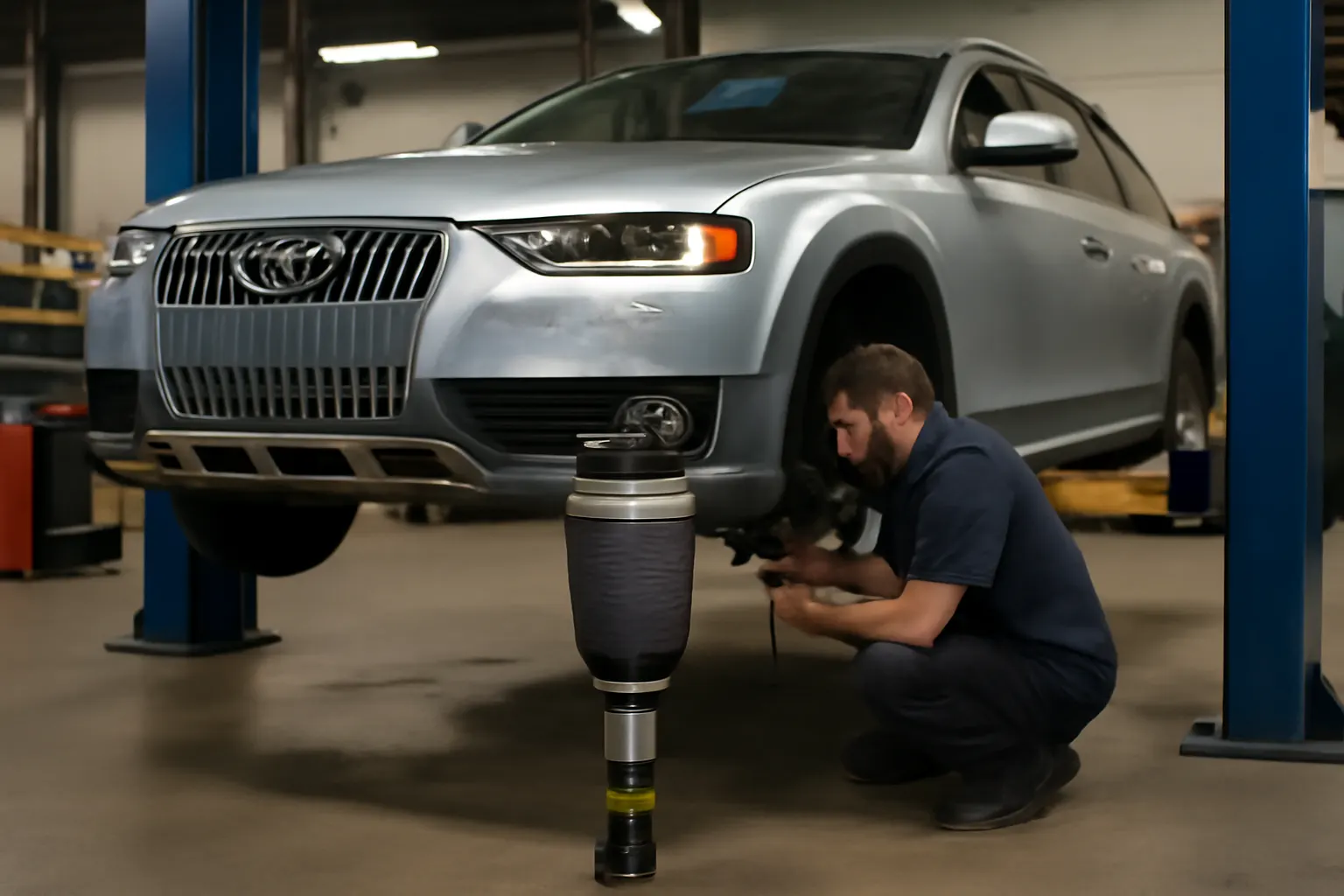
Allroad High Mileage Service Case
The 120,000-mile mark is a milestone for any vehicle, but for an Audi AllRoad A4 with its complex air suspension, it’s a turning point that often demands comprehensive service. In this real-world case, we break down a complete air suspension overhaul—what went smoothly, which hidden problems emerged, and what every high-mileage Allroad owner should know before tackling this major service. If you’re considering a similar project, this guide will help you anticipate costs, avoid common pitfalls, and ensure a safe, reliable outcome. For a broader selection of model-specific fitment information and high-quality parts, visit the Audi AllRoad A4 Auto Parts & Model-Specific Fitment Guide.
The Immediate Answer: What to Expect from a 120,000-Mile Allroad Air Suspension Overhaul
At 120,000 miles, the Audi AllRoad A4’s air suspension is likely overdue for significant attention. In this owner’s report, the following key outcomes surfaced:
- Complete replacement of all four air springs and the compressor was necessary, as all showed signs of fatigue or failure.
- Ride quality and handling were dramatically restored after the overhaul, with a return to factory-level comfort and control.
- Unexpected issues included corroded air lines, seized fasteners, and a failing ride height sensor.
- Total parts and labor costs ranged from $2,400–$3,600 depending on part sourcing and labor rates.
The process demanded advanced diagnostic work, careful part selection, and a methodical approach to installation and calibration. Notably, several hidden problems surfaced only after teardown—emphasizing the importance of thorough inspection and readiness for scope expansion.
The Hidden Problem: More Than Just Air Springs
While most Allroad owners anticipate air spring degradation, the real challenge often lies beneath the surface. Air suspension systems are interconnected and age as a system:
- Compressor wear leads to slow or uneven lift, often masked until new air springs are installed.
- Corroded or brittle air lines can cause elusive leaks that are difficult to diagnose without specialized equipment.
- Electronic components—such as ride height sensors and control modules—may fail intermittently, complicating troubleshooting.
These secondary issues frequently go unnoticed in routine checks. Only a full overhaul exposes the true extent of system aging, which is why many high-mileage Allroad owners find themselves facing more extensive repairs than anticipated.
Understanding the Allroad’s Air Suspension System
The Audi AllRoad A4’s air suspension is a sophisticated, electronically controlled system designed for both versatility and comfort. Key components include:
- Air Springs (Air Struts): Replace traditional coil springs, allowing variable ride height and adaptive damping.
- Air Compressor: Supplies pressurized air to the springs; controlled by an electronic module.
- Valve Block: Directs air to each spring, enabling independent height adjustment.
- Ride Height Sensors: Monitor the position of each corner, feeding data to the control module.
- Control Module: Interprets sensor input and manages compressor/valve operation.
System Interdependence: Failure in any one part—such as a leaking air spring—can overwork the compressor, leading to premature failure elsewhere. This is why high-mileage overhauls must address the entire system, not just the most obvious weak link.
For a deeper dive into diagnosis strategies, see our Allroad Air Suspension Diagnosis guide.
Signs Your Allroad’s Air Suspension Needs an Overhaul
High-mileage Allroads often display subtle and not-so-subtle signs of suspension distress. Recognizing these early can help prevent cascading failures:
- Sagging at one or more corners after parking overnight
- Compressor running excessively or making unusual noises
- Dashboard warnings for ride height or suspension faults
- Noticeably harsher or bouncier ride
- Uneven tire wear or poor alignment
- Visible cracks or dry rot in air spring bellows
If you notice these symptoms, a full-system inspection is warranted. These issues rarely resolve themselves and can lead to more expensive repairs if ignored.
Diagnostic Checklist: Evaluating a High-Mileage Allroad Suspension
Before committing to a full overhaul, use this checklist to assess the condition of your Allroad’s air suspension:
| Item | Inspection Method | Typical Findings at 120k Miles |
|---|---|---|
| Air Springs | Visual/tactile check for cracks, leaks (soapy water test) | Cracks, slow leaks, dry rot |
| Compressor | Listen for excessive noise; monitor run time | Overheating, excessive cycling |
| Air Lines | Inspect for kinks, corrosion, leaks | Cracked, brittle, or corroded lines |
| Valve Block | Scan for error codes; check for leaks | Sticky valves, minor leaks |
| Ride Height Sensors | Scan for intermittent faults; visual check for damage | Corroded or malfunctioning sensors |
| Control Module | Scan for stored codes; observe live data | Intermittent communication faults |
| Alignment | Professional alignment check | Out-of-spec due to sagging/settling |
| Tires | Visual inspection for uneven wear | Cupping, inner/outer edge wear |
A thorough diagnostic session with a quality scan tool and physical inspection is critical. Many issues are only apparent under load or after prolonged compressor operation.
What Went Right: Successful Outcomes and Lessons Learned
Despite the complexity, several aspects of the Allroad’s air suspension overhaul went smoothly in this case:
- OEM and high-quality aftermarket air springs fit precisely, restoring ride height and comfort.
- Compressor replacement eliminated slow lift and warning lights, confirming the diagnosis.
- Professional alignment after installation corrected steering and tire wear issues.
- System calibration with a scan tool allowed the control module to relearn correct ride heights.
Key lesson: Investing in quality parts and professional tools pays off. Attempting to reuse tired components or skipping calibration leads to persistent issues and repeat repairs.
What Went Wrong: Unexpected Challenges at 120,000 Miles
Several unanticipated issues complicated the overhaul:
- Corroded air line fittings required careful extraction and replacement, adding hours to the job.
- Seized lower strut bolts forced the use of penetrating oil, heat, and in one case, bolt extraction tools.
- A failing ride height sensor triggered intermittent errors, only discovered after new air springs were installed and the system was recalibrated.
- Compressor relay and fuse had suffered heat damage, necessitating replacement to prevent electrical faults.
Takeaway: Always budget extra time and money for corroded hardware and aging electronics. These issues are common in high-mileage, multi-winter vehicles and can turn a straightforward job into a multi-day project.
Sourcing the Right Parts: OEM vs. Aftermarket
Choosing between OEM and aftermarket parts is a crucial decision in a high-mileage Allroad air suspension rebuild. Here’s what the owner learned:
- OEM parts guarantee exact fitment and adherence to Audi’s original specifications, but come at a premium price.
- High-quality aftermarket options—from reputable brands—offered significant cost savings and comparable longevity, especially for air springs and compressors.
- Beware of ultra-low-cost parts: Some aftermarket air springs failed within a year due to poor materials or manufacturing quality.
Pro tip: Always verify part compatibility using VIN or model-specific fitment tools, such as those found in the Audi AllRoad A4 Auto Parts & Model-Specific Fitment Guide. Avoid generic listings that don’t guarantee proper fit or electronic compatibility.
Installation Insights: Tools, Techniques, and Pitfalls
A successful Allroad air suspension overhaul requires more than just parts—it demands the right tools, workspace, and patience. Here are the practical takeaways:
- Specialty tools needed: Spring compressors, torque wrenches, and a capable diagnostic scan tool are essential.
- Lift or jack stands: The job is far safer and more efficient with the car securely elevated.
- Air system depressurization: Always release system pressure using the scan tool or manual bleed valves before disassembly.
- Careful routing of air lines: Prevents kinking or abrasion, which can cause leaks post-installation.
- Torque specs: Follow factory torque settings for all fasteners to prevent premature wear or unsafe operation.
Common pitfall: Rushing the installation leads to pinched air lines, misaligned sensors, or missed calibration steps—each of which can trigger warning lights and reduce system reliability.
Calibration and Relearning: The Critical Final Step
After installing new air springs and a compressor, proper calibration is non-negotiable. The Allroad’s control module must relearn ride heights and system parameters:
- Use a professional-grade scan tool to initiate the calibration procedure.
- Follow the step-by-step prompts to set front and rear ride heights to factory spec.
- Cycle the suspension through all heights to verify smooth operation and check for leaks.
- Clear any stored fault codes and perform a final road test.
Skipping calibration can result in uneven ride height, poor handling, or repeated warning lights. This step often requires dealership-level tools or a specialized independent shop.
Maintenance After the Overhaul: Keeping Your Allroad Reliable
With a new air suspension system in place, proactive maintenance is key to maximizing longevity:
- Inspect air springs and lines every 12,000 miles for signs of abrasion, leaks, or dry rot.
- Listen for compressor noise at every oil change—unusual sounds may indicate moisture ingress or overwork.
- Keep electrical connectors clean and dry to prevent corrosion.
- Monitor tire wear and alignment; re-align if any suspension components are replaced.
- Scan for fault codes annually or at the first sign of warning lights.
For a detailed maintenance schedule tailored to your model, see our Audi Allroad A4 Maintenance Schedule.
Safety and Regulatory Considerations
High-mileage suspension work is not just about comfort—it’s a critical safety issue. Worn air springs or a malfunctioning compressor can impair handling and braking, especially in emergency situations. According to the National Highway Traffic Safety Administration, maintaining suspension integrity is essential for safe vehicle operation. Additionally:
- Aftermarket parts should meet or exceed OE standards for performance and durability.
- Check for recalls affecting suspension components using the NHTSA Recalls database.
- Follow all manufacturer safety guidelines during installation and calibration.
Neglecting these steps can compromise both safety and legal compliance.
Cost Breakdown: Budgeting for a Complete Overhaul
Here’s a typical cost breakdown for a 120,000-mile Allroad A4 air suspension overhaul:
| Component | OEM Price Range | Aftermarket Price Range | Labor (Est.) |
|---|---|---|---|
| Air Springs (x4) | $1,600–$2,000 | $800–$1,200 | $600–$900 |
| Compressor | $600–$800 | $300–$500 | $200–$300 |
| Air Lines/Fittings | $100–$200 | $60–$120 | $100–$200 |
| Ride Height Sensors | $150–$250 ea | $80–$150 ea | $120–$200 |
| Alignment | — | — | $150–$250 |
| Total | $2,450–$3,900 | $1,800–$2,700 | $1,170–$1,850 |
Note: Final costs vary based on location, labor rates, and whether you DIY or use a professional shop. Always budget an additional 10–20% for unexpected issues.
The AutoPartEx Advantage: Why Fitment and Quality Matter
AutoPartEx specializes in model-specific fitment, curated part quality, and authoritative technical guidance for Audi Allroad A4 owners. Our platform:
- Verifies compatibility for every air suspension component using OEM data and VIN lookup.
- Sources only trusted brands—no generic, low-quality parts that risk early failure.
- Provides detailed installation guides, checklists, and maintenance schedules to empower DIYers and professionals alike.
- Offers expert support for troubleshooting and part selection.
For the most reliable results, always use a reputable source for your Audi AllRoad A4 Auto Parts & Model-Specific Fitment Guide needs.
Final Expert Action: Steps for a Successful Allroad Air Suspension Overhaul
Ready to tackle your own high-mileage Allroad air suspension service? Here’s the expert path to success:
- Perform a comprehensive diagnostic using the checklist above and a professional scan tool.
- Source quality, model-specific replacement parts—prioritize OEM or trusted aftermarket suppliers.
- Prepare your workspace and tools—secure vehicle elevation, specialty tools, and safety equipment.
- Remove and replace all worn components, including air springs, compressor, and any suspect sensors or lines.
- Calibrate the suspension system with a scan tool to ensure correct ride height and system operation.
- Test drive and recheck for leaks, warning lights, and alignment issues.
- Establish a proactive maintenance schedule to keep your Allroad’s suspension reliable for the next 100,000 miles.
For additional technical resources and troubleshooting, consult our related editorial content on Audi Allroad A4 Chassis Parts and Allroad Air Suspension Diagnosis.