
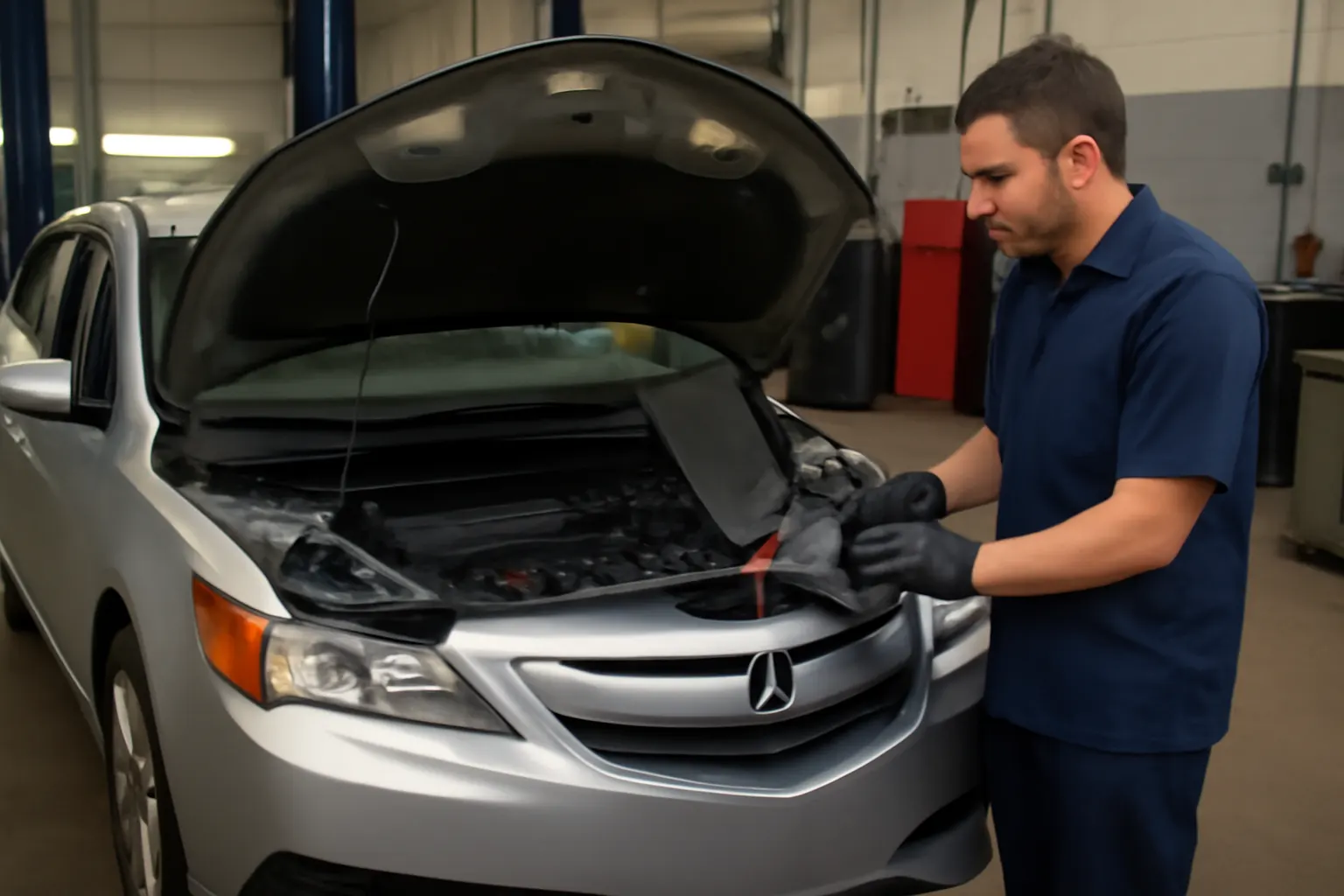
Acura Ilx Maintenance
Acura ILX owners and enthusiasts know that regular maintenance is the backbone of reliability, fuel efficiency, and long-term value. Whether you drive a first-generation ILX or the latest model, following the correct service intervals and using the right diagnostic approach can prevent costly failures and ensure peak performance. This guide delivers a comprehensive, generation-spanning look at Acura ILX maintenance—covering critical intervals, often-overlooked service pitfalls, and step-by-step diagnostics. For those seeking genuine parts or advanced fitment data, our Acura ILX Parts & Maintenance Expertise section offers direct access to OEM and performance options.
Immediate Maintenance Answers for All Acura ILX Generations
For every Acura ILX, routine maintenance starts with a handful of universal essentials:
- Oil and filter changes: Every 5,000–7,500 miles, depending on engine and oil type.
- Brake inspection and fluid replacement: Inspect every 10,000 miles, replace fluid every 3 years.
- Transmission fluid: Change every 30,000–60,000 miles for automatics; check manual fluid at similar intervals.
- Engine air filter: Replace every 15,000–30,000 miles.
- Cabin air filter: Replace every 15,000–25,000 miles.
- Coolant: Replace every 60,000 miles or 5 years.
- Spark plugs: Replace every 100,000 miles (iridium-tipped plugs).
- Tire rotation and balance: Every 5,000–7,500 miles.
These intervals, while broadly applicable, may vary slightly by year, engine, and driving conditions. Consult your owner’s manual for specifics, but these guidelines keep most ILX models running efficiently and safely.
The Hidden Problem: Overlooked Intervals and Service Pitfalls
While Acura’s maintenance minder system and scheduled services are robust, real-world experience shows that many ILX owners fall into several traps:
- Ignoring fluid condition: Relying solely on mileage, not fluid color or contamination.
- Delaying brake service: Postponing pad or rotor replacement until wear indicators squeal.
- Skipping transmission service: Particularly for CVT-equipped ILX models, which are sensitive to fluid age and quality.
- Neglecting the cooling system: Resulting in overheating and premature head gasket or radiator failure.
- Failing to address minor leaks: Small oil or coolant leaks can snowball into major repairs if ignored.
These pitfalls not only threaten long-term reliability, but also safety and fuel efficiency—areas highlighted by both the National Highway Traffic Safety Administration and the United States Department of Energy.
Expanding the Problem: Generation-Specific Acura ILX Maintenance Issues
The Acura ILX, introduced in 2013, has seen several evolutions in powertrains, electronics, and materials. Each generation brings unique maintenance considerations:
2013–2015 (First Generation)
- Engines: 2.0L I4, 2.4L I4, 1.5L Hybrid
- Common issues: Early CVT models (hybrid) prone to fluid-related shudder; 2.4L manual transmission requires more frequent clutch inspection.
- Electronics: Early infotainment glitches may require software updates.
2016–2018 (Facelifted First Generation)
- Engines: 2.4L I4 (Earth Dreams)
- Known pitfalls: Direct injection can lead to intake valve carbon buildup—consider periodic induction cleaning.
- Safety: More advanced driver-assist features require periodic sensor calibration after windshield or bumper service.
2019–2022 (Second Facelift)
- Engines: 2.4L I4
- Pitfalls: LED lighting systems may develop condensation—check seals during routine maintenance.
- Transmission: Continued attention to CVT fluid is critical for longevity.
2023–Present
- Engines: 2.4L I4 (final run, as ILX is phased out in favor of Integra)
- Special notes: Last models use lightweight materials for improved efficiency—take care with fastener torque and bodywork to avoid damage (DOE Materials Technologies).
Step-by-Step Acura ILX Maintenance Checklist
Use this practical checklist to keep your ILX on schedule and avoid missed services:
| Interval (Miles/Months) | Service Item | Notes/Details |
|---|---|---|
| 5,000–7,500 / 6 | Oil & filter change | Use 0W-20 synthetic for most engines |
| 10,000 / 12 | Tire rotation & balance | Inspect for abnormal wear, check alignment |
| 15,000 / 18 | Engine air filter | Replace sooner in dusty environments |
| 15,000 / 18 | Cabin air filter | Replace; inspect HVAC operation |
| 30,000 / 36 | Brake fluid | Replace; inspect hoses and calipers |
| 30,000 / 36 | Transmission fluid | Especially critical for CVT; use Honda/Acura fluid |
| 60,000 / 72 | Coolant | Replace; inspect hoses, radiator, and water pump |
| 100,000 / 120 | Spark plugs | Iridium plugs; check ignition coil boots |
| Every 6 months | Wipers, lights, electronics | Inspect and test all safety equipment |
| As needed | Brake pads, rotors | Replace at minimum thickness or if vibration occurs |
| As needed | Battery | Load test, inspect terminals for corrosion |
Diagnosing Common Acura ILX Maintenance Issues
Engine Oil Leaks
Symptoms: Oil spots under car, burning oil smell, low oil level.
- Inspect valve cover gasket, oil pan, and VTEC solenoid area for seepage.
- Clean area, run engine, and recheck to pinpoint leak source.
- Use only Honda/Acura-approved sealants and gaskets to avoid premature failure.
Brake Pulsation or Noise
Symptoms: Vibration under braking, squealing, grinding.
- Inspect rotor thickness and runout with a dial gauge.
- Check pad wear indicators and hardware for corrosion.
- Replace pads/rotors as a set to ensure even braking.
Transmission Shudder
Symptoms: Hesitation, vibration under acceleration.
- Check CVT fluid level and condition (should be pink and clear).
- Drain and refill with genuine Honda HCF-2 fluid.
- If shudder persists, advanced diagnostics (scan tool for codes) may be required.
Poor Fuel Economy
Symptoms: Drop in MPG, sluggish acceleration.
- Check for overdue air filter, spark plugs, or tire pressure issues.
- Scan for stored engine codes (misfire, O2 sensor, etc.).
- Clean mass air flow sensor and throttle body if needed.
Acura ILX Maintenance Minder System: How to Interpret and Use It
The ILX’s Maintenance Minder system calculates service intervals based on driving conditions, not just mileage. Understanding its codes is crucial:
- A: Replace engine oil.
- B: Replace oil and filter, inspect brakes, check fluid levels.
- 1: Rotate tires.
- 2: Replace air and cabin filters.
- 3: Replace transmission fluid.
- 4: Replace spark plugs.
- 5: Replace engine coolant.
Action: When a code appears (e.g., “A1”), perform all corresponding services. Don’t ignore supplemental codes, as they reflect real-world wear and tear.
Safety-Related Maintenance: Beyond the Basics
Safety system maintenance is often overlooked but vital for compliance and occupant protection:
- Brakes: Use only DOT 3 or DOT 4 fluid as specified. Flush lines every 3 years regardless of mileage.
- Tires: Maintain correct pressure and replace any tire with sidewall damage or tread below 2/32".
- Lighting: Check all exterior and interior lights at each service; replace bulbs with correct wattage and type to avoid CAN bus errors.
- Airbags and Sensors: If SRS light is on, use a scan tool to diagnose. Don’t ignore airbag or seatbelt warning lights.
For more on safety equipment standards, see the NHTSA’s Vehicle Safety and Equipment page.
Material Technologies and Body Maintenance
Recent ILX models use advanced materials for improved efficiency and crash performance. Maintenance tips:
- Aluminum body panels: Use plastic trim tools and torque fasteners to spec—over-tightening can cause distortion.
- Paint and coatings: Wash regularly, wax bi-annually, and touch up chips to prevent corrosion.
- Windshield and sensors: After glass replacement, recalibrate cameras and sensors for ADAS features.
For more on materials technology, consult the DOE’s Materials Technologies overview.
Sourcing the Right Acura ILX Parts
Using the correct parts ensures longevity and safety. Here’s how to source accurately:
- OEM vs. Aftermarket: For critical systems (brakes, timing components, sensors), use OEM. For wear items (filters, wiper blades), quality aftermarket is acceptable.
- Fitment: Always cross-check part numbers using the VIN. For advanced fitment guidance, see our Acura Ilx Fitment guide.
- Recalls: Before buying used or aftermarket parts, check the NHTSA recall database for your VIN and part numbers.
Diagnosing With OBD-II and Beyond
Modern Acura ILX models feature robust diagnostic systems:
- Basic OBD-II: Plug in a compatible scan tool to check for engine, transmission, and emissions codes.
- Advanced diagnostics: For ABS, SRS, and ADAS, use a Honda HDS or compatible advanced scan tool.
- Live data: Monitor coolant temp, transmission fluid temp, and fuel trims to spot emerging issues before warning lights appear.
Preventing Acura ILX Maintenance Mistakes
Avoid these common errors:
- Mixing fluids: Never mix generic ATF or coolant—use only those specified for Acura/Honda.
- Over-tightening fasteners: Use a torque wrench, especially on aluminum components and spark plugs.
- Neglecting torque-to-yield bolts: Always replace single-use fasteners (e.g., head bolts) to prevent leaks or failure.
- Delaying recalls or TSBs: Check for Technical Service Bulletins (TSBs) that may affect maintenance intervals or recommended fluids.
Advanced Maintenance: Prolonging ILX Longevity
For those seeking to maximize their ILX’s lifespan:
- Induction cleaning: Every 30,000–50,000 miles for direct-injection models to prevent carbon buildup.
- Chassis lubrication: Inspect and lubricate suspension bushings, sway bar links, and door hinges annually.
- Rust prevention: In rust-prone climates, apply undercoating and inspect drain holes in doors and sills.
- Battery health: Use an AGM or high-quality replacement and keep terminals clean.
AutoPartEx: Your Acura ILX Maintenance Resource
At AutoPartEx, we specialize in data-driven fitment, genuine and performance parts, and expert diagnostics for every Acura ILX generation. Whether you need step-by-step guides, VIN decoding, or a deep dive into Acura Ilx Parts Evolution, our resources are curated to help you avoid common pitfalls and maximize your vehicle’s safety, performance, and efficiency.
For a complete selection of parts, fitment data, and maintenance tips, visit our Acura ILX Parts & Maintenance Expertise hub.
Expert Action: Next Steps for Acura ILX Owners
- Review your maintenance log: Compare your service history to the checklist above.
- Inspect critical systems: Focus on fluids, brakes, and electronics before your next long trip.
- Address any warning lights: Use a scan tool or visit a qualified technician for diagnostics.
- Source quality parts: Use VIN-based lookup and stick to OEM for critical components.
- Stay informed: Bookmark AutoPartEx for ongoing updates, recall alerts, and technical guides tailored to the Acura ILX.
By following these steps and leveraging trusted resources, you’ll ensure your Acura ILX delivers the safety, efficiency, and driving enjoyment it was engineered for—mile after mile.