
Advertisement
530e Service Experience
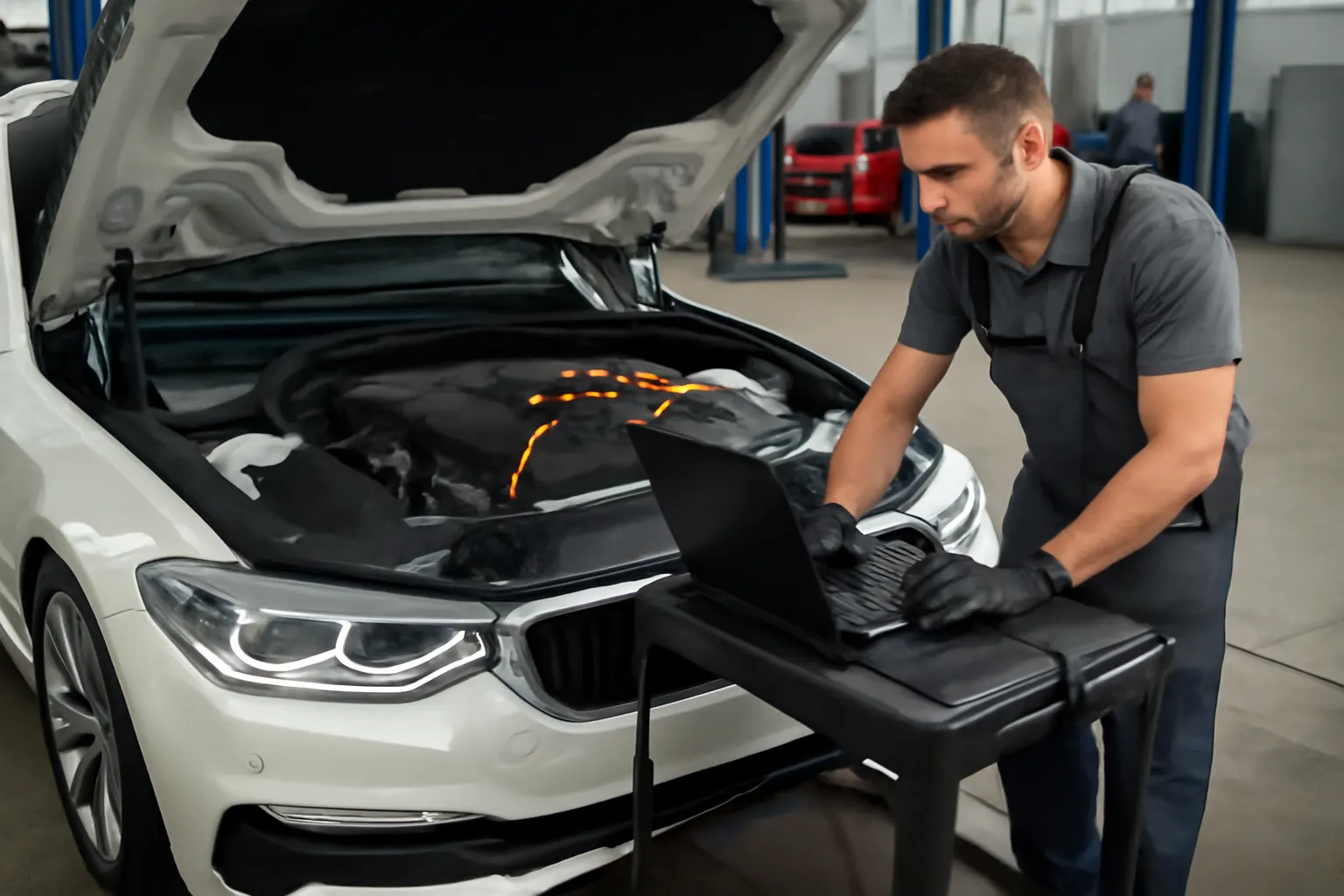
Servicing the BMW 530e’s hybrid cooling systems and battery modules requires a specialized approach that blends traditional BMW maintenance with advanced knowledge of high-voltage hybrid technology. In real-world shop environments, technicians frequently encounter unique challenges with the 530e’s dual cooling circuits and lithium-ion battery packs. This guide delivers hands-on insights and step-by-step advice drawn from actual service experiences, helping owners and independent shops avoid costly pitfalls and ensure optimal vehicle performance.
If you’re looking for a comprehensive reference on replacement parts, service intervals, and troubleshooting, visit our BMW 530e Parts & Maintenance Guide. This article focuses on the practical aspects of hybrid system servicing, with a special emphasis on the cooling and battery modules—areas where even experienced BMW technicians can run into unexpected complications.
Immediate Answer: What You Need to Know About 530e Hybrid System Servicing
The BMW 530e plug-in hybrid sedan integrates a high-voltage lithium-ion battery and a sophisticated dual-circuit cooling system to manage both the combustion engine and the electric drivetrain. Routine servicing of these systems is essential for safety, efficiency, and longevity. The most critical aspects include:
- Regular inspection and maintenance of the electric and engine cooling circuits.
- Timely diagnostic checks on battery health and cooling performance.
- Use of BMW-approved fluids, parts, and diagnostic tools.
- Strict adherence to safety protocols when working around high-voltage components.
Hybrid-specific issues—such as coolant contamination, battery module imbalance, and auxiliary pump failures—can lead to reduced efficiency, unexpected warning lights, or even safety hazards if not addressed promptly and correctly.
The Hidden Problem: Overlooked Hybrid-Specific Service Needs
Many BMW 530e owners and some general repair shops underestimate the complexity of hybrid system maintenance. While the 530e shares many components with conventional 5 Series models, its hybrid architecture introduces several hidden vulnerabilities:
- Dual Cooling Circuits: The electric drive and battery modules have their own dedicated cooling loops, separate from the combustion engine’s system. Failure in one loop can cause hybrid-specific failures that are not immediately apparent through standard OBD-II scans.
- Battery Module Sensitivity: The lithium-ion battery pack is sensitive to temperature and voltage imbalances. Even minor cooling issues or undetected module faults can escalate into expensive repairs or loss of electric drive capability.
- Specialized Parts and Fluids: Using non-approved coolants or replacement parts can introduce chemical incompatibilities, leading to corrosion or leaks in the high-voltage cooling circuit.
- Diagnostic Blind Spots: Hybrid-specific fault codes and service requirements may not be visible with generic scan tools, leading to missed problems during routine inspections.
These issues often go unnoticed until a warning light appears or the vehicle enters a reduced power mode, at which point repairs become more involved—and costly.
Deeper Technical Explanation: How the 530e Hybrid Cooling and Battery Systems Work
To understand the challenges of 530e servicing, it’s essential to break down the vehicle’s hybrid architecture and the role of its cooling and battery modules.
Hybrid System Overview
The BMW 530e pairs a turbocharged inline-four gasoline engine with an electric motor integrated into the transmission. The high-voltage lithium-ion battery, mounted beneath the rear seat, provides the energy for electric drive and regenerative braking.
Dual Cooling Circuits
- Engine Cooling Loop: Uses a traditional water pump, radiator, and thermostat to regulate the combustion engine’s temperature.
- Hybrid/Electric Cooling Loop: Features an auxiliary electric water pump, dedicated heat exchanger, and specialized coolant to manage the temperature of the electric motor, power electronics, and high-voltage battery.
The cooling systems are physically and chemically separate, each requiring specific BMW-approved fluids and service intervals.
Battery Module Architecture
The 530e’s battery pack consists of multiple modules, each with several cells monitored by an integrated Battery Management System (BMS). The BMS continuously checks for:
- Voltage Imbalance: If one module’s voltage drops below threshold, it can trigger a reduced power mode or warning light.
- Temperature Control: The battery coolant loop prevents overheating and maintains optimal cell temperature for longevity and performance.
Common Failure Points
- Auxiliary Pump Failure: Leads to inadequate cooling of battery and electric motor, causing thermal derating or component damage.
- Coolant Leaks or Contamination: Cross-contamination between loops or use of incorrect coolant can cause corrosion, sensor errors, or cooling inefficiency.
- Module Imbalance or Degradation: Individual battery modules may degrade unevenly, affecting range and power output.
Service Checklist: Cooling System and Battery Module Maintenance
A thorough 530e service should include the following checks and procedures:
530e Hybrid Cooling and Battery Service Checklist
| Task | Frequency | Notes |
|---|---|---|
| Inspect engine and hybrid cooling circuits for leaks | Every 12 months / 12,000 miles | Use UV dye for leak detection |
| Check coolant levels (engine and hybrid loops) | Every 6 months | Use only BMW-approved coolant |
| Test auxiliary electric water pump operation | Every 24 months | Listen for pump noise, verify flow with diagnostic tool |
| Scan for hybrid/BMS fault codes | Every service | Requires BMW ISTA or equivalent |
| Inspect battery module connectors and wiring | Every 24 months | Look for corrosion or loose contacts |
| Verify battery module voltages and temperature balances | Every service | Compare across all modules for imbalance |
| Replace coolant (engine and hybrid loops) | Every 4 years / 50,000 miles | Flush system, refill with correct fluid |
| Update vehicle software (hybrid control modules) | As needed | Check for BMW technical bulletins |
| Test high-voltage interlock integrity | Every service | Ensures proper safety circuit function |
| Visual check of battery pack enclosure | Every 24 months | Inspect for physical damage or moisture |
Advertisement
Diagnostic Approaches: Identifying Cooling and Battery Issues
Effective diagnosis of 530e hybrid system problems requires a combination of visual inspection, electronic scanning, and functional testing. Here’s how experienced shops approach common scenarios:
1. Coolant Loss or Overheating Warnings
- Symptoms: Warning lights, reduced hybrid performance, or “Drive moderately” messages.
- Diagnosis: Inspect both cooling loops for leaks; check coolant reservoir levels; pressure test system; use BMW ISTA to read hybrid-specific fault codes.
- Common Causes: Leaking hose clamps, failed auxiliary pump, or cracked heat exchanger.
2. Battery Module Imbalance or Degradation
- Symptoms: Reduced electric range, high-voltage system errors, or persistent check engine light.
- Diagnosis: Use BMW diagnostic software to access BMS data. Compare individual module voltages and temperatures. A module more than 0.1V off from others may indicate early failure.
- Common Causes: Cell aging, poor cooling, or internal battery faults.
3. Electric Water Pump Failure
- Symptoms: Sudden loss of electric drive, battery overheating, or repeated thermal derating.
- Diagnosis: Command pump operation via diagnostic tool; listen for pump noise; verify coolant flow at heat exchanger.
- Common Causes: Pump motor failure, electrical connector issues, or relay faults.
4. Hybrid System Warning Lights
- Symptoms: General “Drivetrain” or “Hybrid system” warning messages.
- Diagnosis: Retrieve all hybrid, battery, and cooling system codes. Check for software updates or known technical bulletins.
- Common Causes: Firmware issues, sensor faults, or low coolant.
Installation Guidance: Replacing 530e Cooling and Battery Components
When replacement of cooling or battery components is required, following proper procedures is critical for safety and performance.
Cooling System Component Replacement
- Depressurize System: Allow the vehicle to cool fully. Open coolant reservoir cap slowly to release pressure.
- Drain and Capture Coolant: Use a clean catch pan for environmental safety.
- Remove Faulty Component: For auxiliary pump or hoses, disconnect battery negative terminal first, then unbolt and remove part.
- Install New Component: Use only OEM or BMW-approved aftermarket parts. Ensure all seals and O-rings are replaced.
- Refill and Bleed System: Fill with BMW-approved coolant. Bleed air using ISTA’s coolant bleed procedure or manual bleed screws.
- Test Operation: Run vehicle and monitor for leaks, proper pump operation, and absence of warning lights.
Battery Module or Connector Service
Warning: High-voltage battery service should only be performed by trained technicians with proper PPE and tools.
- Isolate High Voltage: Disconnect service disconnect plug and verify zero voltage at terminals.
- Access Battery Pack: Remove rear seat and battery covers as per BMW service manual.
- Inspect/Replace Module or Connector: Carefully disconnect wiring; replace module or repair connector as required.
- Reassemble and Reconnect: Torque all fasteners to spec. Reconnect high-voltage interlock and 12V battery.
- System Test: Use ISTA to run BMS diagnostics and clear any fault codes.
- Verify Balance: Confirm all modules are within voltage and temperature spec.
Maintenance Best Practices: Extending the Life of Your 530e’s Hybrid Systems
Routine maintenance is the key to maximizing reliability and efficiency in the BMW 530e’s hybrid systems. Here are best practices based on shop experience and manufacturer recommendations:
- Use Only Approved Fluids: Never mix or substitute coolants between engine and hybrid loops. Use BMW-specified coolant to avoid chemical reactions or corrosion.
- Monitor for Early Warning Signs: Unusual fan noise, sudden drops in electric range, or unexplained warning lights should prompt immediate inspection.
- Keep Software Up to Date: Many hybrid system issues are resolved with control module updates. Always check for new technical bulletins during service.
- Schedule Regular Diagnostic Scans: Even if no warning lights are present, periodic scans can catch early signs of module imbalance or cooling inefficiency.
- Protect Connectors and Wiring: Inspect for moisture, corrosion, or rodent damage, especially in vehicles stored for extended periods.
Sourcing Quality Replacement Parts: What to Look For
Hybrid system components for the BMW 530e are highly engineered and must meet strict safety and performance standards. When sourcing replacement parts:
- Prioritize OEM or BMW-Approved Aftermarket Parts: These are tested for compatibility with the 530e’s unique cooling and electrical requirements.
- Verify Part Numbers: Ensure replacement parts match the vehicle’s VIN and production date. Small differences in connector design or fluid compatibility can cause installation issues.
- Check for Recalls or Service Bulletins: Before installing any high-voltage component, verify there are no outstanding manufacturer recalls or technical service bulletins.
- Consider Remanufactured Battery Modules: For older vehicles, high-quality remanufactured modules can provide a cost-effective alternative, but always demand proof of testing and warranty.
For more details on parts compatibility, see our Bmw Hybrid Parts Compatibility guide.
Fitment and Compatibility: Avoiding Common Pitfalls
A frequent source of trouble in 530e service is improper fitment of cooling or battery parts. Here’s how to avoid the most common mistakes:
Advertisement
- Cross-Check VIN and Build Date: BMW made mid-generation changes to some cooling and battery components. Always use the full VIN to confirm fitment.
- Inspect Old vs. New Parts: Before installation, compare the removed part with the replacement—connector orientation, mounting points, and coolant hose diameters must match.
- Beware of Aftermarket Shortcuts: Some aftermarket parts may claim universal fit but lack the necessary thermal or electrical characteristics. Stick with trusted suppliers.
- Test Before Final Assembly: After installing a new pump, sensor, or battery module, run a full system test with diagnostic software before reassembling trims or covers.
Battery Module Balancing: A Shop-Level Technical Deep Dive
Battery module balancing is a critical but often misunderstood aspect of 530e maintenance. The battery management system (BMS) is designed to keep all modules within a narrow voltage range, but over time, imbalances can develop due to:
- Cell Aging: Individual cells degrade at different rates, especially if cooling is suboptimal.
- Partial Charging Habits: Frequent partial charges can lead to state-of-charge drift between modules.
- Environmental Extremes: High heat or cold can accelerate imbalance.
How Technicians Address Imbalance
- Software-Based Balancing: The BMS can perform limited balancing by shunting current around higher-voltage modules, but this is only effective for minor differences.
- Manual Intervention: For severe imbalances, shops may need to replace affected modules or, in rare cases, perform a controlled discharge/recharge cycle using specialized equipment.
- Post-Service Verification: After any battery work, always confirm that all modules are within 0.05V of each other under load.
For guidance on hybrid battery longevity and reconditioning, see our Bmw Hybrid Battery Maintenance editorial.
Safety Protocols: Working Around High Voltage
The 530e’s high-voltage system operates at up to 350V DC, posing serious risks if mishandled. Adherence to safety protocols is non-negotiable:
- Personal Protective Equipment (PPE): Always wear Class 0 or better insulated gloves rated for hybrid vehicle service.
- High-Voltage Interlock: Verify that the interlock circuit is disengaged and the system is fully de-energized before beginning any work.
- Isolation Procedures: Use insulated tools and never work alone when servicing high-voltage components.
- Clear Signage: Mark vehicles under hybrid service with “High Voltage – Do Not Touch” notices to prevent accidental contact.
Advertisement
Consult the National Highway Traffic Safety Administration’s equipment guidelines for more on safety standards.
Real-World Shop Stories: Lessons Learned
Drawing from field experience, several recurring themes emerge in 530e hybrid service:
-
Case 1: Silent Pump, Silent Failure
A customer reported intermittent “Hybrid system malfunction” warnings. Initial scans showed no codes. Closer inspection revealed the auxiliary electric water pump was not running—despite no warning light for the pump itself. Replacement restored proper cooling and eliminated the warning. -
Case 2: Coolant Cross-Contamination
An owner used non-approved coolant during a DIY top-up. Six months later, hybrid cooling performance dropped, and corrosion was found in the heat exchanger. Flushing both circuits and replacing the heat exchanger resolved the issue, but at significant cost. -
Case 3: Module Imbalance After Storage
A 530e stored for months developed a persistent battery warning. Diagnosis revealed one module had drifted out of balance due to self-discharge. The module was replaced, and the car returned to full electric range.
These stories reinforce the importance of using correct fluids, performing regular diagnostic checks, and not ignoring subtle early warning signs.
Solution Path: Building a Proactive 530e Maintenance Plan
To minimize risk and maximize the lifespan of your 530e’s hybrid systems, follow these steps:
- Establish a Routine Service Schedule: Stick to or exceed BMW’s recommended intervals for hybrid system checks, coolant replacement, and battery diagnostics.
- Partner with Qualified Shops: Choose service centers with hybrid experience and the right diagnostic tools. Ask about technician certifications.
- Document All Service Events: Keep detailed records of coolant changes, battery module replacements, and software updates for future troubleshooting.
- Stay Informed on Recalls and Updates: Regularly check for manufacturer recalls or technical service bulletins relevant to the 530e.
- Educate Yourself: Review resources like our Bmw 530e Service Checklist for up-to-date service items and intervals.
Expert Action: When to Call in a BMW Hybrid Specialist
While basic inspections and fluid checks can be handled by experienced general technicians, the following situations demand a BMW hybrid specialist:
- High-Voltage Battery Service: Any work requiring opening the battery pack or replacing modules.
- Persistent Hybrid System Warnings: If warning lights return after standard troubleshooting.
- Repeated Auxiliary Pump Failures: May indicate deeper electrical or software issues.
- Complex Fault Codes: Hybrid- or BMS-specific codes that generic scan tools cannot interpret.
AutoPartEx recommends establishing a relationship with a BMW-certified hybrid service center for major repairs and using our BMW 530e Parts & Maintenance Guide as your reference point for parts sourcing, maintenance intervals, and technical updates.
AutoPartEx: Your Trusted Partner for BMW 530e Hybrid Parts and Expertise
At AutoPartEx, we specialize in providing verified, high-quality parts and technical guidance for BMW hybrids, including the 530e. Our curated inventory and expert resources ensure you get the right fit, the right fluid, and the right advice—every time. Whether you’re a DIY owner or a professional shop, our platform supports your commitment to safety, performance, and value.
For the most current parts listings, compatibility checks, and in-depth maintenance guides, start with our BMW 530e Parts & Maintenance Guide.
References
Advertisement