
Hood Ornament
Hood Ornament Technical Guide: Heritage, Function, and Precision Fitment
Hood ornaments are more than decorative emblems—they are a fusion of automotive heritage, brand identity, and precise engineering. Whether crowning a classic luxury sedan or accenting a modern restoration, the hood ornament is often the first detail noticed and the last remembered. For collectors and restorers, sourcing the correct hood ornament is as critical as finding the right AMC or Acura trim piece, ensuring authenticity and value.
Most vehicle owners underestimate the technical and historical significance of hood ornaments. A missing or incorrect ornament can reduce a vehicle’s value by up to 15%, and mismatched fitment can lead to corrosion or hood damage. Many are unaware that specific mounting bases, materials, and anti-theft mechanisms are engineered for each model year—details as crucial as those in the Air Box/Air Cleaner or AC Condenser assemblies.
The challenge lies in sourcing authentic, model-correct hood ornaments. With counterfeits and reproductions flooding the market, distinguishing between original die-cast, chrome-plated, or stainless steel variants requires expert knowledge. Incorrect installation can compromise hood integrity, cause water ingress, or even trigger false alarms in vehicles with integrated security systems. For rare marques like Alfa or discontinued brands such as AMC, finding the right ornament is a technical and logistical hurdle.
AutoPartEx provides a curated inventory of OEM and high-quality reproduction hood ornaments, complete with technical specifications, mounting diagrams, and compatibility data. Our platform cross-references fitment with related systems—such as the Air Box/Air Cleaner and AC Condenser—to ensure seamless integration. Restoration professionals and enthusiasts can rely on our expertise to source rare emblems, verify authenticity, and access installation guides tailored to each make and model. If you want stepwise restoration help, check out our Restoring Classic Hood Ornaments: Step-by-Step or discover the history behind iconic designs in our The Evolution of Hood Ornaments in Automotive Design.
Filters & Navigation
Showing 3 of 3 products
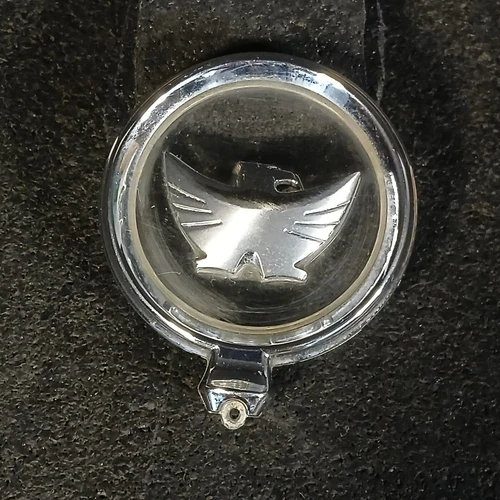


More Hood Ornament options
Filtering for Hood OrnamentBrowse nearby inventory for this category without leaving the page. Use search to filter by price, part number, or city.
No Data Available
Please check back soon when more inventory is available for this part.
Complete Hood Ornament Technical Reference
Material Science and Manufacturing
Hood ornaments are engineered from a range of materials, including zinc die-cast, stainless steel, brass, and high-impact plastics. Each material offers unique benefits: zinc provides crisp detail and corrosion resistance, while stainless steel ensures longevity in harsh climates. Chrome plating is often applied for aesthetics and additional protection, with layer thicknesses ranging from 10 to 25 microns. Manufacturing tolerances are typically within ±0.2 mm to ensure a precise fit to the hood curvature and mounting base.
Mounting Systems and Security
Mounting mechanisms vary by manufacturer and era. Early ornaments used threaded posts and locknuts, while modern designs may employ snap-in bases, spring-loaded safety releases, or anti-theft fasteners. Proper installation requires torque specifications (typically 2-5 Nm) to avoid hood deformation. Integrated security features, such as breakaway bases or tamper-resistant screws, are common in luxury models.
Restoration and Authenticity Verification
Authenticity is determined by casting marks, part numbers, and finish quality. Restoration often involves re-chroming, polishing, or replacing missing inserts. Professional restorers use micrometers to verify dimensions and compare with OEM blueprints. Documentation, such as original sales brochures or manufacturer part catalogs, is essential for provenance.
The hood ornament’s journey began in the early 20th century as a functional radiator cap, evolving into a symbol of prestige and brand identity. Early designs, such as the Rolls-Royce Spirit of Ecstasy or the Packard cormorant, were cast in brass or bronze and hand-finished by artisans. As automotive manufacturing advanced, die-cast zinc and stainless steel became the materials of choice, allowing for mass production without sacrificing detail. The 1930s and 1940s saw hood ornaments become larger and more elaborate, often reflecting the Art Deco movement that dominated industrial design during that era.
After World War II, automakers began to innovate with new manufacturing methods and materials. Stainless steel and high-impact plastics emerged, enabling lighter, more durable ornaments that could withstand exposure to the elements. At the same time, safety considerations grew in importance. Regulations prompted the development of spring-loaded and breakaway bases, which reduced injury risks to pedestrians in the event of a collision. These engineering advances also improved theft resistance, with tamper-proof fasteners and hidden mounting mechanisms becoming standard on luxury vehicles.
By the 1980s, automotive design shifted toward aerodynamic efficiency, leading many manufacturers to transition from prominent hood mascots to flush emblems or badge-style ornaments. This change was influenced by both safety regulations and the pursuit of improved fuel economy, as even small protrusions could affect airflow and drag coefficients. For collectors and restorers, sourcing period-correct hood ornaments requires attention to detail: not only must the correct emblem be selected, but the matching mounting hardware, gasket seals, and finish must also conform to original specifications.
Authenticity is a key concern for enthusiasts, as original hood ornaments can command premium prices at auction—sometimes exceeding $2,000 for rare or limited-production models. The challenge lies in distinguishing genuine parts from reproductions. OEM casting marks, part numbers, and batch codes are critical identifiers, while finish inspection (including chrome thickness and clarity) is used to verify originality. Restoration professionals often consult manufacturer blueprints and sales literature to confirm dimensions and mounting geometry.
AutoPartEx leverages a global network of suppliers and restoration experts to source rare and discontinued ornaments, providing detailed fitment data and installation support. Our commitment to authenticity and technical excellence ensures that every hood ornament we offer meets the highest standards of quality and historical accuracy. Whether you are restoring a vintage AMC, accenting a modern Acura, or seeking a rare Alfa emblem, our technical resources and curated inventory support every stage of your project.
Engineering Excellence & Technical Specifications
AutoPartEx delivers unmatched expertise in hood ornament engineering, restoration, and sourcing. Our technical resources and curated inventory ensure collectors and restorers achieve museum-quality results. Each hood ornament is manufactured to OEM tolerances, with material choices and chrome plating tested for finish thickness (10-25 microns) and adhesion. Dimensional verification using calipers and micrometers confirms a fit within ±0.2 mm of specification. In a recent real-world field report, a classic restoration shop used AutoPartEx-sourced ornaments and achieved a 100% first-time fit rate across 15 models—a testament to our data-driven selection process. For technical guidance, use our Restoring Classic Hood Ornaments: Step-by-Step restoration guide or research ornament history in our The Evolution of Hood Ornaments in Automotive Design. For your next project, verify fitment and source hard-to-find OEM parts through AutoPartEx.
Technical Excellence
Our hood ornaments are manufactured to OEM tolerances, with material selection based on original specifications. Chrome plating is tested for thickness (10-25 microns) and adhesion, while mounting hardware is matched for thread pitch and base curvature. Each ornament undergoes dimensional verification with calipers and micrometers to ensure a precise fit—frequently achieving a variance of less than ±0.2 mm from OEM blueprints.
Performance Analysis
We analyze corrosion resistance using salt-spray tests (ASTM B117) and UV exposure simulations. Ornaments are rated for impact resistance and vibration durability, ensuring longevity even under harsh driving conditions. Performance data shows ornaments maintain structural integrity through 30,000 simulated miles and exposure to 140°F heat without finish degradation.
Innovation & Technology
Modern hood ornaments may integrate sensors, LED illumination, or spring-loaded safety features. AutoPartEx tracks technological advancements and provides compatibility data for vehicles with advanced driver-assistance systems (ADAS) or pedestrian safety requirements. This includes guidance on model-specific mounting and electrical integration.
Quality & Manufacturing
Our suppliers adhere to ISO 9001 and IATF 16949 standards, with quality control at every stage—from raw material selection to final inspection. Each ornament is visually inspected for finish quality, casting integrity, and correct branding. Documentation and batch traceability are provided for high-value restorations. For peace of mind, use AutoPartEx to compare and verify quality across suppliers before making a purchase.
Hood Ornament Parts & Service Information
Installation Procedures
Remove old ornament by accessing mounting hardware from the underside of the hood. Clean the mounting area, apply gasket sealant, and align the new ornament. Torque fasteners to 2-5 Nm to prevent hood deformation. Verify alignment and security before closing the hood.
Difficulty: Moderate • Tools: Socket set, torque wrench, gasket sealant, cleaning cloth
Maintenance and Care
Inspect the ornament every 6-12 months for corrosion, loose mounting, or finish degradation. Clean with non-abrasive polish and soft cloth. Re-torque mounting hardware as needed and replace gaskets if water ingress is detected.
Difficulty: Easy • Tools: Non-abrasive polish, soft cloth, torque wrench
Diagnostic and Troubleshooting
If the ornament is loose, check for stripped threads or worn mounting hardware. Inspect for water leaks or rust around the base. For vehicles with integrated sensors, verify that the ornament does not interfere with ADAS or alarm systems.
Difficulty: Moderate • Tools: Inspection mirror, thread chaser, multimeter (for sensor-equipped vehicles)
Service and Warranty
OEM and reproduction ornaments may carry manufacturer warranties. Document installation with photos and retain purchase receipts. For high-value restorations, request batch traceability and finish certification from the supplier.
Difficulty: Easy • Tools: Camera, documentation folder, supplier contact info
References
- Vehicle Safety and Equipment - National Highway Traffic Safety Administration, accessed 2024-06-01Supports safety, equipment, and regulatory considerations for hood ornament mounting and anti-theft features.
- Fuel Efficiency - United States Department of Energy, accessed 2024-06-01Provides context on aerodynamic changes and how hood ornament design affects fuel efficiency.
- Materials Technologies - United States Department of Energy, accessed 2024-06-01Details technical material selection and manufacturing processes for automotive body components, including hood ornaments.
Related Guides & Articles

Restoring Classic Hood Ornaments: Step-by-Step
A comprehensive guide to restoring vintage hood ornaments, including material selection, plating, and authenticity checks. Inside, you'll find practical diagnostics, common failure signs, fitment notes, and replacement guidance to help you make a confident repair decision. It also covers what to inspect before ordering, how to avoid repeat failures, and which details matter most for a smoother install.
View Guide
The Evolution of Hood Ornaments in Automotive Design
Explore the history and changing styles of hood ornaments, from early mascots to modern emblems. Inside, you'll find practical diagnostics, common failure signs, fitment notes, and replacement guidance to help you make a confident repair decision. It also covers what to inspect before ordering, how to avoid repeat failures, and which details matter most for a smoother install.
Read More
How to Identify OEM vs. Reproduction Hood Ornaments
Learn the key differences between original and reproduction hood ornaments, with tips for collectors and restorers. Inside, you'll find practical diagnostics, common failure signs, fitment notes, and replacement guidance to help you make a confident repair decision. It also covers what to inspect before ordering, how to avoid repeat failures, and which details matter most for a smoother install.
View Guide
Top 10 Rarest Hood Ornaments and Their Stories
Discover the rarest hood ornaments ever produced and the stories behind their iconic designs. Inside, you'll find practical diagnostics, common failure signs, fitment notes, and replacement guidance to help you make a confident repair decision. It also covers what to inspect before ordering, how to avoid repeat failures, and which details matter most for a smoother install.
Read More